
Keir Starmer’s assertion that “full due process” was followed in Peter Mandelson’s appointment as ambassador to the US has not been backed by the former top official at the UK Foreign Office.
The British Prime Minister faces a possible parliamentary sleaze inquiry over claims he misled MPs over the process which led to Mandelson taking the Washington job.
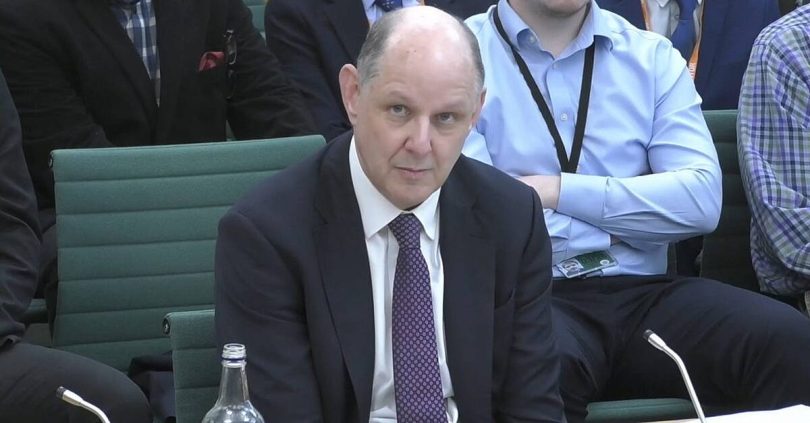
Former Foreign Office mandarin Philip Barton declined to agree with the Prime Minister’s assessment of the process, told MPs that it was unusual for the peer’s appointment to be announced before security vetting had been completed and said Starmer knew of the risks over Mandelson’s relationship with “toxic, hot potato” Jeffrey Epstein.
Barton told the Commons’ Foreign Affairs Committee (FAC) that there was an “uninterested” attitude towards getting Lord Mandelson high-level security clearance for the role.
And he suggested there was pressure to “get on with” approving the peer for developed vetting (DV).
The FAC also heard from Starmer’s former chief of staff Morgan McSweeney, who insisted he did not “ask officials to ignore procedures, request that steps should be skipped, or communicate explicitly or implicitly that checks should be cleared at all costs” during the appointment of Mandelson.
The British Prime Minister will face a Commons vote on whether to refer him to the Privileges Committee for claims in the House including that “full due process” had been followed and that “no pressure existed whatsoever in relation to this case”.
Asked directly whether he agreed that full due process had been followed, Barton paused before telling the committee “I’m going to dodge”, saying it was for MPs to form a view on that.
But he told MPs the “normal order” for ambassadorial appointments was for vetting to be completed before an announcement, contradicting claims by the Government.
Barton said he had learned Mandelson had been picked as US ambassador on December 15th, 2024, days before Starmer made the announcement.
Asked if he had any concerns about the appointment, he told the committee he had worries about Lord Mandelson’s known connection to paedophile financier Epstein.
“Obviously, I didn’t know what was actually going to happen, because Epstein was such a toxic, hot potato subject in US politics itself, including in the election campaign,” he said.
But he also suggested there was no way for him to raise his concerns before the appointment, as “I was presented with a decision … and told to get on with it”.
He told MPs: “I had a concern that a man who demonstrably from the public record at the time – and it was clearly much bigger than we all knew – had a link to Epstein, and that Epstein through both the presidential election campaign in the US and more generally in US politics, had been and was a controversial figure, and I was worried that this could become a problem in future.
“That is a very candid account of probably what I was thinking at the time but there was no space or avenue or mechanism for me to put that on the table.
“A decision had been taken. It was a political decision.”
Starme had been “made aware of the risks, and had accepted those risks and decided to proceed”, Barton added.
He denied there was a “dismissive” attitude towards the vetting process – as his successor Olly Robbins had claimed – but added: “The word I would use is uninterested.
“I think people wanted to know that all the practical steps required for Mandelson to arrive in Washington on or around the inauguration date… it needed to be completed at pace, as it were.”
His evidence contradicted suggestions from the Government that it was normal procedure to carry out vetting after a political appointment to a diplomatic posting was announced.
Barton said: “The normal order is vetting and then announcement.”
Asked if he knew why the process was reversed in Mandelson’s case, he said: “No, the timing of the announcement was driven and decided by No 10.”
Mandelson was granted DV status by the Foreign Office in late January 2025, under Robbins, despite failing checks by the specialist UK Security Vetting agency.
The peer was sacked in September after further details emerged about his friendship with Epstein.
McSweeney admitted he was “wrong” to advise the British Prime Minister to appoint the peer but said he believed Mandelson had been the right choice to deal with Donald Trump’s incoming administration.
He told MPs: “What I did do was make a recommendation based on my judgment that Mandelson’s experience, relationships and political skills could serve the national interest in Washington at an important moment. That judgment was a mistake.
“What I did not do was oversee national security vetting, ask officials to ignore procedures, request that steps should be skipped, or communicate explicitly or implicitly that checks should be cleared at all costs.”
Labour MPs will be ordered to oppose the attempt to launch an investigation into the Prime Minister which has been led by the Tories and supported by the Liberal Democrats, SNP and other opposition MPs.
Starmer sought to dismiss the Commons bid to refer him to the committee, a move which ended Boris Johnson’s political career, as a “political stunt” ahead of May’s elections.
His defence is that former head of the civil service Chris Wormald had concluded that “appropriate processes” were followed in the appointment of Mandelson.
And on the issue of pressure, Starmer has insisted that there was only the “everyday pressure of government” in trying to implement decisions quickly.