
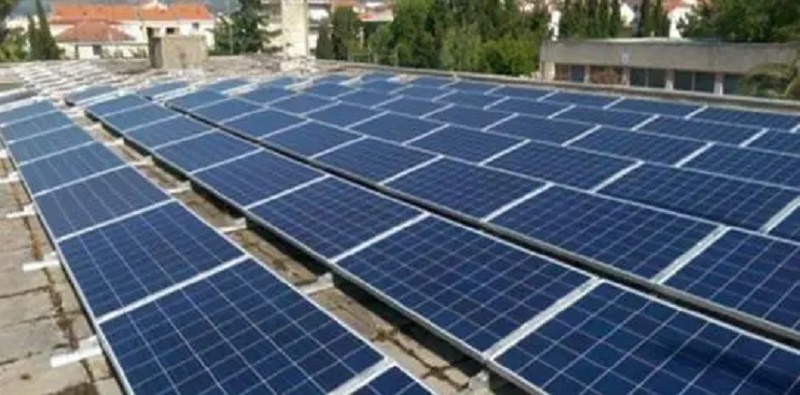
Nigerians continue to seek alternative power sources, primarily solar, causing the consumption of Premium Motor Spirit (PMS), also known as petrol, to fall by 16.9 per cent in March 2026.
Prices of the petroleum products have been up since last month as a result of the US-Israel attack on Iran and its blowback.
According to data from the Nigerian Midstream and Downstream Petroleum Regulatory Authority (NMDPRA), daily petrol consumption dropped from 56.9 million litres in February to 47.3 million litres in March, marking one of the steepest month-on-month declines in recent times.
This fall is significant not just for its size, but for what it signals in a country where petrol has long remained the dominant fuel for transport and off-grid electricity generation, which has been epileptic.
The drop of over 9 million litres per day suggests that households, transport operators and small businesses had to adjust their consumption patterns in response to sustained fuel price pressure, which rose to as high as N2,000 in some parts of the country, following the blockade of the Strait of Hormuz.
At the same time, total PMS supply rose marginally from 39.5 million litres per day in February to 40.1 million litres in March, representing a 1.5 per cent increase. This contrast between rising supply and falling demand points to a market that is not constrained by availability but increasingly shaped by affordability and substitution effects.
Prices of petrol in Nigeria typically rise due to global market conditions since the government removed fuel subsidy, which led to changes in the cost of buying the fuel weekly.
Also, Dangote Refinery, which handles a chunk of Nigeria’s domestic supply, relies on international markets to get crude feedstock due to shortages from the Nigerian National Petroleum Company (NNPC) Limited. This comes into play when pricing for the local market.
Also, the March figures could suggest rising renewable energy adoption as residential estates, businesses and commercial buildings are gradually expanding, driven largely by the need to escape rising diesel and petrol costs.
However, adoption is slow because of how expensive a solar power setup is, with the cost running into millions of Naira.
Energy experts told Business Post that, beyond cost, there are several factors, such as holding false beliefs as well as a lack of energy management.
Mr Danieel Anomfueme, a Port Harcourt-based solar expert, told this newspaper, “While going solar is a much better alternative to fuel-based generation (napkin maths puts it at ~3 years fuel cost ), most can’t make the move because they lack the upfront money. While there are solar financing companies, the credit cost and options don’t make it attractive.”
“We are wasteful energy-wise because we grew up with it being heavily subsidised electricity, and we don’t bother to know about energy conservation or efficiency of appliances. This is why someone will be spending 400k+ monthly on band A, but expect their “#6m setup” to power all those appliances 24/7 daily,” he added.
For the expert, interested Nigerians can design a solar setup, have an overview of it and get to build it up little by little as the money comes.
“They don’t have to deploy everything at once.”