
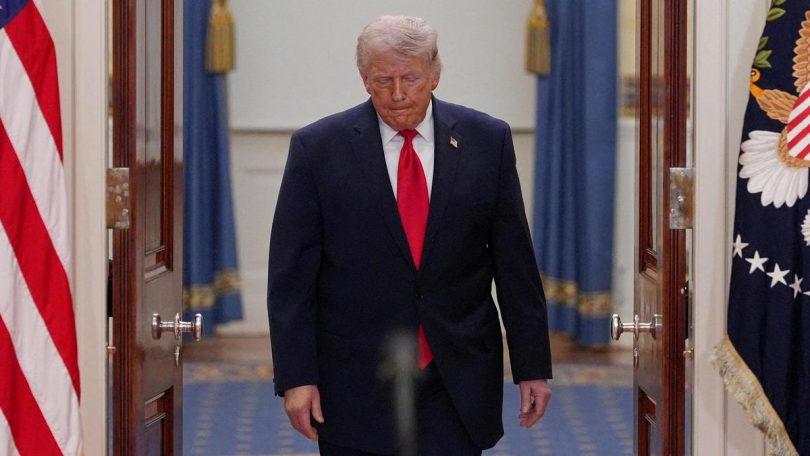
Representational image
| Photo Credit: REUTERS
The administration of U.S. President Donald Trump launched a military offensive against Iran on February 28, in tandem with Israeli strikes across the region. Tehran’s retaliation, entailing missile and drone attacks on Israel and Gulf countries such as the UAE, Qatar, Saudi Arabia and others, as well as its blockade of the critical oil transportation route through the Strait of Hormuz, led Washington deeper into the military engagement against Iran. Despite a fragile ceasefire and the U.S.’s counter-blockade of the Iranian ports and naval manoeuvres giving it a measure of control of the strait, the overall war plans of the Trump administration might be in jeopardy due to a provision of the U.S. constitution – the War Powers Act (WPA). The Act requires the President to seek authorisation from Congress for the continued use of military force in hostilities abroad beyond 60 days of such involvement, yet going by past record, Mr. Trump may have several options to circumvent this requirement and persist with the ongoing military engagement in West Asia.
The Act, known formally as the War Powers Resolution of 1973, was introduced into U.S. law in the context of President Richard Nixon’s support for clandestine hostilities in Cambodia during the Vietnam War, carried out sans Congressional consent. Mr. Nixon vetoed the bill, yet it was overridden by Congress and enacted into law as a means for Congress to limit presidential authority to wage war.
Published – April 27, 2026 11:07 pm IST