
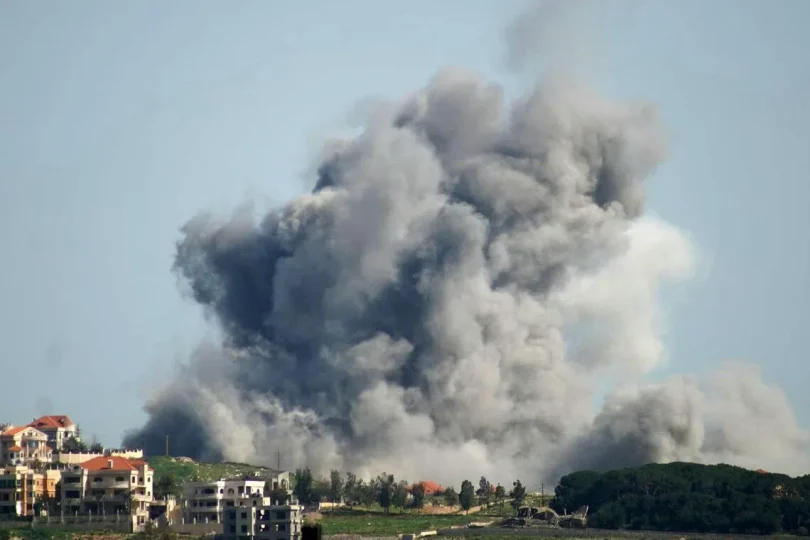
BEIRUT – Israel and Lebanon have agreed to begin a 10-day ceasefire, President Donald Trump said on April 16.
In a post on his Truth Social platform, Mr Trump said he held “excellent conversations” with the leaders of both countries and directed his top aides to work with Israel and Lebanon to “achieve a Lasting PEACE”.
“Both sides want to see PEACE, and I believe that will happen, quickly!” he said.
The truce will begin at 5pm Eastern time (5am on April 17, Singapore time), he said.
Lebanese President Joseph Aoun had urged Mr Trump to help secure a ceasefire for Lebanon in the first call ever between the two leaders.
Pakistan has said peace in Lebanon is vital to ending the Iran war.
The US-Israeli war with Iran spilt into Lebanon on March 2, when the Iran-backed militant group Hezbollah fired missiles into Israel in support of Tehran, prompting an Israeli offensive in Lebanon just 15 months after the last major conflict.
“Peace in Lebanon is essential for (Iran) peace talks,” Mr Tahir Andrabi, spokesman for Pakistan’s Foreign Ministry, said.
Mr Trump said earlier in the day he was seeking to create “a little breathing room” between Israel and Lebanon.
Mr Aoun’s office said he spoke to Mr Trump and Secretary of State Marco Rubio and thanked them for their efforts to reach a ceasefire in Lebanon.
Mr Trump had also said the two leaders of Lebanon and Israel had not spoken for some 34 years and “it will happen tomorrow”.
But three Lebanese officials told Reuters on April 16 that Mr Aoun would not hold a call with Israeli Prime Minister Benjamin Netanyahu in the near future.
Two of the Lebanese officials said the Lebanese embassy in Washington had informed the US administration of the position before Mr Aoun’s call with Mr Rubio.
The Lebanese government has been sharply at odds with Hezbollah over its decision to enter the war, having spent the last year seeking to secure the peaceful disarmament of the group founded by Iran’s Revolutionary Guards in 1982.
Beirut banned Hezbollah’s military activities on March 2.
Israeli and Lebanese ambassadors held rare talks in Washington on April 14, but contact between Mr Netanyahu and Mr Aoun would be a major milestone in ties between the two countries, which have remained in a state of war since Israel was established in 1948.
Hezbollah opposes contacts between Lebanon and Israel.
Mr Aoun had said early in the war he would be open to direct talks, but Lebanon’s position is that a ceasefire should precede negotiations.
In a statement on April 16, he said a ceasefire would be the “natural entry point for direct negotiations” with Israel, and that the withdrawal of Israeli troops in southern Lebanon would be “a fundamental step”.
Fighting continued to rage in south Lebanon, notably in the Lebanese border town of Bint Jbeil, a Hezbollah stronghold and strategic prize.
A senior Lebanese official said Lebanon believes Israel wants to secure a victory in Bint Jbeil before diplomatic progress could be made.
An Israeli strike destroyed the last bridge over the Litani River into the south, a senior Lebanese security source said, fully severing almost a tenth of Lebanon from the rest of the country after Israel destroyed other crossings during the war.
Israeli attacks have killed more than 2,100 people in Lebanon since March 2 and forced more than 1.2 million to flee, the Lebanese authorities say.
Hezbollah attacks have killed two Israeli civilians, while 13 Israeli soldiers have died in Lebanon since March 2, Israel says.
Optimism rose on April 16 that the Middle East war may be nearing an end after a Pakistani mediator made progress on “sticky issues”, though Iran said questions concerning its nuclear programme remain unresolved.
US and Iranian negotiators have scaled back ambitions for a comprehensive peace deal and are instead seeking a temporary memorandum to prevent a return to conflict, two Iranian sources told Reuters.
A senior Iranian official said the two sides have started to narrow some gaps, including over how to manage the Strait of Hormuz, a vital route for about 20 per cent of the world’s oil and gas needs that has been closed to most ships for weeks.
Israel and the US have said the campaign against Hezbollah was not part of that ceasefire, though Pakistan’s prime minister had said the truce would include Lebanon, as demanded by Iran.
A senior Israeli official and the senior Lebanese official said on April 16 that Mr Netanyahu’s government was under heavy pressure from Washington to reach a ceasefire in Lebanon.
Defence Secretary Pete Hegseth on April 16 threatened US attacks on Iran’s power plants and other energy sites if its leaders do not agree to a peace deal.
Speaking at a news conference at the Pentagon, Mr Hegseth repeatedly urged Iran’s leaders to “choose wisely”, and said an American naval blockade of Iranian ports would continue “as long as it takes”.
The Trump administration has alternated between assuring Americans that a peace deal was within reach and threatening Iran’s leadership if it does not comply, as the war’s economic toll has put Mr Trump under increasing political pressure at home.
“If Iran chooses poorly, then they will have a blockade and bombs dropping on infrastructure, power, and energy,” Mr Hegseth said. REUTERS