
Business
MICHAEL David, Executive Director, Global Initiative Food Security and Ecosystem Preservation (GIFSEP), on Wednesday said that the banning of solar imports would be counterproductive given the country’s manufacturing capacity.
David, represented by Ms Dorcas Nicanor, Assistant Programme Manager, GIFSEP, said this in Abuja at the media round table on Strengthening Media Capacity for informed Energy Reporting.
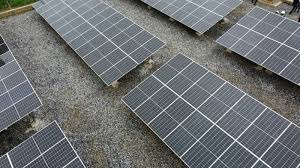
The News Agency of Nigeria (NAN) reports that government had announced in March 2025 plans to phase out the importation of solar panels to promote local manufacturing, citing a spending of over N200 billion on imports.
“We must also be realistic: banning solar imports at this stage would be counterproductive, especially given Nigeria’s limited local manufacturing capacity.
“The focus should instead be on strengthening standards, improving quality control, and supporting local industry development over time.
“With the right policies, investments, and public awareness, we can change our narrative and lead by example across Africa,” he said.
David said that the country continues to face significant energy poverty, a challenge that not only affects households and businesses but also impacts journalists and your ability to effectively carry out your work.
According to him, reliable energy is fundamental to information flow, storytelling, and accountability.
“Within this challenge lies a great opportunity. Nigeria has the potential to transit from a generator-dependent nation to a true SolarCountry.
“We have abundant renewable energy resources and the economics already favour clean energy. Why do we suffer when we have solution at hand?
The conversation around some cases of rooftop solar fire in Nigeria needs more clarity.
“Solar energy itself is not the problem. The real challenge lies in the growing number of unskilled technicians and the influx of poor-quality materials in the market.
“As demand rises the sector risks becoming an all-comers space often at the expense of safety, efficiency, and consumer trust,” he said.
David said that solar remained a life line for millions of Nigerians seeking reliable and clean energy.
He said that rather than discouraging adoption of solar, the moment presents a critical opportunity for institutions and training centres to step in building a pipeline of skilled professionals through structured training and certification programmes.
“As journalists, especially those reporting on power and energy, you play a critical role. You shape public discourse, influence policy direction, and hold stakeholders accountable.
“Your work is essential in ensuring that citizens and decision-makers alike are well-informed about the realities, challenges, and opportunities within Nigeria’s energy sector.
“This workshop is not just a learning opportunity it marks the beginning of a lasting relationship.
“We hope it will lead to the formation of a strong platform for journalists reporting on power arid energy, fostering collaboration knowledge sharing, and sustained engagement,” he said.
Mr Joseph Ibrahim, Campaign Director, Secure Energy Project said that solar power has transitioned from an alternative to a necessity for households and small businesses.
Ibrahim said that solar represents not just a clean energy solution, but a lifeline powering homes, supporting livelihoods, and enabling economic participation in ways the grid has not been able to deliver.
“In planning to ban the importation of solar panels in a bid to promote local manufacturing, we must ask ourselves a critical question: is Nigeria ready for such a transition at this moment?
“Globally, successful energy transitions have been gradual, carefully sequenced, and supported by strong industrial capacity.
“Countries that now lead in renewable energy manufacturing did not achieve this overnight, they relied on years of investment, policy stability, and continued access to global supply chains,” he said.
Ibrahim also said that in the midst of a global energy crisis, policies that restrict access to affordable energy technologies without adequate local capacity risk deepening energy poverty rather than solving it.
He said, ” this is why the #SolarPowerNigeria campaign was launched to ensure that Nigeria’s energy transition remains equitable, affordable, and sustainable.
“Our position is clear: we are not opposed to local manufacturing. On the contrary, we strongly support the vision of “Made-in-Nigeria,”he said.(NAN)
A.I
April 23, 2026
Tags: Michael David Ms Dorcas Nicanor