
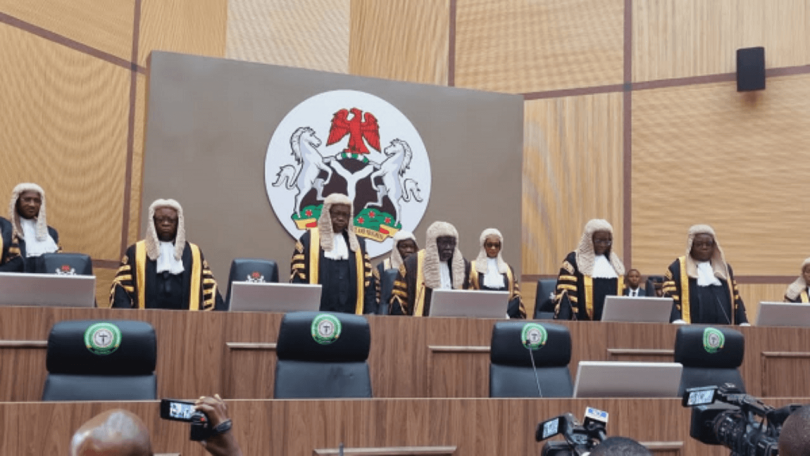
The Supreme Court on Wednesday reserved judgment in the leadership tussles within the Peoples Democratic Party (PDP) and the African Democratic Congress (ADC), raising fresh uncertainty over the stability of the opposition parties ahead of the 2027 general elections.
A five-member panel of the apex court, led by Justice Mohammed Garba, reserved judgment after hearing arguments from parties in separate appeals challenging lower court decisions.
PrimeTimes Nigeria understands that no date was fixed for the delivery of the judgment. The development comes amid tight timelines set by the Independent National Electoral Commission.
INEC has fixed May 10 for submission of party membership registers, while party primaries are scheduled between April 23 and May 30, 2026.
The commission also set January 16, 2027, for Presidential and National Assembly elections, and February 6, 2027, for governorship and state assembly polls.
With both parties embroiled in multiple litigations, their ability to organise congresses, primaries, and other activities has been significantly disrupted.
The situation has left aspirants in limbo, uncertain about their political future as the legal battles continue.
Within the PDP, the crisis has split the party into factions led by Tanimu Turaki and Abdulrahman Mohammed.
The Turaki-led faction, backed by Governor Seyi Makinde and Bala Mohammed, is seeking validation of the party’s November 2025 convention held in Ibadan.
Lower courts had nullified the convention over alleged procedural breaches, including claims that Sule Lamido was denied the opportunity to contest.
ADC Crisis Deepens With Multiple Factions
The ADC is also facing a deepening leadership crisis involving former Senate President David Mark.
The dispute arose after the handover of party leadership by Ralph Nwosu to a coalition group led by Mark, sidelining Nafiu Gombe.
The situation has since split the party into three factions, including one aligned with Dumebi Kachikwu.
The crises have resulted in multiple cases before the courts, raising concerns about the parties’ readiness for the 2027 elections.
Mark, through his counsel, argued that the dispute is an internal party matter and should not be subject to judicial interference.
However, opposing factions insisted that the courts have jurisdiction over the matter.
Following the conclusion of arguments, the apex court reserved judgment, with a date to be communicated to the parties.