
Health
A health advocate, Ms Aisha Yusuf, has urged Nigeria and other West African countries to strengthen affordable hepatitis diagnostics, digital disease surveillance and laboratory systems to eliminate viral hepatitis by 2030.
Yusuf, an emerging health advocate and Medical Laboratory Scientist, said the region’s greatest weakness in tackling hepatitis was the inability to identify infected persons early enough for treatment and prevention.
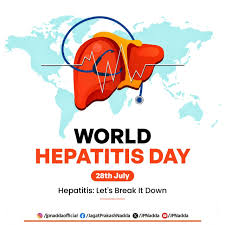
Speaking with the News Agency of Nigeria (NAN) on Tuesday in Abuja, on the World Hepatitis Day 2026, she described diagnostics and health data as the ”missing links” in West Africa’s hepatitis response.
According to her, over 80 to 90 per cent of people living with viral hepatitis in the region remain unaware of their status, making it difficult to interrupt transmission and prevent complications.
”When we focus entirely on hepatitis treatment without fixing diagnostics, we are treating an invisible enemy.
”The fundamental blind spot in West Africa is that over 80 to 90 per cent of people living with viral hepatitis do not know their status.
”Without accessible, low-cost screening at the primary healthcare level and unified digital registries to track positive cases, public health interventions end up reacting to late-stage liver complications rather than stopping transmission at the source.”
The medical laboratory technologist explained that the concentration of hepatitis testing services in tertiary hospitals had created significant barriers for millions of Nigerians, particularly those living in rural and underserved communities.
She said confirmatory viral load testing and Polymerase Chain Reaction (PCR) services remained largely unavailable at lower levels of healthcare, forcing many patients to travel long distances or pay unaffordable costs before receiving a diagnosis.
She warned that delayed diagnosis often meant patients sought medical attention only after developing severe liver disease.
”Limited testing turns viral hepatitis into a silent epidemic. Because baseline screening and confirmatory viral load testing are heavily concentrated in tertiary urban centres, rural and semi-urban populations face immense geographical and financial barriers.
”When out-of-pocket diagnostic costs rival a family’s monthly income, patients delay testing until severe symptoms present, at which point clinical management becomes exponentially more expensive and far less effective,” she added.
She also highlighted major weaknesses in hepatitis surveillance and disease reporting across the region.
According to her, dependence on paper-based laboratory registers and fragmented reporting systems continues to undermine accurate disease monitoring and public health planning.
She urged governments to integrate hepatitis screening into existing electronic disease surveillance systems and require both public and private laboratories to submit real-time electronic reports to national databases.
”The biggest gap in surveillance is a reliance on paper-based laboratory registers that create data silos.
”Laboratory records rarely interface with national public health databases in real time.
”Governments must integrate hepatitis screening into existing digital surveillance platforms and mandate real-time electronic reporting from both private and public laboratories to build an accurate national disease registry,” she emphasised.
Yusuf further emphasised the need to modernise laboratory services using digital technologies to improve patient follow-up and continuity of care.
She said mobile-based diagnostic reporting, automated text message notifications and cloud-based laboratory information systems could reduce delays in delivering test results while preventing patients from being lost after initial screening.
She also advocated expanding molecular diagnostic capacity by decentralising testing through existing multi-disease point-of-care platforms available within primary healthcare systems.
”Digital tools bridge the critical gap between screening and retention in care.
”Decentralising molecular diagnostics through existing multi-disease testing platforms can significantly improve turnaround time and linkage to treatment,” she said.
She added that achieving the World Health Organisation’s target of eliminating viral hepatitis by 2030 would require greater involvement of young healthcare professionals, researchers and innovators.
She said young professionals possessed the digital skills, community networks and innovative thinking needed to expand awareness campaigns, improve disease surveillance and support community-level screening initiatives.
”Young health professionals and innovators are the execution engine for the 2030 elimination target.
”We bring two distinct advantages; fluency in digital tools and proximity to frontline grassroots realities.
”Early-career practitioners are already driving micro-elimination campaigns, leveraging health technology for community-level screening and demystifying diagnostic data.
”When young professionals are given seats at policy design tables, advocacy moves from passive awareness campaigns to measurable, technology-enabled implementation,” she also said.
Yusuf called on governments across Africa to view investments in diagnostics, laboratory infrastructure and digital health systems as long-term health security investments capable of reducing healthcare costs and preventing avoidable deaths.
”Elimination is impossible without diagnostic equity. Investing in affordable diagnostic kits, decentralised laboratory networks and health data tracking is not merely an operational expense; it is a cost-saving health security investment,” she said.
She also urged Nigerians to take advantage of available hepatitis screening services, noting that early diagnosis remained the most effective defence against severe liver disease.
According to her, hepatitis is preventable and manageable, but early testing is your strongest defence. Know your status today because early detection saves lives.
NAN reports that according to WHO, hepatitis is an inflammation of the liver caused by several factors, including viral infections, alcohol use and certain medicines.
The agency warns that viral hepatitis is becoming a growing public health threat in Africa, where deaths from the disease are projected to exceed those from HIV/AIDS, malaria and tuberculosis if urgent action is not taken.
Of the five types of viral hepatitis, B and C account for the greatest burden of illness and deaths. Hepatitis B is preventable through vaccination and can be effectively managed, while hepatitis C is curable with appropriate treatment.
WHO estimates that more than 70 million people in Africa are living with chronic viral hepatitis, with at least 200,000 deaths recorded annually.
However, few people on the continent have access to hepatitis testing and treatment, resulting in many infections progressing undetected until advanced liver disease develops.
The global health body says expanding access to early diagnosis, treatment, vaccination, stronger surveillance systems and community awareness will be critical to achieving the goal of eliminating viral hepatitis as a public health threat by 2030.(NAN)
A.I
July 28, 2026
Tags: Ms Aisha Yusuf World Hepatitis Day