
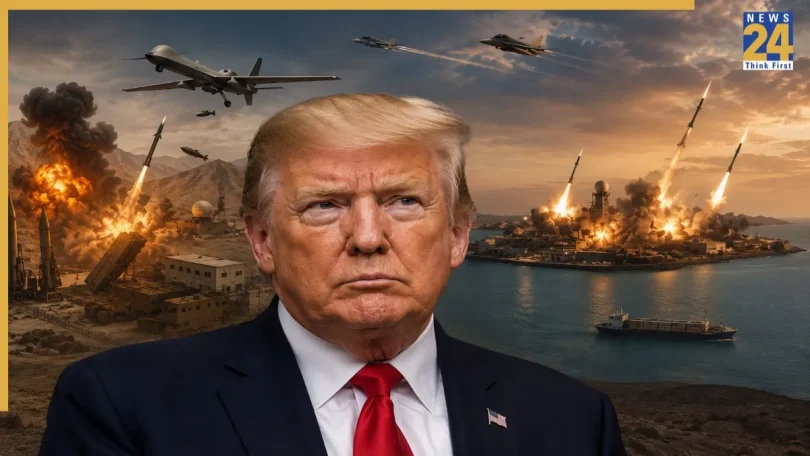
US President Donald Trump entered the conflict with Iran promising to force Tehran into accepting a nuclear deal on American terms. However, after months of military action and diplomatic efforts, experts believe the United States is still struggling to achieve its main objectives.
Despite repeated US airstrikes and heavy economic sanctions, Iran continues to maintain its ability to disrupt the Strait of Hormuz, one of the world’s most important oil shipping routes. Nearly one-fifth of global oil supplies pass through the narrow waterway, making it a critical point for international trade and energy security.
The US military says it has destroyed dozens of Iranian military targets, including missile sites, radar systems and small naval boats. However, Iran has continued launching missiles at US positions in the Gulf, while reports suggest commercial tanker traffic through the Strait has slowed because of security concerns.
Why is the Strait of Hormuz so important?
The Strait of Hormuz remains the biggest source of leverage for Iran. Even after suffering military losses, Tehran can still threaten global shipping and create uncertainty in oil markets.

Military experts argue that previous large-scale operations failed to fully secure the waterway, raising doubts about whether the current campaign can achieve better results. Analysts say airstrikes may damage military infrastructure but are unlikely to change Iran’s political decisions or regional strategy.
Can military action alone solve the crisis?
Several experts believe military success does not necessarily guarantee a strategic victory. While the US has successfully targeted Iranian military assets, Iran continues to demonstrate its ability to retaliate using missiles and drones.
Former US officials have warned that destroying military targets alone will not force Iran to change its behaviour. They argue that lasting peace would require political negotiations alongside military pressure.
What options does Trump have now?
Experts say both escalation and de-escalation carry serious risks. Increasing military operations could trigger wider attacks on US bases and Gulf energy infrastructure, pushing oil prices higher and hurting the global economy. On the other hand, returning to negotiations could be seen as a political setback after Trump rejected earlier diplomatic agreements.
Analysts believe the conflict may now enter a phase of “managed instability,” where limited military action and diplomatic contacts continue without reaching a permanent solution. For now, both the US and Iran appear locked in a confrontation that neither side can easily end.
First published on: Jul 10, 2026 06:39 AM IST
Get Breaking News First and Latest Updates from India and around the world on News24. Follow News24 on Facebook, Twitter.
End of Article
About the Author

Shivam Verma
Shivam Verma is a Chief-Sub-Editor at News24. A postgraduate diploma holder in Integrated Journalism from the Asian College of Journalism, Chennai, Shivam focuses on international affairs, diplomacy, defence, and politics. Beyond the newsroom, he is passionate about football, both playing and watching, and enjoys travelling to explore new places and cuisines.
Read MoreRelated Story


