
Health
THE World Health Organisation (WHO) has called for stronger collaboration to reduce drowning deaths across Africa ahead of World Drowning Prevention Day.
Dr Mohamed Janabi, WHO Regional Director for Africa, made the call in a statement on Friday to celebrate the day that would be observed on July 25.
According to him, the 2026 theme, “Unite to Turn the Tide,” highlights the need for governments, communities, and partners to work together to prevent avoidable drowning deaths.
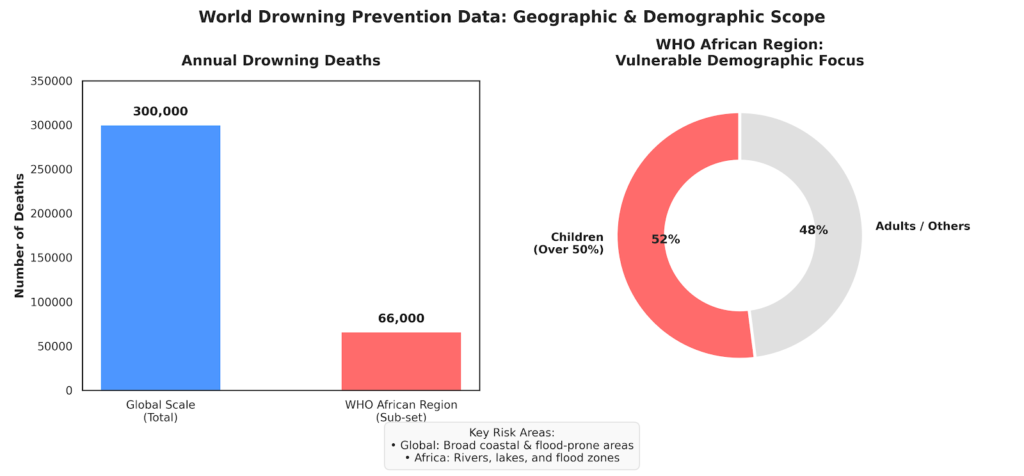
He noted that although the global drowning death rate has declined by 38 per cent since 2000, no fewer than 300,000 people still died from drowning every year worldwide.
Regrettably, the WHO African Region continued to record the world’s highest drowning mortality rate, with an estimated 66,000 people losing their lives annually.
Janabi said children accounted for more than half of all drowning deaths in the region, making them the most vulnerable group requiring urgent protection.
He stressed that behind the statistics were families devastated by loss, communities exposed to floods, and people whose livelihoods depend on rivers, lakes, and the sea.
The global decline contrasted sharply with the regional burden, highlighting the vulnerability of African communities:
The regional director maintained that drowning was preventable through sustained investment, stronger policies, and coordinated action across all sectors.
To achieve this, he urged governments, health authorities, education institutions, transport agencies, fisheries, maritime authorities, and disaster management bodies to strengthen partnerships.
Janabi said civil society organisations, academic institutions, local governments, communities, and the private sector also had critical roles in preventing drowning.
Highlighting ongoing progress in several African countries, the WHO chief noted that Tanzania and Uganda were advancing national leadership and strategies on drowning prevention.
He added that Ghana was promoting regional policy dialogue, while Mozambique and Nigeria were strengthening multisectoral coordination to reduce drowning risks.
Janabi reaffirmed WHO’s commitment to supporting member states by improving governance, strengthening data and surveillance systems, building capacity, and expanding evidence-based interventions.
He said that WHO would continue collaborating with governments, United Nations agencies, the Global Alliance for Drowning Prevention, and other partners to save lives.
The regional director urged governments to prioritise drowning prevention in national public health and development plans while investing in proven safety measures for vulnerable communities.
He also encouraged families to supervise children around water, promote swimming and water safety skills, use life jackets where appropriate, and adopt safe behaviours around rivers, lakes, and coastal waters, stressing that every drowning death was preventable through collective action.(NAN)
F.O
Tags: Drowning deaths WHO