
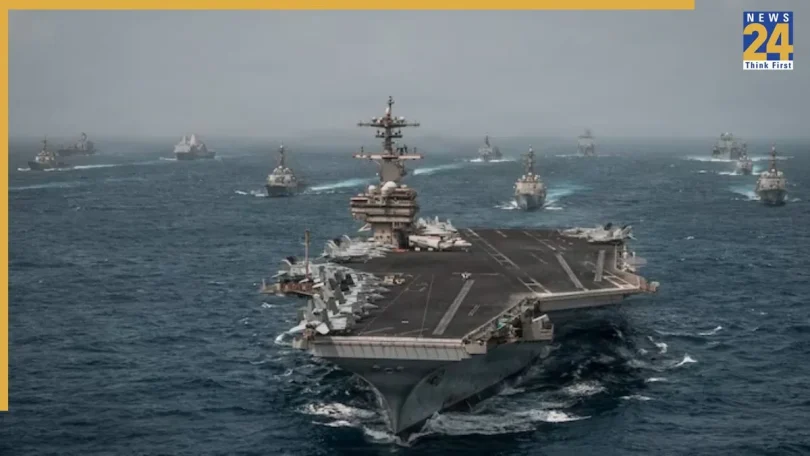
The conflict between the United States and Iran intensified on Wednesday as Washington carried out fresh airstrikes, reinstated its naval blockade on Iran and warned of further military action if Tehran refuses to resume negotiations.
US President Donald Trump confirmed that the blockade on Iranian ports, which had been lifted under a memorandum of understanding reached in June, had been reimposed. He said the US was prepared to widen its military campaign if Iran continued to reject talks.
Speaking to Fox News, Trump said, ‘I’ll save the energy targets for last, but ultimately we’ll hit energy targets.’ He added, ‘Next week comes the power plants, next week comes the bridges. Unless they get to the table and negotiate.’ Trump also claimed US officials had warned Iran that they ‘better make a deal.’
US launches fresh strikes, restores naval blockade
The US Central Command said its latest strikes targeted military infrastructure used by Iran to threaten commercial shipping in the Strait of Hormuz. The operation followed earlier attacks on missile launch sites, drone facilities, coastal defence systems and other military assets in southern Iran.
.@POTUS on Iran: “We’re going to hit them very hard tonight. We’re going to hit them very hard tomorrow night. We’re going to hit them very hard the night after… We’re going to knock out all their power plants, we’re going to knock out all their bridges, unless they get to the… pic.twitter.com/kPhMQKHqe9
— Rapid Response 47 (@RapidResponse47) July 14, 2026
The renewed naval blockade came into effect at 20:00 GMT, restricting vessels travelling to and from Iranian ports. Trump maintained that while Iranian ships would be affected, the Strait of Hormuz would remain open to international shipping. The US continues to maintain a strong military presence in the region, with more than 20 Navy warships and hundreds of aircraft deployed.

Iran responds with drone attacks
Iran retaliated by launching drone strikes on US positions at Jordan’s Azraq Air Base. The Islamic Revolutionary Guard Corps (IRGC) also targeted weapons storage sites in Bahrain and Kuwait.
Iranian media reported fresh US strikes near Bandar Abbas, Sirik and Qeshm Island, all located close to the Strait of Hormuz. Tehran also announced that it had once again closed the strategic waterway.
More footage emerges showing drone attacks carried out by the Islamic Revolution Guard Corps (IRGC) Navy against the US bases during the third wave of Operation Nasr 2.
Follow: https://t.co/Ydtgh5MJgy pic.twitter.com/TajQ0i78Uh
— PressTV Extra (@PresstvExtra) July 14, 2026
Deputy Foreign Minister Kazem Gharibabadi rejected US pressure, saying, ‘If the US thinks that by tightening its measures against us, its military actions and its economic blockade, we will return to negotiations, it is making a mistake.’
Fresh sanctions add to pressure
The US also announced new sanctions targeting a shipping network allegedly linked to Iranian oil exports. According to the Treasury Department, more than 200 individuals, companies and vessels have been sanctioned, with their US-based assets frozen and American businesses barred from dealing with them.

With military action, economic sanctions and tensions around the Strait of Hormuz all intensifying, hopes of preserving the June truce have weakened further, raising fresh concerns over stability in one of the world’s most vital energy corridors.
First published on: Jul 15, 2026 07:16 AM IST
Get Breaking News First and Latest Updates from India and around the world on News24. Follow News24 on Facebook, Twitter.
End of Article
Related Story


