
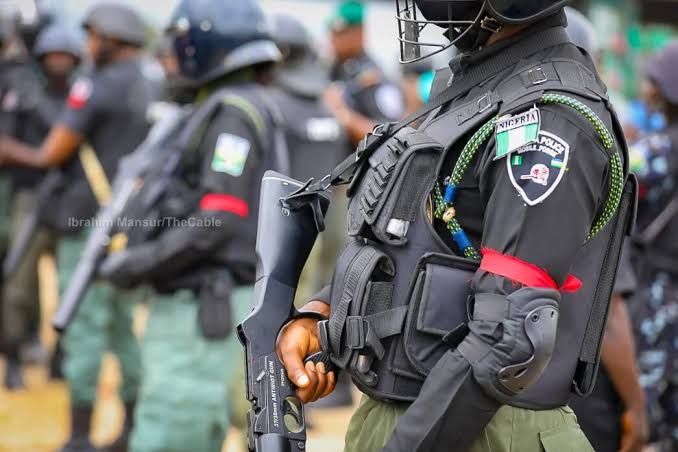
Senior government officials, governors, lawmakers, security experts and international stakeholders have renewed calls for the establishment of state police, arguing that Nigeria’s worsening security challenges require a decentralised policing system supported by strong legal safeguards, sustainable funding and community participation.
The consensus emerged on Thursday at the ARISE News and THISDAY Town Hall on State Police and National Security in Abuja, where participants said constitutional reforms alone would not guarantee success unless accompanied by effective institutional and financial frameworks.
The discussions came two days after President Bola Tinubu inaugurated the Presidential Working Group on the National Policing Bill to develop the legal framework for implementing state police following the Senate’s passage of the Constitution of the Federal Republic of Nigeria (Alteration) (State Police) Bill, 2026.
The proposed constitutional amendment seeks to move policing from the Exclusive Legislative List to the Concurrent Legislative List, allowing states to establish and operate their own police services under a nationally regulated framework.
Supporters believe decentralised policing will improve intelligence gathering, enhance response times and strengthen community-based security, while critics have warned that state police could be abused by governors without adequate constitutional safeguards.
Speaking during one of the panel sessions, the Chief of Defence Staff, Gen. Christopher Musa (retd.), said military operations remained important but could not, on their own, eliminate terrorism, banditry and other forms of violent crime.
According to him, successful counter-insurgency operations require a balance between military action and non-military approaches such as dialogue, intelligence gathering, reconciliation and community engagement.
“You must be able to bring the kinetic and the non kinetic working together,” he said.
Musa explained that members of the armed forces operate under established rules of engagement and receive extensive training to distinguish between terrorists, bandits and civilians during operations.
“Members of the armed forces have their rules of engagement. Once you are deployed out for an operation, you are allowed to take out the enemy using the standards.
“As professionals, we train our troops before deploying them. And once they are deployed, they are able to identify who is a bandit, who is a terrorist, and who is a civilian.”
He noted that counter-insurgency operations are particularly challenging because terrorists often blend into local communities.
“Asymmetric warfare is a very, very difficult operation, because the enemy is within, the enemy is just that individual that you think is your citizen, or is your brother, or is your uncle, that you are protecting, is the one that could help me.”
Drawing comparisons with Turkey’s decades-long conflict with the Kurdistan Workers’ Party (PKK), Musa said defeating insurgency requires patience and a comprehensive strategy.
“No country can shoot itself to peace. The kinetic aspect is based about 25, 30%. The non kinetic, which has to do with dialogue, discussion, understanding.”
He stressed that community cooperation remains vital because terrorists often rely on local populations for intelligence, logistics and concealment.
“These terrorists live within the communities.”
Also speaking, Senate Majority Leader Opeyemi Bamidele warned that creating state police without guaranteeing financial autonomy could undermine the entire initiative.
“If the state police is not well funded, it may as well be a highway to nowhere,” he said.
Bamidele explained that the constitutional amendment was designed to give states the option of establishing police services rather than compelling every state to do so immediately.
“It’s not every state that will immediately, after we finish amending this constitution, go to town to say, ‘We’re launching our state police.’ All we are trying to achieve with this constitutional amendment is to move this duty from the exclusive legislative list to the concurrent legislative list.”
He acknowledged widespread concerns that governors could misuse state police for political purposes, describing those fears as legitimate.
“The various concerns that have been expressed from different quarters are well-founded concerns that we cannot sweep under the carpet or pretend that they are not real.”
According to him, accountability must be guaranteed through both legislation and active public oversight.
“When it comes to issues of accountability, it’s something that will have to be addressed, both at the level of legislative intervention, through the law, as well as vigilance on the part of the Nigerian people.”