
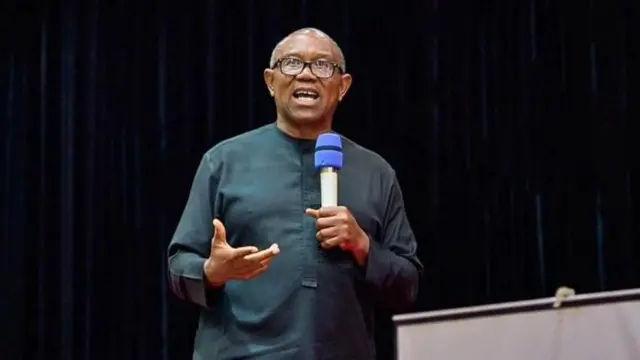
Former Anambra State governor Peter Obi has raised concern over his safety and alleged pressure on his businesses ahead of Nigeria’s 2027 election. The comments, made in an interview shared on Wednesday, matter because they come as opposition parties prepare for the next poll; voters should treat the claims as allegations for now and follow official updates from parties, security agencies and INEC.
Obi, who is being linked with the Nigeria Democratic Congress, said he could not say with certainty that he would be on the ballot in 2027. In an interview on With Chude, hosted by Chude Jideonwo, he said there was a possibility he might not be alive to contest.
The former governor claimed that parts of his business life were being frustrated and suggested that opposition figures were facing personal pressure. He also said he was not making a formal direct accusation, but alleged that the difficulties around him were targeted.
Obi cited an airport incident, claiming that officials locked his vehicle while other cars were left untouched. He also alleged that some people now avoid public association with him because they fear possible consequences.
The Presidency has dismissed Obi’s allegations, describing them as false and misleading. Bayo Onanuga, Special Adviser to President Bola Tinubu on Information and Strategy, said Obi’s claim of being targeted by the government was “unfounded and misleading”.
Onanuga also rejected Obi’s claim that he might not be alive for the 2027 election. He said the former governor was trying to attract sympathy and insisted that the Tinubu administration was focused on governance.
The Presidency further denied targeting Fidelity Bank, where Obi has declared an interest. Onanuga said the government was not after the institution and argued that Obi’s comments lacked evidence.
Obi’s comments have added another layer of tension to Nigeria’s early 2027 political race. Reuters reported in May that the opposition alliance formed to challenge President Tinubu had suffered setbacks after Peter Obi and Rabiu Kwankwaso left the ADC-led coalition and joined a separate group, the Nigeria Democratic Congress.
The political stakes are high because Obi remains one of the most visible opposition figures in Nigeria. He came third in the 2023 presidential election, behind President Bola Tinubu and Atiku Abubakar, and built a strong following among younger voters and urban supporters.
However, being a public political figure does not automatically place anyone on the ballot. Under Nigeria’s electoral process, parties must conduct their internal processes, submit candidates and comply with INEC rules before the final list of candidates is settled. INEC said in March that it was reviewing political party regulations ahead of the 2027 election to strengthen compliance, reduce disputes and improve transparency in party activities.
That means Obi’s final political route will depend on party decisions, legal requirements and the wider opposition landscape. His safety claims may also increase pressure on the authorities to reassure opposition figures, supporters and voters that political participation will be protected.
For now, the matter remains a political dispute with serious claims on one side and firm denial from the Presidency on the other. Readers should watch for any formal complaint, security response, party announcement or INEC update before drawing conclusions about Obi’s 2027 chances.