
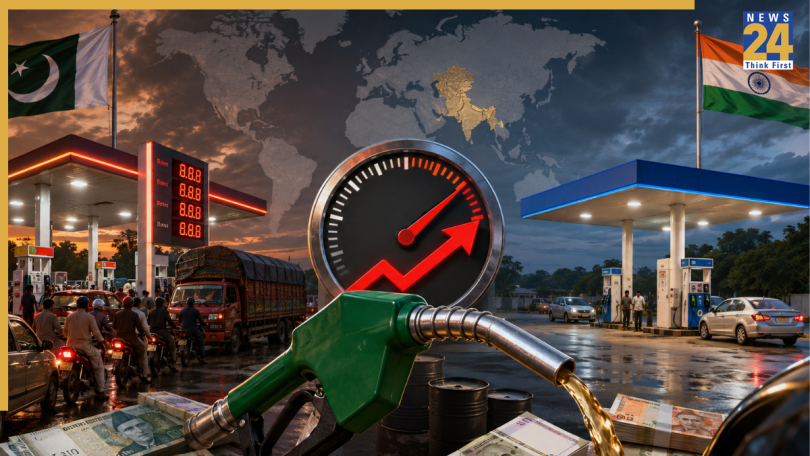
Petrol and diesel prices in Pakistan have increased sharply once again, with the government raising fuel rates by more than Rs 13 per litre. The latest revision comes as Islamabad continues its weekly fuel price review policy introduced after the Iran conflict began on February 28. While fuel prices in India have remained unchanged, the fresh hike has renewed interest in comparing petrol and diesel costs in both neighbouring countries. Here is a look at what changed, why prices have gone up, and how Pakistan’s fuel rates compare with India’s.
Why did Pakistan increase petrol and diesel prices?
Pakistan has increased the price of petrol by Rs 13.18 per litre and diesel by Rs 13.80 per litre, with the revised rates coming into effect immediately. After the latest hike, petrol now costs Rs 310.71 per litre, while diesel is priced at Rs 323.30 per litre in Pakistan.

The government has been reviewing fuel prices every Friday since the Iran conflict began on February 28, as fluctuations in global crude oil prices continue to affect the country’s import bill. Rising international oil prices over the past week reportedly prompted the latest increase.
How do Pakistan’s fuel prices compare with India?
Despite the latest revision, fuel prices in India have remained unchanged. In Delhi, petrol is currently priced at Rs 102.12 per litre, while diesel costs Rs 95.20 per litre. When converted into Pakistani currency, petrol in Delhi works out to around PKR 297.67 per litre, while diesel is approximately PKR 277.50 per litre. This means that, even after currency conversion, both petrol and diesel are currently more expensive in Pakistan than in India.

Diesel generally costs more to produce than petrol. However, in India, government policies and taxation make diesel cheaper than petrol at retail fuel stations.
How have fuel prices changed since the Iran conflict?
According to reports, before the Iran conflict, petrol in Pakistan was priced at around PKR 266 per litre, while diesel sold for about PKR 281 per litre.
Fuel prices have seen several revisions since then. On April 3, they reportedly reached record highs, with petrol touching PKR 458.41 per litre and diesel climbing to PKR 520.35 per litre before easing in subsequent reviews.
The latest increase reflects Pakistan’s continued efforts to adjust domestic fuel prices in line with international crude oil movements.
What taxes are included in Pakistan’s fuel prices?
A significant portion of Pakistan’s retail fuel price comes from taxes and levies imposed by the government.
Reports indicate that diesel currently carries around PKR 101 per litre in taxes, including customs duty, petroleum levy, climate support levy and inland freight equalisation charges.
Petrol attracts taxes of around PKR 95 per litre, which include petroleum levy, climate levy and customs duty.
The government also collects petroleum levies on kerosene and light diesel oil. Fuel taxes remain one of Pakistan’s major revenue sources, with monthly petrol and diesel sales estimated at 700,000 to 800,000 tonnes.
The latest price hike highlights Pakistan’s dependence on imported fuel and its vulnerability to global oil market fluctuations. With weekly reviews continuing, future fuel prices will largely depend on international crude oil trends and the government’s taxation policy.
First published on: Jul 11, 2026 03:53 PM IST
Get Breaking News First and Latest Updates from India and around the world on News24. Follow News24 on Facebook, Twitter.
End of Article
About the Author

Sagar Puri
Sagar Puri is a seasoned Senior Sub-Editor with over four years of newsroom experience, bringing sharp editorial judgment and an eye for detail to every story he handles. Over the years, he has worked across a diverse range of beats, including sports, education, news desk, entertainment, and lifestyle, giving him a well-rounded understanding of the digital news ecosystem.
Read MoreRelated Story


