
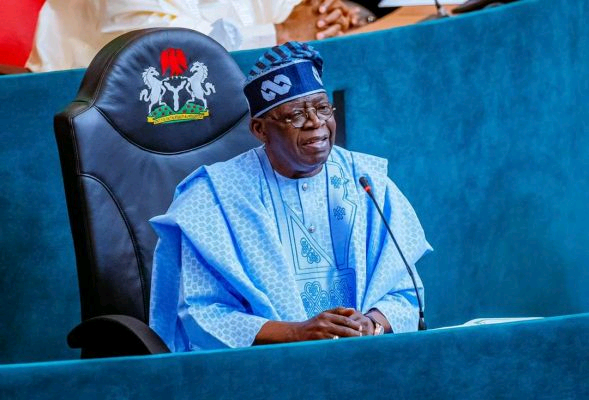
The Federal Government has renamed the Lagos-Calabar Coastal Highway after President Bola Tinubu, drawing criticism from an opposition support group which described the decision as an attempt to glorify a sitting president.
Minister of Works David Umahi announced that the 750-kilometre road would now be known as the President Bola Ahmed Tinubu Coastal Highway during a media briefing in Abuja.
Umahi said the Ministry of Works took the decision after consulting its permanent secretary, minister of state, directors and other senior officials.
According to the minister, the highway was named after Tinubu because the President developed the idea for the coastal road nearly three decades ago while serving as governor of Lagos State.
Umahi said Tinubu conceived the project about 27 years ago and now had the opportunity to turn the proposal into reality as President.
He described the road as one of Tinubu’s major infrastructure projects and said it would connect communities along Nigeria’s coastline.
However, the Atiku Is For The People movement, a political support group linked to former Vice-President Atiku Abubakar, criticised the decision.
In a statement published on its social media account, the group described the renaming as “indefensible” and an abuse of public office.
It accused the administration of using a national infrastructure project for political self-promotion, arguing that naming the highway after a serving president lowered the dignity of the presidency and created a poor precedent for public governance.
The group also argued that infrastructure financed with public funds should not be treated as the personal achievement of one political leader.
Its reaction adds a new political dimension to a project that has faced questions over its cost, timing, procurement process and priority since construction began.
Peter Obi, who contested the 2023 presidential election on the Labour Party platform, had earlier questioned the government’s decision to begin the coastal highway while many federal roads remained abandoned or unfinished.
Read related news:
Tinubu’s flagship programmes will support vulnerable Nigerians, says Doro
Atiku warns Tinubu over Peter Obi’s safety amid reported security concerns
Tinubu gives ICPC 30 days to name officials, banks in ₦1.3bn ghost agency scandal
Obi acknowledged that the highway could have economic benefits but said the government should review its cost and timing. He argued that limited public funds should first be directed towards completing existing roads that support trade, movement and public safety.
Former President Olusegun Obasanjo has also criticised the project, describing it as wasteful and questioning whether it should be treated as a priority during a period of economic hardship.
The government has repeatedly defended the highway, saying it will improve transport links, support tourism, open new economic corridors and encourage investment across coastal states.
Giving an update on construction, Umahi said work was progressing on several sections of the highway.
The first phase runs from Victoria Island to Eleko Village in Lagos State. The second section, from Eleko to the Lagos-Ogun boundary, is about 60 per cent complete and is expected to be substantially delivered by November.
Construction is also continuing in Ogun, Ondo, Akwa Ibom and Cross River states, according to the minister.
Umahi also announced that Tinubu had approved a 400-kilometre extension of the Fourth Legacy Highway, increasing the proposed length of the corridor to about 1,100 kilometres.
The President also approved the reconstruction of the Lagos-Ibadan Expressway with reinforced concrete pavement, the completion of the Ibi Bridge in Taraba State and the construction of the 5.76-kilometre Lau Bridge.
Other approvals include the dualisation of an additional 400 kilometres of the East-West Road.