
Andy Burnham has been confirmed as the new leader of the Labour Party, clearing the final political hurdle before he becomes the next Prime Minister of the United Kingdom.
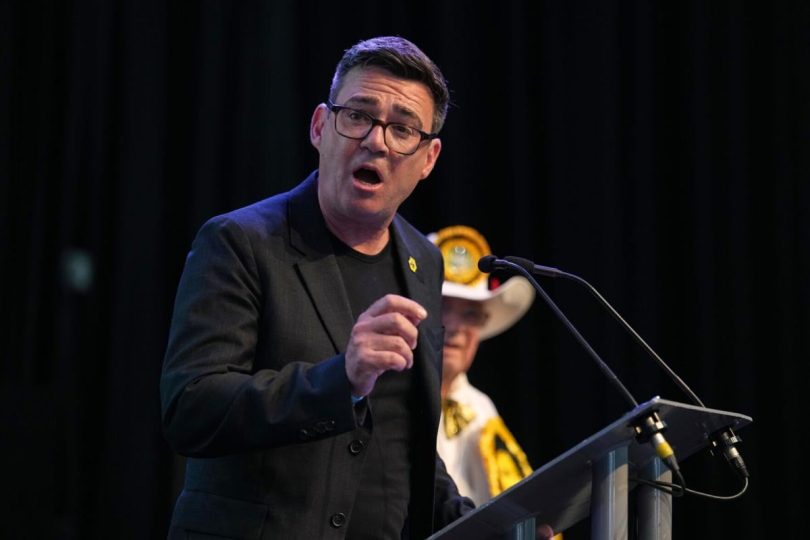
The former Greater Manchester mayor was formally declared Labour leader at a special party conference held at the Trades Union Congress headquarters in London on Friday.
Burnham is expected to enter Downing Street on Monday, July 20, after outgoing Prime Minister Keir Starmer visits Buckingham Palace to formally submit his resignation to King Charles III.
The King is then expected to invite Burnham to form a new government, completing the transfer of power.
Burnham secured overwhelming backing from Labour MPs, trade unions and local party branches. His commanding support left him as the only candidate in the race to succeed Starmer.
Shabana Mahmood, chair of Labour’s National Executive Committee and a leading candidate to become the next Chancellor, formally announced Burnham as the party’s new leader during the conference.
In his first speech as Labour leader, Burnham said Britain was demanding a different style of leadership. He called for “new politics” and warned Labour that it had been given its “last chance to change”.
He said the party must remain united and avoid internal battles as it prepares to confront Reform UK and other groups on the political right.
Burnham argued that Labour could not defeat its opponents while senior figures were fighting one another or pushing the party in different directions.
He promised to create what he described as “one Labour team”, with ministers, MPs, trade unions and party members working towards the same goals.
Although Burnham praised Starmer’s achievements, he also suggested that Labour must improve its performance in government.
He credited Starmer with rebuilding the party after its heavy 2019 general election defeat and leading it to a major victory in 2024. However, Burnham said Labour must now ask whether it had done enough for the people who elected it.
The incoming Prime Minister has yet to publish a full policy programme, but he identified housing, economic growth and the transfer of power away from Westminster as early priorities.
He said his government would support businesses while investing in more council and social housing.
Burnham also promised to give local communities greater control over decisions affecting their areas. He argued that too much authority was concentrated in Westminster, Whitehall and private companies.
The new Labour leader said power should be returned to towns, cities and regions across the country.
Burnham, who built his national reputation during his time as mayor of Greater Manchester, rejected claims that his political focus was limited to northern England.
He promised to govern for every part of the United Kingdom, including Scotland, Wales and Northern Ireland, while recognising the different identities and traditions found across the country.
Burnham also ruled out copying the policies of rival parties simply to win back voters.
He said Labour would not attempt to defeat Reform UK by adopting Reform’s approach. He also rejected moving closer to Conservative policies or trying to compete directly with the Green Party on its own political ground.
Instead, he promised to establish a clear Labour direction based on economic reform, stronger local government and public investment.
Burnham is expected to deliver his first speech as Prime Minister outside 10 Downing Street on Monday before beginning the process of appointing his Cabinet.
He said he had not yet made final decisions about all the senior figures who would serve in his government.
Among his first major challenges will be reassuring financial markets, presenting a credible economic programme and rebuilding public confidence in Labour.