
Featured, Oil & Gas
By Anthony Isibor
ADEGBITE Falade, Chairman of the Independent Petroleum Producers Group, IPPG, and Managing Director/CEO of Aradel Holdings Plc, has urged the Federal Government to move beyond increasing crude oil production and focus on creating value across the entire oil and gas chain, warning that Nigeria risks missing future global opportunities unless it strengthens infrastructure, investment and human caipacity.
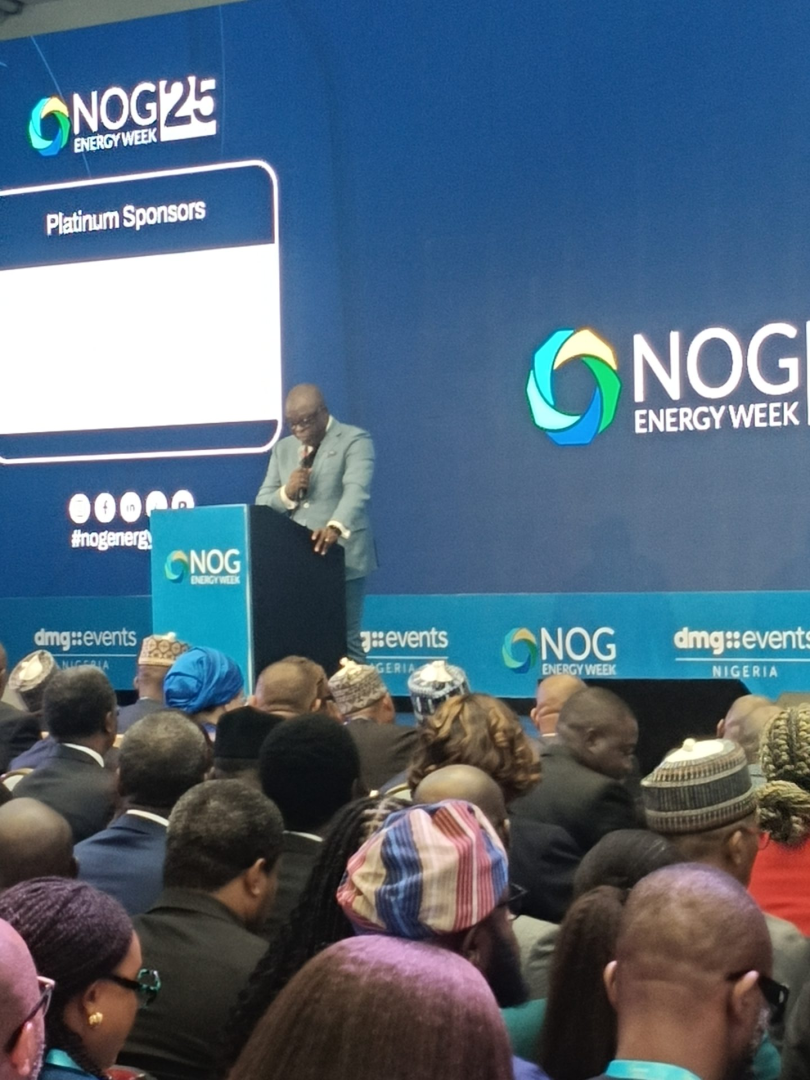
Delivering the industry keynote address at the 25th edition of the NOG Energy Week 2026 in Abuja, Falade said that recent reforms by the administration had restored investor confidence, attracted billions of dollars in fresh upstream investments and helped crude oil production recover to an average of about 1.7 million barrels per day.
He said the government had secured over $8 billion in major upstream final investment decisions, FIDs, since 2023, citing major transactions and projects that have renewed confidence in Nigeria’s petroleum industry.
Falade attributed the renewed momentum to collaboration among the Federal Government, regulators, operators and host communities.
“On behalf of indigenous producers, thank you for your unwavering commitment towards building a sustainable oil and gas industry,” he said, while commending President Bola Tinubu, the Ministers of State for Petroleum Resources, the leadership of the industry regulators and organisers of NOG Energy Week for sustaining the conference over the past 25 years.
He described the conference as one of the world’s leading energy industry platforms where policy, investment, technology and partnerships converge to shape the future of the sector.
Falade warned that global geopolitical disruptions had repeatedly exposed Nigeria’s inability to take advantage of favourable market conditions.
He cited the European energy crisis and recent tensions in the Middle East, noting that although oil prices rose significantly above Nigeria’s budget benchmark, inadequate production capacity and infrastructure prevented the country from fully benefiting.
“The next geopolitical shock is not a question of if; it is a question of when,” he said.
According to him, Nigeria should emulate the long-term investment approach adopted in developing strategic refining infrastructure by investing ahead of demand rather than reacting after opportunities emerge.
He stressed that infrastructure should be treated not merely as an economic asset but as a strategic national shield capable of protecting the country’s economic interests during global supply disruptions.
Speaking on the conference theme, Forging Africa’s Energy Future Through Global Collaboration, Falade said that Nigeria’s success should no longer be measured solely by crude oil production volumes.
Instead, he argued, the country must evaluate whether its hydrocarbon resources are translating into industrial development, employment generation and shared prosperity.
He questioned how additional oil production would create jobs for Nigerians, expand local manufacturing, increase domestic gas utilisation and develop sectors such as LPG, CNG, electricity generation, fertiliser, petrochemicals and other industries.
“A country that produces oil but cannot refine at scale is exposed. A country that produces gas but cannot process, transport and utilise it efficiently is constrained. A country that exports raw molecules but imports finished energy products has not yet fully captured the value of its resources,” he said.
Falade maintained that Nigeria’s ambition should extend beyond crude production to developing the entire energy value chain, while building local technical expertise in engineering, geoscience, welding, project management and other specialised skills.
Presenting the position of the IPPG, he outlined four priority areas requiring urgent action.
First, he called for a change in government’s approach from what he described as a “collector to catalyst,” urging the authorities to rationalise taxes, levies and statutory charges imposed on operators.
According to him, Nigeria’s oil and gas industry currently faces more than 270 different taxes, fees and levies from multiple agencies, creating a cumulative burden that undermines the fiscal incentives introduced under the Petroleum Industry Act.
He urged government agencies to harmonise the charges, eliminate duplication and improve transparency in their computation and application.
Second, Falade warned of an emerging manpower crisis, saying the retirement of experienced professionals and reduced investment by international oil companies had created a significant skills gap.
He said that operators should prioritise recruiting, training and retaining competent professionals, describing workforce development as a business necessity rather than corporate social responsibility.
Third, he called for stronger integration across the upstream, midstream and downstream segments, insisting that Nigeria’s future competitiveness would depend on efficiently linking production with processing, transportation and industrial utilisation.
Finally, he advocated a review of aspects of the Petroleum Industry Act to ensure the legislation remains responsive to industry realities and continues to support investment, competitiveness and sustainable sector growth.
W.U
July 7, 2026
Tags: Adegbite Falade