
Featured, Oil & Gas
By Anthony Isibor
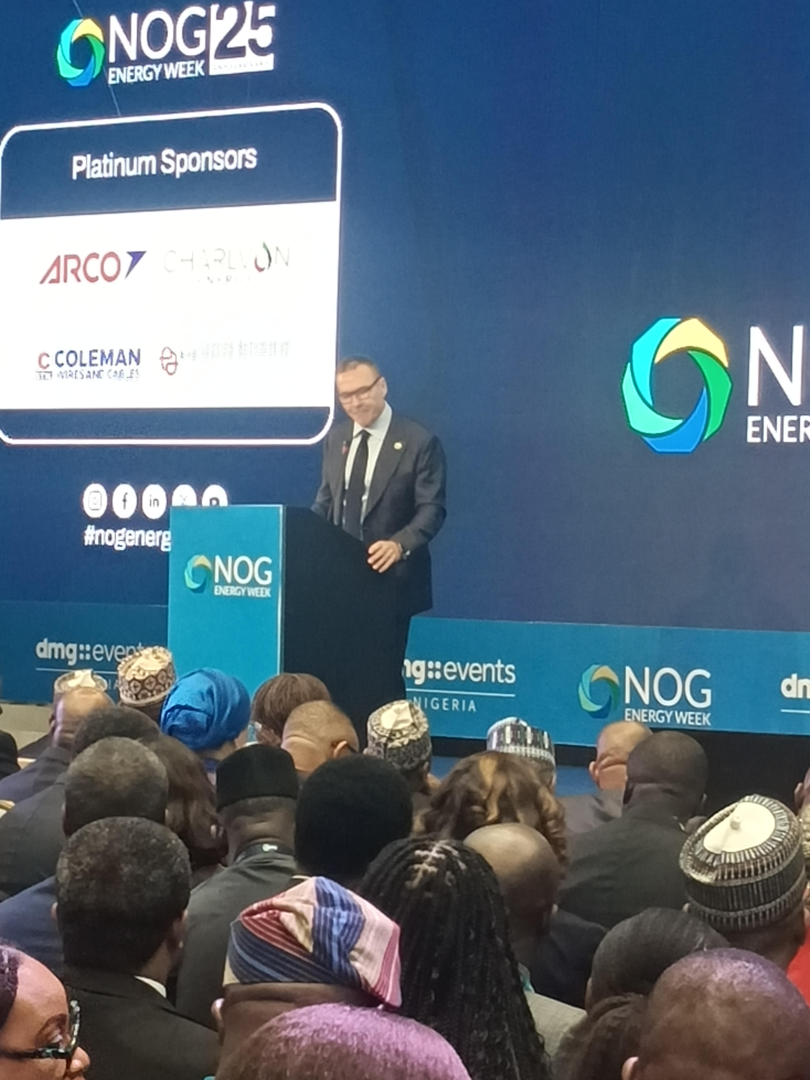
THE President of DMG Events, Christopher Hudson, says that the 25th edition of NOG Energy Week will serve as a platform for governments, investors and energy companies to forge partnerships needed to meet rising global energy demand and strengthen energy security.
Speaking at the opening of the conference on Monday, Hudson noted that the event comes at a time when growing populations, urbanisation, industrialisation and technological advancement are placing unprecedented pressure on global energy systems.
He thanked the Federal Government, the Nigerian Content Development and Monitoring Board, NCDMB, and industry stakeholders for supporting the event, while commending President Bola Tinubu’s administration for its commitment to positioning Nigeria as a reliable international energy partner and promoting in-country value creation.
Hudson also acknowledged the presence of the Ministers of State for Petroleum Resources (Oil and Gas), the Minister of State for Industry, visiting ministers from Zimbabwe, members of the diplomatic corps and other policymakers participating in the conference.
Explaining why the event is significant, he stated that global energy demand is projected to increase by about 30 per cent by 2040, with electricity consumption expected to rise sharply as artificial intelligence, digitalisation and data centres expand across the world.
According to him, the world’s population is expected to reach 9.8 billion by 2050, while more than 1.5 billion additional people will move into urban centres, increasing demand for electricity, transport, cooling and other energy-intensive services.
He said that emerging and developing economies would account for about 70 per cent of future electricity demand, adding that the number of air conditioners worldwide is projected to rise from 1.6 billion today to 5.6 billion by 2050.
Hudson noted that the global commercial aircraft fleet is expected to double from about 25,000 to 50,000 aircraft, while demand for natural gas and liquefied natural gas is projected to increase by about 50 per cent. Renewable energy, he added, is also expected to more than double by 2040.
Rejecting the notion that the world is moving away from conventional energy sources, Hudson said that every form of energy would be required to satisfy future demand.
“This is not an energy transition; this is energy addition to meet the world’s growing demands. Right now, all forms of energy are needed,” he said.
He said that meeting future energy requirements would require the construction of at least six million kilometres of new electricity transmission lines by 2050 and investments exceeding $7 trillion to strengthen electricity networks and support rapidly expanding data centres.
Hudson also highlighted the challenge of energy poverty, noting that about 750 million people worldwide still lack access to electricity, while more than 2.1 billion people do not have access to clean cooking fuels.
He said that expanding access to affordable and reliable energy would reduce pollution, improve public health and enhance the quality of life for millions of people.
Describing NOG Energy Week as more than a conference, Hudson said that it had become a strategic platform where policymakers and business leaders negotiate investments, build partnerships and develop solutions to strengthen energy resilience and protect economies from future geopolitical shocks.
He expressed optimism about the future of Nigeria’s energy industry, saying the partnerships forged during the conference would contribute to the country’s growth and support the evolution of the global energy sector over the coming decades.
W.U
July 7, 2026
Tags: Anthony Isibor Christopher Hudson President Bola Tinubu