
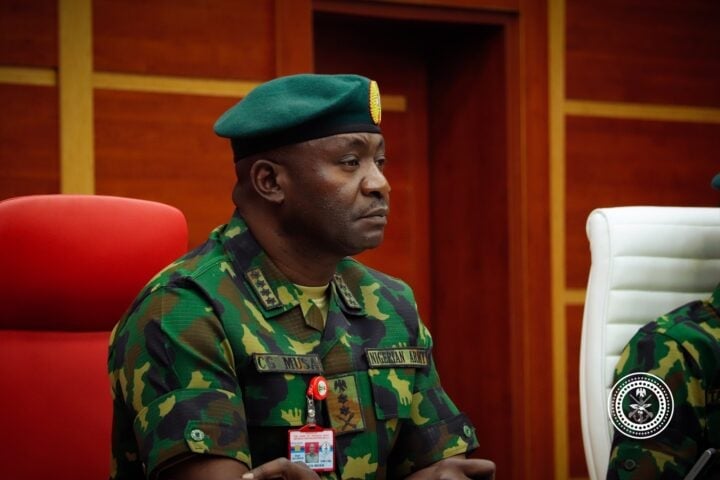
Nigerian soldiers now earn a minimum monthly salary of N100,000 (£54) up from N49,000(£25) Defence Minister Christopher Musa has said. The pay rise is part of a recent welfare review by the Federal Government, but the minister also admitted that the military still does not have enough funding to meet all its needs.
Musa made the disclosure during an interview with News Central on Wednesday, ahead of its broadcast on the NC Exclusive programme on Friday.
The former Chief of Defence Staff said the government had made progress on soldiers’ welfare, especially for rank-and-file personnel.
“When they started, a soldier was collecting N49,000 monthly. We tried so hard, now he’s collecting N100,000,” Musa said.
The increase means the minimum monthly pay has risen by about 104%, more than double the previous figure. It should therefore not be described as a 50% increase unless another official figure is being referred to.
Despite the salary increase, Musa said the defence budget remains inadequate.
Asked whether current military funding was enough, the minister replied: “It’s not enough.”
His comment is important because Nigeria’s military is facing pressure on several fronts, including terrorism, banditry, kidnapping and attacks on communities. Better pay can improve morale, but soldiers also need equipment, logistics, welfare support and operational funding.
The salary review also comes at a time when troop welfare has been under public scrutiny.
In recent months, there have been claims that some soldiers have had to buy parts of their own kit, including uniforms and boots. The Nigerian Army has denied such allegations, saying troops are supplied through official logistics systems.
Musa’s latest comment does not settle that wider debate. But it confirms that the government has reviewed soldiers’ pay and accepts that more funding is still needed.
The minister also addressed concerns about feeding in the military. He dismissed claims that soldiers were being poorly fed, saying one reported incident had created a wrong impression about the quality of food served to troops.
Musa also called for the death penalty for convicted kidnappers, saying tougher punishment is needed to reduce abductions across the country.
“I think we should do that. There must be deterrence. The laws are soft, and that’s why people take advantage,” he said.
His call comes amid growing public concern over kidnappings, including attacks on schools and communities. Armed groups in parts of Nigeria have used abductions to demand ransom payments or pressure the authorities.
The death penalty is already a sensitive legal and human rights issue. Any change in punishment for kidnapping would require proper legal backing, and courts would still have to determine guilt in each case before any sentence is imposed.
For soldiers and their families, the key issue is whether the new N100,000 minimum pay will be enough to match the cost of living and the risks of military service. For the public, the bigger question is whether improved welfare and better funding will help security forces respond more effectively to violent crime.
Readers should note that the N100,000 figure is the minister’s stated minimum monthly salary for soldiers after the welfare review. Further details on allowances, ranks, deductions and other benefits were not provided in the report.