
Featured, Oil & Gas
By Anthony Isibor
THE Nigerian Content Development and Monitoring Board, NCDMB, has unveiled a new phase of Nigeria’s local content development strategy aimed at expanding manufacturing capacity, strengthening industry collaboration and preparing indigenous companies to benefit from upcoming investments in the oil and gas sector.
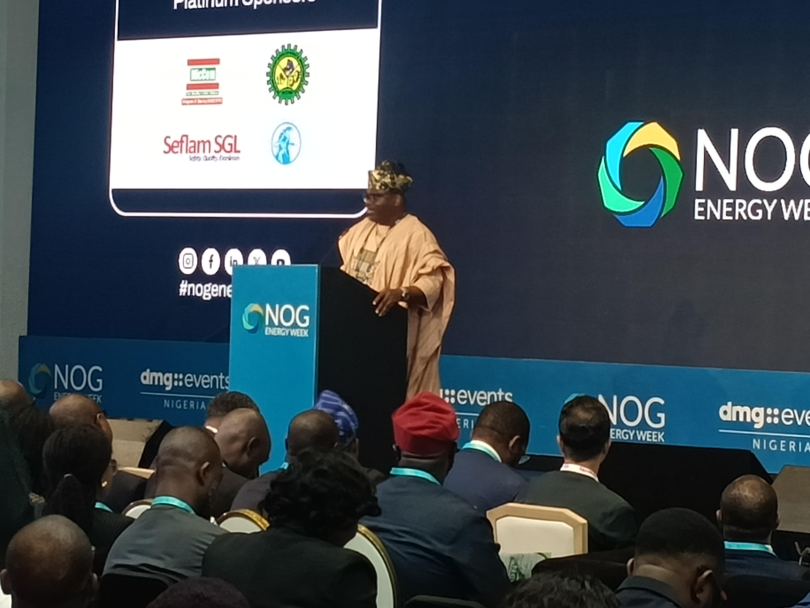
Speaking at the Nigerian Content Seminar at the 2026 Nigeria Oil and Gas Conference, NOG Energy Week, the Executive Secretary of NCDMB, Felix Omatsola Ogbe, represented by Abayomi Bamidele, said that the next phase of local content implementation would move beyond compliance and participation to focus on competence, capacity expansion and collaboration.
According to him, the implementation of the Nigerian Oil and Gas Industry Content Development Act has increased Nigerian content in the industry from less than 5 per cent to 61 per cent over the past 15 years.
“Our next phase of local content growth will go beyond participation and compliance. It must move us from capacity expansion. The level of final investment decisions we are seeing is massive and we must position Nigerian service providers to take advantage of those opportunities,” he said.
Bamidele noted that although Nigeria has the capacity to support a vibrant manufacturing ecosystem, many local manufacturers still operate below capacity because of limited market access, technology gaps and financing constraints.
To address the challenges, he said that the board, in collaboration with the Nigerian Upstream Petroleum Regulatory Commission, NUPRC, NNPC Limited and other industry stakeholders, had developed a harmonised contractor grading framework.
Under the new system, companies will be classified into five categories, replacing the different grading systems currently used by various industrial institutions. The framework is expected to support a joint industry capacity audit and simplify contractor certification.
He said that the initiative would eliminate duplication in certification processes, reduce the burden on companies and help ensure that manufacturers with genuine production capacity have direct access to contracts instead of operating through intermediaries.
The capacity audit, he added, would identify Nigerian companies capable of supporting major deepwater developments expected to enter execution, while also creating opportunities for smaller indigenous firms through the new classification structure.
Bamidele also announced measures introduced by the board over the past year to improve ease of doing business, including the publication of a Nigerian Content Equipment Certificate, NCEC application guide, new channels for reporting complaints and corruption, and shorter timelines for product certification.
He warned companies against paying unofficial fees for certifications, stressing that NCDMB services were free and urged stakeholders to report any demands for bribes through the board’s established channels.
On human capital development, he disclosed that about 20,000 trainees had registered under the board’s Project 100 Field Readiness Programme, with digital skills emerging as the most sought-after training area.
He invited operators and service companies with training facilities and active projects to partner with the board by providing on-the-job training opportunities for participants.
The board also introduced the Nigerian Content Trainers Certification Scheme to accredit institutions and trainers involved in delivering industry capacity-building programmes.
Bamidele said that progress had also been recorded on the Back-to-Creek Initiative launched last year to expand educational opportunities in oil-producing communities.
According to him, project sites have been identified, designs completed and a scholarship programme introduced with 500 students recently receiving educational support.
He further announced plans to launch the Nigerian Content Academy, which will train compliance officers and industry personnel on Nigerian content processes, certification requirements, statutory reporting and other regulatory obligations.
The academy, he said, would also strengthen the capacity of NCDMB staff to improve service delivery.
The board also unveiled an online Nigerian Content Development Fund compliance certificate to help companies meet their statutory one per cent contribution obligations and avoid regulatory sanctions.
Bamidele emphasised that sustained local content growth depends on increased project development across the oil and gas industry.
“No project, no local content. Manufacturing cannot thrive without demand and investments cannot be justified without projects. Every new field development, gas processing facility, pipeline project and energy infrastructure creates opportunities for Nigerian businesses, workers and manufacturers,” he said.
He called on industry operators to accelerate final investment decisions on approved projects to ensure that regulatory reforms translate into actual investments and wider economic benefits for Nigerians.
W.U
July 6, 2026
Tags: Felix Omatsola Ogbe Nigerian Content Development and Monitoring Board