
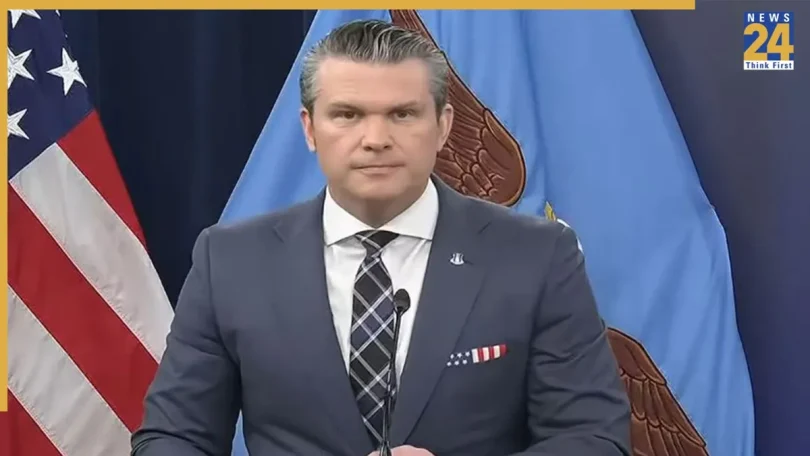
The cost of the United States’ military campaign against Iran has now exceeded USD 37.5 billion, according to US Defence Secretary Pete Hegseth. The updated figure marks an increase of nearly USD 8 billion compared with estimates released in May.
Speaking before the Senate Appropriations Committee on Tuesday, Hegseth said the latest estimate also includes expected military operations and maintenance expenses until 30 September.
“The estimate we have as of today is USD 37.5 billion,” Hegseth said. He urged lawmakers to approve an additional $87 billion for the Department of Defense. According to Hegseth, USD 67 billion of that amount would be used directly to support ongoing military operations across the Gulf region.
Hegseth Defends Additional Defence Spending
During the hearing, Hegseth argued that the extra funding was essential to maintain US military readiness and support troops deployed in the region.
“We live in a dangerous world,” Hegseth said. He added, “Without these funds, we face critical shortfalls that threaten our ability to simply pay our service members, rapidly replenish equipment and munitions, and sustain vital operations without disruption.”
Describing the request as a “generational investment”, Hegseth said it would strengthen the US military and help maintain its advantage over rival nations.
“Rest assured that every dollar appropriated to the Department of War will be focused on building the lethality of our joint force, and reinforcing peace through strength,” Hegseth said.
Military Costs Continue to Rise
The latest estimate is significantly higher than the Pentagon’s USD 29 billion assessment released in May. Earlier in the conflict, Pentagon officials had informed lawmakers that the first week of fighting alone had cost around USD 11.3 billion.
However, some Democratic lawmakers questioned whether the new estimate reflects the full financial impact of the conflict. According to sources familiar with the matter, the calculation may not include expenses such as repairing damaged US military bases.
Democrats Raise Concerns Over War Funding
Several Democratic senators criticised the administration’s request for additional military funding and warned against extending the conflict.
Senator Patty Murray said the situation was becoming increasingly dangerous. “My colleagues and I cannot and will not support rubber-stamping a request to bankroll this war and whatever other misadventures Trump wants to get us into next,” Murray said. “The American people want to see a quick and strategic end to this war, not $70 billion of their tax dollars sent to keep it going.”
Senator Kirsten Gillibrand also criticised the proposal, accusing the administration of seeking “unlimited money for bombs” while many Americans continue to struggle with higher living costs.
The hearing became tense when Democratic Senator Gary Peters criticised Hegseth and questioned the administration’s strategy. “You, sir, are the failure,” Peters said. “Not the men and women who are on that frontline. … If there’s a lack of a winning strategy, they’re in harm’s way, their leaders have failed them.”
Hegseth strongly rejected the criticism. “Shame on you and others who call this a quagmire and a failure, and then you want to turn around and say you support the warfighter. Either you do or you don’t.” He also accused Peters of suffering from “Trump derangement syndrome.”
White House Also Seeks Record Defence Budget
The emergency funding request comes shortly after the White House asked Congress to approve a record USD 1.5 trillion defence budget for the next financial year. The proposal has received a cautious response from lawmakers in both political parties.
US Launches More Strikes on Iran
Hours after the Senate hearing, the United States carried out another wave of airstrikes on Iranian targets, marking the 11th consecutive night of military action.
Iranian state media reported that air defence systems were activated over Tehran early on Wednesday. Explosions and interceptions were reported in the western, eastern and north-eastern parts of the capital. Fresh strikes were also reported near Bushehr, where one of Iran’s nuclear power plants is located.
Trump Signals More Military Action
US President Donald Trump said military operations against Iran were not yet over and suggested that Pickaxe Mountain, an underground nuclear complex near Natanz believed by Western intelligence agencies to be linked to uranium enrichment, could become a future target.
“If we left right now, it would take Iran 20, 25 years to rebuild,” Trump said. “We’re not finished at all… we’re not leaving right now.”
First published on: Jul 22, 2026 02:35 PM IST
Get Breaking News First and Latest Updates from India and around the world on News24. Follow News24 on Facebook, Twitter.
End of Article
Related Story


