
Oil & Gas
Anthony Isibor
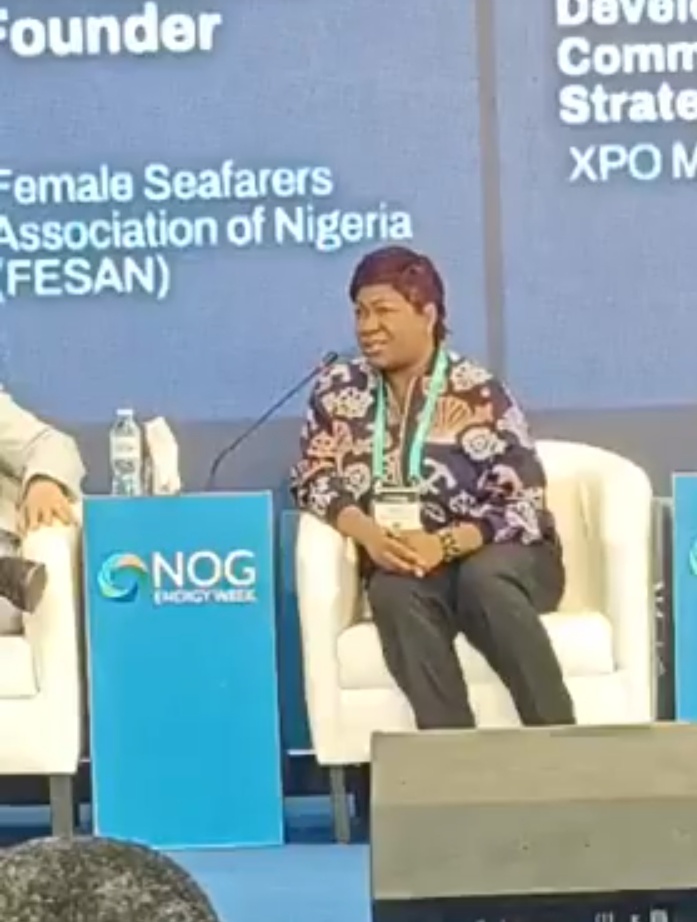
THE Female Seafarers Association of Nigeria, FESAN, has called for stronger collaboration between government, maritime institutions and vessel owners to guarantee practical sea-time training and eliminate discrimination against women in the industry.
Speaking at the strategic panel on “From Ownership to Competence – The Role of Maritime Training and Capacity Development” during NOG 2026, FESAN President and Founder, Koni Duniya, stated that classroom education alone cannot produce competent seafarers without access to practical onboard training.
She explained that international maritime training combines academic instruction with mandatory sea-time experience, noting that in countries such as the United Kingdom, prospective cadets are required to secure commitments for onboard training before being admitted into maritime schools.
According to her, Nigeria has training institutions, but lacks sufficient opportunities for practical sea-going experience.
“The industry, the training institutions and government need to work together so that every institution has an asset tied to it to ensure that practical training is taken care of,” she said.
Duniya revealed that women account for about 4 per cent of Nigeria’s seafaring workforce, compared with a global average of about 2 per cent, but said many qualified female professionals still struggle to secure employment.
She identified structural constraints, including limited accommodation onboard vessels, alongside cultural and behavioral barriers as major obstacles to women’s participation.
According to her, some recruiters openly reject female applicants, while others withdraw employment offers after discovering candidates are women.
She also highlighted workplace harassment and discrimination as persistent problems facing female seafarers.
Duniya urged vessel owners and operators to deliberately create inclusive workplace cultures and enforce policies that protect women from discrimination and harassment.
She argued that companies investing in maritime assets should also invest in training pipelines linked directly to those assets.
“If you own assets, you must get involved in training,” she said, describing backward integration between asset ownership and workforce development as the most sustainable pathway for building maritime competence in Nigeria.
A.I
July 10, 2026
Tags: Female Seafarers Association of Nigeria FESAN Koni Duniya