
Business
By Wealth Ufford

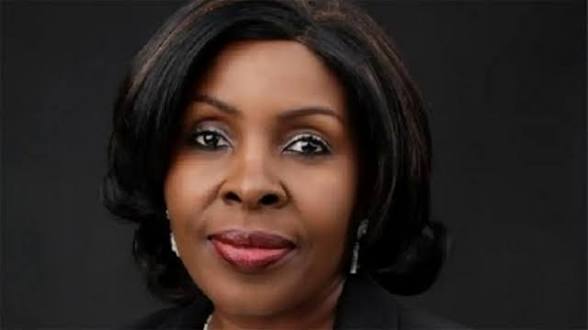
CHINYERE Almona, CEO of the Lagos Chamber of Commerce and Industry, LCCI, has urged businesses across Africa to treat sustainability as a long-term strategic investment rather than a compliance obligation, as climate change, evolving regulations and shifting investor expectations continue to reshape the global business environment.
Speaking at the FITC Sustainability and ESG Conference 3.0, Almona stated that climate change has moved beyond being a distant environmental concern and now poses immediate financial and operational risks for businesses.
According to Almona, extreme weather events, rising temperatures, supply chain disruptions and geopolitical tensions are increasingly affecting business operations, making environmental risks inseparable from financial risks.
She cited recent flooding in Lagos as an example of how climate-related events disrupt economic activities, damage infrastructure and increase operational costs for businesses.
“Environmental risk is now financial risk,” she said, noting that companies can no longer ignore the impact of climate change on their long-term viability.
Almona observed that global capital is increasingly flowing toward businesses with strong Environmental, Social and Governance (ESG) credentials, warning that companies that fail to strengthen their sustainability practices may face higher financing costs and reduced access to investment.
According to her, global sustainability regulations and disclosure requirements are also becoming more stringent, meaning African businesses must prepare to compete in an increasingly interconnected marketplace.
Despite contributing less than 4 per cent of global greenhouse gas emissions, Africa bears a disproportionate share of the impacts of climate change.
However, Almona described this challenge as an opportunity for the continent to position itself as a leader in renewable energy, climate-smart agriculture, sustainable infrastructure and green industrial development.
She said that Africa’s abundant solar resources, agricultural potential and critical minerals provide a strong foundation for participating in the global transition to a low-carbon economy.
Highlighting the business case for sustainability, Almona said that organisations that improve energy efficiency, reduce waste and optimise resource use can lower operating costs while enhancing profitability.
She added that businesses with credible ESG strategies are better positioned to attract investment, strengthen stakeholder trust, improve their reputation and remain competitive in the long term.
She further encouraged organisations to move beyond viewing sustainability as a compliance exercise by embedding it into corporate strategy, measuring environmental performance and investing in green technologies.
Almona also advocated stronger partnerships among governments, businesses, investors and civil society to accelerate Africa’s sustainability transition, stressing that collective action would be essential to overcoming environmental and infrastructure challenges.
Describing sustainability as the foundation of resilient businesses, she urged African organisations to embrace innovation, strengthen governance and seize opportunities created by the global green economy.
“Sustainability is not a cost. It is an investment and the foundation of long-term business success,” she said.
She concluded by stating that African businesses must work together to shape the continent’s sustainability agenda and position Africa as a leader, rather than merely a participant, in the global transition to a more sustainable economy.
W.U
July 9, 2026
Tags: Chinyere Almona