
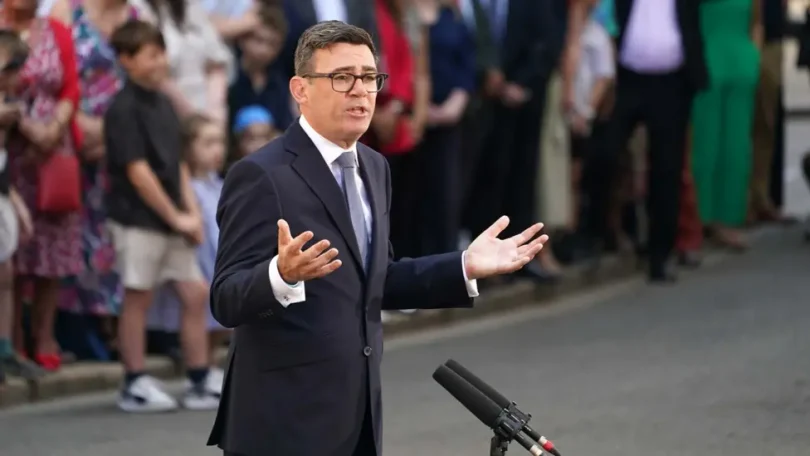
Prime Minister Andy Burnham has come under scrutiny after using a government jet for a 38-minute flight from Glasgow to Manchester before starting work at the new No 10 North office. The journey, made on Friday, 24 July, matters to taxpayers because government aircraft are publicly funded, although there is no evidence that the flight breached ministerial travel rules.
Burnham travelled on a government Airbus A321 after attending the opening ceremony of the Commonwealth Games in Glasgow.
Flight information reported by The Telegraph and other outlets showed that the aircraft left Glasgow at about 9.19am and landed at Manchester Airport at 9.57am, giving a flight time of 38 minutes.
The plane had previously carried the Prime Minister from London Stansted to Glasgow on Thursday. That flight lasted about 55 minutes, according to publicly available flight records cited in reports.
The decision has raised questions about whether a shorter or cheaper form of transport could have been used, particularly as Labour has supported policies aimed at reducing carbon emissions.
However, the Government said official aircraft may be used when required for security, scheduling or operational reasons.
A government spokesman said: “Government aircraft are used in line with the Ministerial Code and long-standing rules governing official travel.”
The spokesman added that ministers must be able to carry out their duties effectively while providing value for taxpayers. The Government did not immediately release the full cost of Burnham’s journey or explain whether other ministers and officials travelled on the aircraft.
Prime ministers do not travel under the same conditions as ordinary passengers. Their transport arrangements can involve security officers, government staff, secure communications and changes to schedules at short notice.
This means a commercial flight or train may not always meet the security and working requirements attached to the office. However, the use of an official jet for a short domestic journey can still lead to questions about cost, environmental impact and whether the decision offered value for money.
Burnham flew to Manchester to begin his first working day at No 10 North, a new branch of the Prime Minister’s operation based at Heron House in the city centre.
The Government described the office as a “situation room for growth” that will bring national ministers, regional mayors and business representatives together to make decisions about investment, jobs and local development. Burnham is expected to work from the Manchester office each week, with other ministers also using the site regularly.
During the opening, Burnham described the occasion as the “best day of my life”, before joking that the comment might cause trouble at home.
He defended the decision to establish the northern office, arguing that major government decisions should not be made only in Westminster.
Burnham said No 10 North would help move authority and resources to communities across the country, adding: “The days of Whitehall resisting devolution are over, for good.”
The Prime Minister also chaired the first meeting of the revived National Economic Council. The body, first established during the 2008 financial crisis, brings senior ministers and other leaders together to respond to economic problems.
Regional mayors will be invited to take part in meetings, depending on the issues being discussed. The Government says the arrangement will give local leaders a greater role in decisions affecting transport, housing, regeneration and business investment.
The government jet row comes during Burnham’s first week in office after he replaced Sir Keir Starmer as Prime Minister on 20 July.
Burnham, a former Greater Manchester mayor, returned to Parliament in June and became Labour leader on 16 July. He has since appointed a new Labour cabinet and promised to move more political power away from London.
His Government has announced measures aimed at reducing the cost of living, including removing VAT from domestic electricity bills from 1 October.
A £2 cap on single bus fares in England is due to begin in January 2027, while a 20 per cent business-rates reduction for pubs, clubs and live music venues is planned for April 2027. PrimeTimes has reported separately on Burnham’s tax relief plan for pubs and the wider hospitality sector.
The aircraft controversy is unlikely on its own to define Burnham’s early government. However, it creates an early test of his promise to deliver a different style of leadership while ensuring that public money is spent carefully.
The Government may face further calls to disclose the flight’s confirmed cost, environmental impact and the reason an official jet was considered necessary for the journey.
Related PrimeTimes report: Burnham becomes UK Prime Minister with a 10-year plan for Britain