
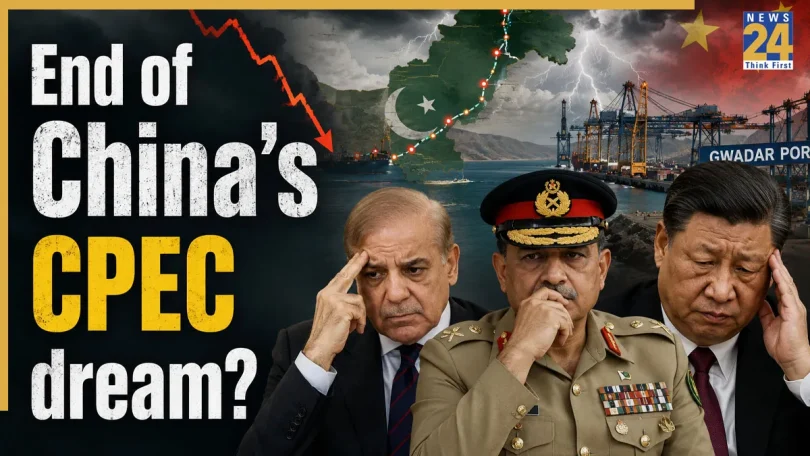
In a major blow to China, its ambitious China-Pakistan Economic Corridor (CPEC) project is faced with a significant challenge due to the escalating violence in Balochistan– Pakistan’s largest, yet least populated province, which recently declared its “independence” from Islamabad.
Security situation has worsened in the restive region, particularly after Baloch separatist groups recently declared the province as an independent nation, threatening China’s $65 billion CPEC project, which is a key component of Beijing’s larger Belt and Road Initiative (BRI).
Why Gwadar Port has become a burden than an asset for China?
While China has envisioned to develop Gwadar Port as a regional trade hub, would help reduce Beijing’s dependence on long-haul sea routes to Southeast Asia. The port is now more of a heavily guarded strategic location than a busy commercial hub as the project progress has been slowed down by limited cargo, poor connectivity, and persistent security challenges in the region.
According to experts, a mega project like CPEC requires a secure transportation network, a stable local environment, and uninterrupted logistics to succeed, but frequent attacks by Baloch ultras on highways, railways, security convoys, and Chinese citizens have forced Pakistan to devote more resources to protecting the project rather than expanding it.
Many believe that China may simply stop pumping more investments in the development of the project, and focus on the security of existing projects, instead of investing in new ones under CPEC.
Chinese mining project may halt production
Amid the growing security crisis in Balochistan, the Saindak Copper-Gold Project– Pakistan’s largest operated copper-gold mine run by China– sent a letter to Pakistan’s energy ministry on June 29 last month, warning that production may be halted if the security situation in the region does not improve.
In the letter, the Chinese company which operates the mine, expressed concern over the repeated attack and deteriorating law and order, which it said are affecting its supply chain of equipment and other materials.
The company warned that it would be difficult to continue operations within a month if the situation does not improve, describing the roadways in the region as “extremely dangerous.”
ALSO READ: Why Balochistan’s ‘independence’ declaration is bad news for China? Beijing could lose Rs 5777130000000 due to…, Gwadar Port could…
Why this is good news for India?
The Balochistan situation, devastating for Pakistan and harmful for China’s strategic investments, offers strategic implications for India as it forces Pakistan to divert it military and administrative resources to maintain security in the restive province.
Additionally, slow progress of development at the Gwadar Port, boosts India’s strategic position in the Arabian Sea and highlights the importance of regional connectivity projects.
Why Pakistan could lose Gwadar Port?
According to geopolitical experts, Pakistan, and by extension, China, could lose control and ownership of the strategic Gwadar Port if Balochistan is recognised as a sovereign nation by major countries and the United Nations.
Under international law, operation and ownership are strictly distinct matters, and since Gwadar Port is located in the Balochistan province, it would be the sole mandate of the Baluchi government whether to honour agreements signed between Pakistan and China, if the province is recognised as an independent sovereign country.
First published on: Jul 20, 2026 11:07 PM IST
Get Breaking News First and Latest Updates from India and around the world on News24. Follow News24 on Facebook, Twitter.
End of Article
Related Story


