
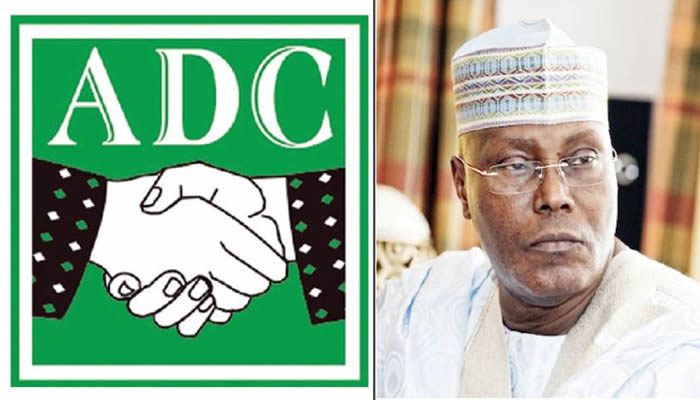
Former Vice-President Atiku Abubakar’s possible 2027 presidential bid faces fresh uncertainty after the Court of Appeal in Abuja upheld an order stopping the Independent National Electoral Commission from recognising congresses organised by the Senator David Mark-led leadership of the African Democratic Congress. The ruling matters because candidates and party officers produced through the disputed process could face legal challenges unless the Supreme Court overturns the judgment.
The Court of Appeal delivered the split decision on Monday, with two judges supporting the earlier Federal High Court ruling and one judge disagreeing. According to the report, the majority held that the Mark-led caretaker leadership lacked the authority to appoint committees to conduct state congresses while elected state executives remained in office.
Justice Okon Abang, who delivered the lead judgment, said the appellate court found no reason to overturn the restraining order issued by the Federal High Court in Abuja on April 29.
The court also upheld an order preventing the Mark-led national executives from interfering with the tenure and responsibilities of the ADC’s elected state executive committees. It ruled that elected state officials, rather than the party’s national caretaker leadership, had responsibility for conducting state congresses.
Justice Donatus Okorowo joined Justice Abang in the majority decision. Justice Abba Mohammed, who headed the three-member panel, dissented.
In his minority judgment, Justice Mohammed said the disagreement was an internal party matter that the courts should not decide. He argued that the Federal High Court should not have accepted jurisdiction over the case.
A matter is described as “non-justiciable” when a court considers it unsuitable for judicial determination, often because it falls within the internal affairs of an organisation. However, the majority ruled that the courts could intervene because the case involved alleged breaches of constitutional and legal provisions.
The judgment does not automatically disqualify Atiku or any other possible presidential candidate. However, it may create uncertainty over any candidacies, party positions or decisions produced through congresses and a national convention organised by the Mark-led faction.
The report states that the ruling could affect candidates who emerged from the faction’s national congress ahead of the 2027 general election.
Much will depend on the precise orders contained in the judgment, whether the disputed convention directly produced any presidential candidate and what the Supreme Court decides if the ADC files a further appeal.
The Court of Appeal reportedly held that the congresses and national convention organised by the Mark-led leadership were invalid because they took place while an earlier court order remained in force. It dismissed the ADC’s appeal and awarded costs of N10 million against the party.
The case was brought by a group of ADC state officials who said they acted for themselves and other state chairmen and executive committees.
They challenged the caretaker leadership’s decision to appoint committees to conduct state congresses. The plaintiffs argued that only duly elected party structures had the authority to organise those congresses under the ADC constitution.
The Federal High Court had ruled that the existing four-year tenure of the party’s state working and executive committees remained valid until properly constituted congresses and a national convention were held.
Justice Joyce Abdulmalik also ruled that neither Nigeria’s 1999 Constitution nor the ADC constitution gave the caretaker National Working Committee the power to appoint state congress committees.
The lower court said judges generally avoid interfering in political parties’ internal disputes. However, it held that courts could act where a case raised allegations of breaches of the Constitution or other laws.
The Court of Appeal said constitutional complaints removed the protection normally given to internal party affairs. Justice Abang said judicial intervention could become necessary once a complaint was based on an alleged constitutional violation.
After the judgment, ADC National Welfare Secretary Nkem Ukandu said the party would take the dispute to the Supreme Court.
The Supreme Court’s eventual decision will determine whether the Mark-led leadership can rely on the disputed congresses and convention. Until then, claims that Atiku or other aspirants have been finally barred would be premature, but the judgment leaves the ADC facing a serious legal and organisational problem before the 2027 elections.