
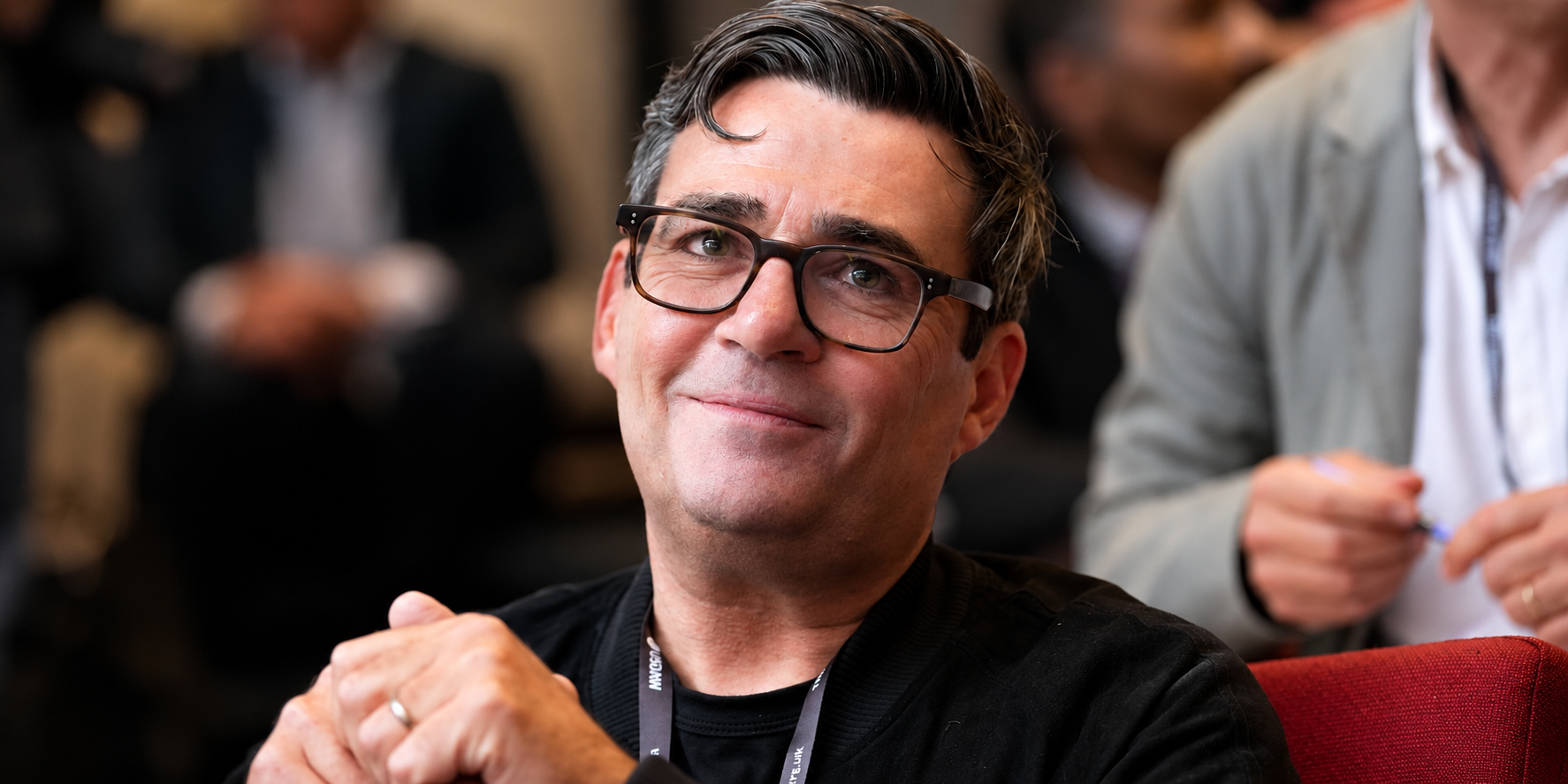
The likely next Labour leader is expected to split his time between Downing Street, Greater Manchester and his Makerfield constituency as he promises to shift power away from Westminster.
Andy Burnham is expected to work from Manchester at least one day a week if he becomes prime minister, as part of a plan to present his government as less centred on Westminster.
The MP for Makerfield, who could succeed Sir Keir Starmer as early as July 17, is expected to divide his working week between No 10, his family home in Greater Manchester and a new government office in Manchester known as “No 10 North”.
According to The Telegraph, a source close to Mr Burnham said he would try to spend at least one day a week working from the Manchester office, although the arrangement would depend on his official diary.
The plan would mark a break with recent political tradition. If Mr Burnham does become prime minister and chooses not to live permanently in Downing Street, he would be the first premier in about 50 years not to make No 10 his main home.
Mr Burnham is expected to remain at his family home in Golborne, on the outskirts of Wigan, at weekends. He is also expected to keep up constituency work in Makerfield, travelling there on Fridays for casework and surgeries with local residents.
Read related news: Burnham victory fuels labour leadership debate
UK Labour crisis: PM Starmer offers Burnham top job to drop leadership ambition
UK Labour crisis: PM Starmer offers Burnham top job to drop leadership ambition
The arrangement is likely to be presented by his supporters as a practical symbol of his political message: that power should move out of London and closer to towns, cities and regions across the country.
Mr Burnham used his first major speech after becoming MP for Makerfield to criticise the way Britain is governed from Westminster. He described the system as “broken” and argued for a more devolved approach to decision-making.
He said the economy had failed ordinary people for decades and claimed that growth could no longer be directed only from the top of government.
“It is time for Whitehall to accept that growth cannot be ordered from the top down,” he said. “Instead, it can only be nurtured from the bottom up.”
The proposed No 10 North office would be central to that approach. Mr Burnham said the Manchester base would become the “nerve centre of a rewired Britain” and would help move power and resources to the regions.
“No 10 North will be the nerve centre for a rewired Britain,” he said. “It will be the conduit through which we redistribute power and resources across the UK.”
The proposal is likely to appeal to voters who believe Westminster politics has become remote from everyday concerns outside London. It also allows Mr Burnham to build on the political identity he developed as Mayor of Greater Manchester, where he often spoke about transport, housing, regional growth and public services from a northern perspective.
However, the plan could also raise questions about how a prime minister would balance the demands of national security, Cabinet government, international diplomacy and constituency duties while spending regular time away from Downing Street.
A source close to Mr Burnham reportedly said the Manchester working pattern would be flexible. Some weeks could involve several days in Manchester, while other weeks would require more time in London.
The issue of where prime ministers live has long carried political and personal significance. Harold Wilson lived in No 10 during his first term between 1964 and 1970, but later moved to Lord North Street in Westminster during his second spell in office. His wife, Mary, was said to have disliked the exposure that came with living in Downing Street.
Later prime ministers also changed the practical use of the Downing Street flats. Sir Tony Blair moved his family into the larger flat above No 11 after entering office in 1997. Gordon Brown, David Cameron, Theresa May, Boris Johnson and Sir Keir Starmer also used the No 11 flat rather than the smaller accommodation above No 10.
Mr Burnham is widely expected to become prime minister on July 17 if no other Labour leadership candidate enters the contest. Al Carns, the former Armed Forces minister, has not ruled out standing, but would need the public support of 80 Labour MPs to get on the ballot.
For Mr Burnham, the Manchester plan is more than a question of where he works. It is an attempt to turn a political slogan about regional power into a visible habit of government.
Whether voters see it as a serious shift in power or a symbolic gesture will depend on what No 10 North is allowed to do, how often Mr Burnham uses it, and whether communities outside London feel any real change in their daily lives.