
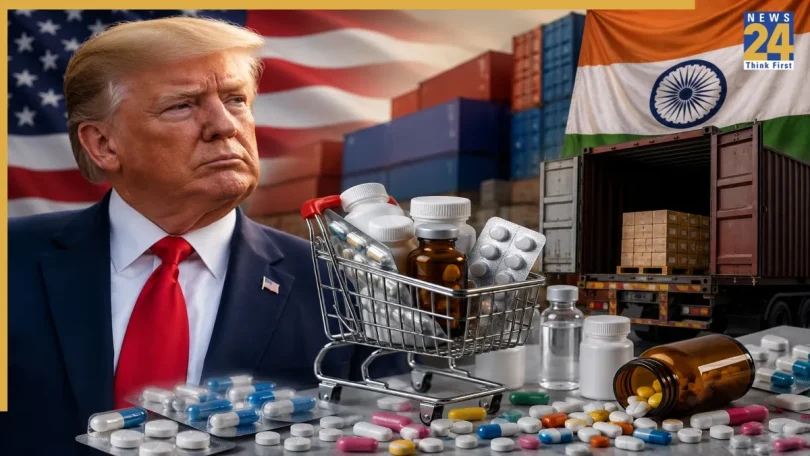
The United States has unveiled a new tariff policy on imported generic medicines, a move that could have significant implications for India’s pharmaceutical industry. US President Donald Trump said the measure is designed to encourage drug manufacturers to shift production to the United States.
India, which is the largest supplier of generic medicines to the US, could be among the countries most affected if the policy is implemented as announced.
US to Introduce Phased Tariffs on Generic Medicines
In a post on his Truth Social platform, Donald Trump announced that the new tariff plan will begin on August 1, 2026. Under the proposal, imported generic medicines will continue to face zero tariffs for the first two years. However, the duty will increase sharply after that.
According to the plan:
- Zero per cent tariff for the first two years
- 100 per cent tariff during the third year
- 200 per cent tariff from the fourth year onwards
The phased approach is intended to give pharmaceutical companies time to establish manufacturing facilities in the United States.
Trump Says Policy Aims to Boost Domestic Manufacturing
Explaining the decision, Trump said the new tariff structure is intended to bring pharmaceutical production back to the US.
“Effective August 1st, 2026, all generic drugs being brought into the United States will continue to have a tariff of zero percent for two years, after which the tariff will be raised to 100 per cent for one year, and 200 per cent thereafter.”
He further added, “This is done in order to RESHORE generic pharmaceutical production into America, with a penalty to those companies that decide not to build plants and equipment within the stated period of time given to them.”
Trump also said the policy is meant to safeguard Americans while confirming there would be no changes to existing rules for patented medicines. “The Policy on Patented, Branded, or Innovative Drugs, which has been so successful, will remain as is.”
Why India Could Be Affected
India is widely recognised as the “pharmacy of the world” because of its large-scale production of affordable generic medicines supplied to countries worldwide.
Indian manufacturers account for nearly 40 per cent of generic medicines used in the US by volume. According to a Global Trade Research Initiative (GTRI) report, India exported USD 9.7 billion worth of pharmaceutical products to the United States during the 2024-25 financial year. These exports represented around 38 per cent of India’s total global pharmaceutical exports, valued at USD 25.8 billion.
Impact on Indian Drug Companies Remains Unclear
While the tariff plan has been announced, its full impact on Indian pharmaceutical companies is yet to become clear.
India and the US signed a trade agreement in February that included a provision stating India would “receive negotiated outcomes with respect to generic pharmaceuticals and ingredients.” However, Trump’s earlier proposals for higher tariffs had already raised concerns over the future of low-cost medicine exports from India.
Generic Medicines Play Key Role in US Healthcare
Generic medicines produced by Indian companies are widely used in the US to treat conditions such as hypertension, diabetes, depression, cancer, infectious diseases and mental health disorders.
According to a report by the Financial Post, around 65% of birth control pill prescriptions in the US during 2024 were supplied by just two India-based pharmaceutical companies, Glenmark Pharmaceuticals Ltd. and Lupin Ltd.
Industry experts are now expected to closely monitor how the proposed tariff policy develops and whether further negotiations between India and the US could influence its final implementation.
First published on: Jul 22, 2026 08:31 AM IST
Get Breaking News First and Latest Updates from India and around the world on News24. Follow News24 on Facebook, Twitter.
End of Article
Related Story


