
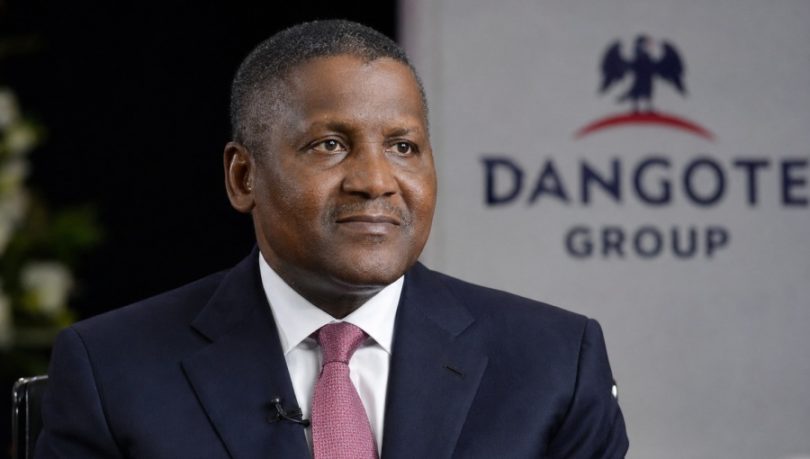
Aliko Dangote’s influence goes beyond wealth. It comes from the place his businesses occupy in Nigeria’s economy and everyday life.
His cement product helps build homes, roads, schools, offices and bridges. His food companies reach households. His fertiliser supports farming, while his trucks connect factories, markets and construction sites. His refinery has also placed him at the centre of Nigeria’s fuel and energy debate.
This is what sets Dangote apart from many powerful Nigerians. His relevance is not mainly political, cultural or digital; it is industrial. Through production, supply chains and large-scale investment, he affects jobs, prices, trade, public policy and Nigeria’s push for economic self-reliance.
PrimeTimes estimates his weighted influence score at 92.0/100, positioning him among Nigeria’s top public figures whose soft power has helped shape the country’s culture, global image and creative economy.
This scorecard is an editorial estimate based on seven indicators: current power and institutional control, reach and visibility, impact, soft power, relevance to 2026, generational influence, and national and international recognition.
Aliko Dangote is the founder, president and chief executive of Dangote Group, one of Africa’s largest industrial groups.
According to Dangote Group, the company has a presence in 17 African countries and is a market leader in cement on the continent. The group also says Dangote Cement is the largest listed company in West Africa and the first Nigerian company to join the Forbes Global 2000 Companies list.
His business interests cover cement, sugar, salt, fertiliser, oil refining and other sectors. Over the years, Dangote has moved from trading into manufacturing and large-scale industrial production.
His most watched project today is the Dangote Petroleum Refinery in Lekki, Lagos. The refinery has the capacity to process 650,000 barrels of crude oil per day, making it one of the most important private industrial projects in Africa. In June 2026, its chief executive said the refinery had a large surplus of jet fuel and could supply global markets.
That makes Dangote highly relevant to Nigeria’s economy going into 2026.
Dangote Group is widely regarded as one of Nigeria’s largest private-sector employers of labour. Its operations support thousands of direct and indirect jobs across manufacturing, logistics, construction, agriculture, energy and distribution.
This is where Dangote’s influence becomes human. Factories need workers. Trucks need drivers. Depots need handlers. Distributors support families. Contractors and suppliers depend on steady industrial activity. Construction projects linked to cement support artisans, builders and traders.
His industrial network therefore feeds into the wider economy and touches people far beyond the boardroom.
His relevance also extends to philanthropy. Through the Aliko Dangote Foundation, he has supported work in health, nutrition, education and economic empowerment. The foundation has also worked with major partners, including the Bill & Melinda Gates Foundation, on public health programmes such as polio eradication and routine immunisation efforts in Nigeria.
This adds another layer to his profile. He is not only known for building companies; he is also linked to social investment, especially in areas that affect vulnerable communities.
Dangote’s influence is powerful, but it is not unlimited. Large industrial groups often raise questions about competition, pricing, market dominance, government support and whether smaller businesses can compete fairly.
There are also concerns about the social and environmental effects of major industrial projects. Around the Lekki industrial corridor, some communities have raised issues linked to displacement, livelihoods and environmental pressure.
These concerns do not cancel his achievements, but they show why industrial power must be examined with balance. A business that touches national life must also face public scrutiny.
There is also concentration risk. When one private group becomes central to cement, refining, fertiliser and other supply chains, Nigeria gains capacity, but it also becomes exposed to the decisions and performance of one dominant player.
That is why Dangote’s influence is both important and complex.
Even so, he deserves to be ranked among Nigeria’s most influential personalities because his work has changed the country’s economic imagination. He has shown that a Nigerian company can build at continental scale, compete in heavy industry and shape markets beyond one sector.