
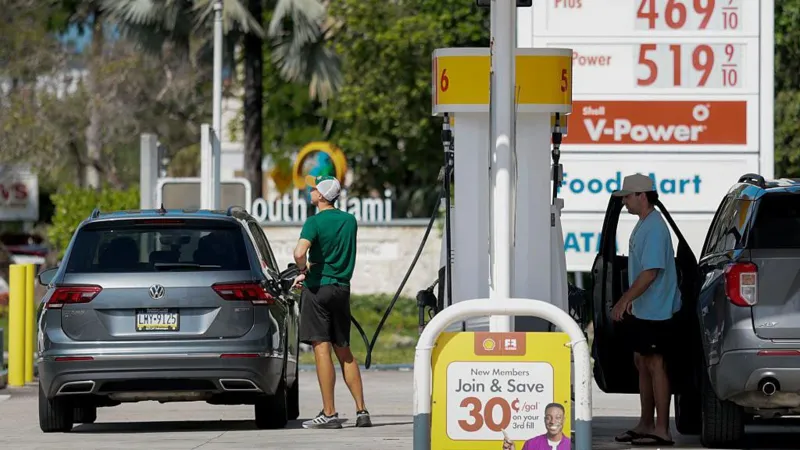
“When this conflict is over… you will see oil drop to where it was before,” he told reporters in the White House. The president pointed to a trip to Iowa in early 2026, saying he saw petrol selling for $1.85 per gallon, adding that “we will be back at those levels very soon”.
Higher inflation also poses a challenge for Kevin Warsh, the new governor of the Fed, ahead of his first interest rate decision in charge of the central bank next week.
When inflation is significantly above the Fed’s target rate, the central bank’s board of governors typically moves to raise interest rates. This in turn pushes up borrowing costs and restricts the flow of money in the economy, limiting further price hikes and bringing inflation under control.
In the run up to Warsh’s appointment, Trump repeatedly called on his predecessor, Jerome Powell, and the central bank to cut interest rates.
Economists expect rates to remain at their current level, between 3.5% and 3.75%, next month, but warned further evidence of inflation persisting could force the Fed into an increase.
Stephen Brown, chief North America economist at Capital Economics, said May’s rise alone was “not large enough to prove any ammo” to those on the Fed’s rate-setting committee who want to push interest rates up.
But Isaac Stell, investment manager at asset manager Wealth Club, said an interest rate hike is “the most logical conclusion from today’s data combined with last week’s blow-out jobs numbers”.