
Environment
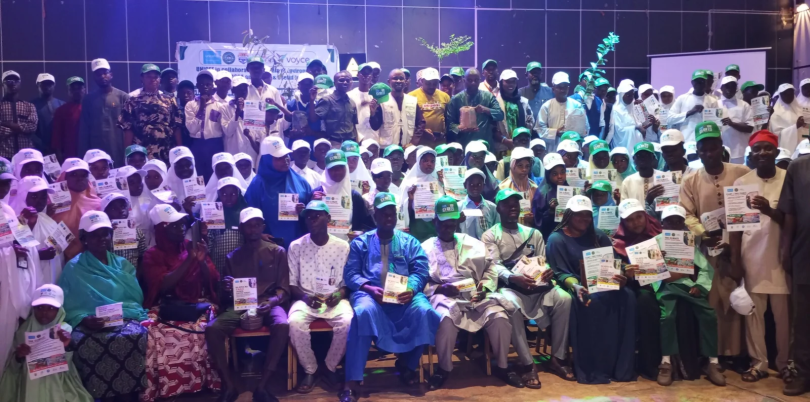
THE UNICEF in collaboration with the Young and Useful Generation Initiative (YUGI), has mobilised 225 students as climate anchors to champion local action on climate change in Sokoto State.
The News Agency of Nigeria (NAN) reports that students were equipped with skills to mobilise peers and implement grassroots climate resilience projects in their schools and communities.
Speaking at the two-day event on Thursday, YUGI Executive Director Mr Edayi Edison said the initiative aims to establish 1,000 secondary school climate change associations that will plant and nurture at least 10, 000 trees.
Edison highlighted the dangers of climate change driven by human activity and shifting weather patterns, including reduced agricultural output, drying water sources, and deforestation.
He said about 150 teachers and CSOs members were also engaged on the platform designed to advance climate action through evidence-based advocacy, capacity building, and innovative solutions.
He called for stronger collaboration among individuals and groups to raise climate awareness and build resilience across Sokoto communities.
According to him, three students were selected from 75 schools as anchors in the first phase of the programme adding that the initiative will be expanded to tertiary institutions, as well as other secondary and primary schools.
He stressed the critical need for concerted efforts to address the widespread and detrimental impact of environmental degradation on ecosystems, public health, and the economy.

In his remarks, UNICEF’s Water, Sanitation and Hygiene (WASH) Specialist, Dr Eteng Ebri-Ibor, called for timely provision of sufficient seedlings for tree-planting noting that UNICEF earmarked 10,000 pieces for Sokoto State.
Ebri-Ibor harped on adequate provision of seedlings in recognition of the rising challenges of climate change, desertification, and deforestation facing the state.
He explained that the project was part of the ” UNICEF’s Green Rising Campaign Initiative” and urged the government to strengthen penalties against indiscriminate tree felling, describing the current sanctions as insufficient to deter offenders.
According to him, stricter enforcement measures would encourage residents to replace felled trees and promote environmental sustainability.
He encouraged the young anchors to use the knowledge they gained and share it with colleagues to restore green environments through tree planting and nurturing.
In his presentation, Prof. Musa Shamaki discussed modalities for handling tree seedlings from planting to growth, waste management techniques, and the “rethink, refuse, reuse, reduce and recycle” model for plastics to ensure a sustainable environment.
Shamaki used graphic illustrations to explain the effects of urbanisation, infrastructural development, building construction, and farmland clearance on deforestation.
He emphasised the need for collective effort from stakeholders, government, the private sector, and multilateral organisations.
Dr Olalekan Oderinde, a resource person also urged students to adhere to stipulated guidelines on tree planting and other environmental sustainability initiatives, along with climate change mitigation and adaptation strategies.
The event featured the inauguration of students as green ambassadors, a question and answer session, and practical discussions on challenges, solutions, and levels of commitment to the initiative. (NAN)
Tags: UNICEF