
Politics
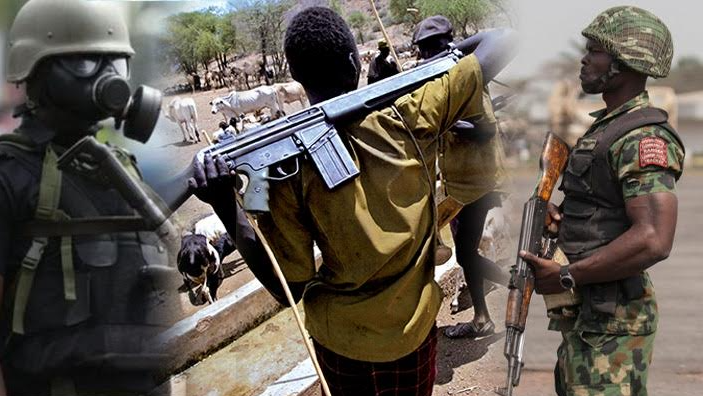
WITH several months before Nigeria’s crucial 2027 general elections, more citizens are expressing concern over the increasing threats of insecurity and what some of them call “electoral manipulation by the government and the weakening of democratic institutions…” in the country
A week after The Patriots urged Nigeria’s Federal Government to “treat insecurity as a national protection, governance and economic survival crisis deserving the setting up of a special committee…,” another group, the “Concerned Citizens,” has expressed a similar sentiment, saying: “Nigeria stands at a dangerous crossroads where rising insecurity, an alarming level of electoral manipulation by government, and the weakening of democratic institutions are converging into a national crisis that threatens the country’s survival.”
In its statement on the “State of the Nation,” the group, including renowned academics, senior lawyers, civil society activists and former government officials, said “Nigeria faces a grave threat to its foundational constitutional principle of separation of powers. Checks and balances between the branches of government have been imperilled. The legislative branch has been placed under near-total control of the executive branch. The judiciary appears to have lost both its independence and its integrity.” and “There are no checks on the powers of the executive who now govern as they please without accountability or respect for the people’s concerns,” the group said in its statement dated 8 June 2026.
It added: “Institutions have been compromised, weakened, and subordinated to the interests of the executive arm of government. This erosion of institutional independence has fuelled public distrust to its highest level in our history, creating a crisis of political exclusion and impunity that is pushing violent extremism, organized crime, and communal conflict to a tipping point.”
“To reverse this trajectory,” the group said, “Nigeria must urgently recommit to democratic accountability, judicial independence, and institutional reforms that strengthen the rule of law. The electoral processes must be transparent, credible, and insulated from executive interference.”
It noted that “The crisis in Nigeria cannot be separated from the broader instability engulfing the Sahel region. The spread of terrorism, arms trafficking, unconstitutional changes of government, and porous borders across countries such as Mali, Burkina Faso, and Niger continue to intensify insecurity in Nigeria and the wider Lake Chad Basin,” adding: “The collapse of regional cooperation and democratic governance in parts of the Sahel further emboldens armed groups, weakens state authority, and undermines civilian protection across West Africa.”
The group recommends that “Regional security cooperation between Nigeria and Sahelian states should be revitalized by establishing strong bilateral and multilateral platforms for intelligence sharing, border governance, and community-based peace building initiatives.”
According to the statement: “Equally important is investing in youth employment, education, social protection, and local conflict resolution mechanisms to address the root causes of radicalization and insecurity.”
The group further recommends that “Government should, as a matter of urgency, recognise that insecurity in the Sahel fuels the Nigerian crisis and that rapprochement between AES (Alliance of Sahel States) and ECOWAS is an important element in Nigeria’s national interest.”
Other recommendations by the group are:
* The Nigerian Government should immediately appoint a high-level Special Envoy for the Sahel to begin the urgent task of rebuilding trust between Nigeria, the AES and ECOWAS, while revamping regional mechanisms for peace and security.
* Civil society organisations should actively sensitize citizens and strengthen public demand for accountability. Nigerians must be bold and courageous in protecting civic rights and resisting the current climate of restricting civic space.
* A call on the Private Sector as critical stakeholders in the nation-state agenda to continue to support and demand accountability in governance and the promotion of the rule of law as the basic premise of economic progress and nation building.
* Professional bodies and associations must rise to the challenge of building a broad national consensus to oppose tyranny and ensure maintenance of checks and balances in governance and the protection of the rule of law.
* A call on traditional leaders and members of the clergy to rise to the full weight of their moral and civic authority to promote peaceful co-existence, solidarity, and inter-faith dialogue to arrest the current slide to criminality and civil disorder.
* Given the clear and consistent indications of the lack of neutrality and competence of INEC, professional bodies such as the Nigerian Bar Association, Unions, and other civic groups must set up a mechanism of engaging the electoral body to ensure that the 2027 elections are free, fair and credible, and
* The Judiciary must address the perception of its complicity in stalling democratic processes. It must remain independent and uphold the rule of law. As a matter of urgency, the Nigerian Bar Association must call its members to order for professional conduct and strengthen its monitoring of the judiciary; it must stay alert and patriotic and ensure political actors play by the rules. The National Judicial Council must set up a framework for holding judges accountable for decisions they take in the context of the electoral process.
Members of the group include Prof Ibrahim Gambari, Nigeria’s former Foreign Minister, UN envoy to Sudan and recently the Chief of Staff to late President Muhammadu Buhari, former chairman of the Independent Electoral Commission (INEC), Prof Attahiru Jega, and Prof Jibril Ibrahim, an academic and fellow of the Centre for Democracy and Development (CDD).
The other members are Husseini Abdu, Amb. Fatima Balla, Usman Bugaje, Yahaya Hashim, Prof. Mohammed Kuna, Senior Advocate of Nigeria, Abubakar Balarabe Mahmoud, and Kabiru Yusuf.
The Patriots are led by Chief Emeka Anyaoku, Commonwealth Secretary General (1990-2000).
A.I
June 10, 2026
Tags: Abubakar Balarabe Mahmoud Amb. Fatima Balla Chief Emeka Anyaoku Husseini Abdu INEC Prof. Mohammed Kuna Usman Bugaje Yahaya Hashim