
The elections if June 12, 1993, were the first held since the 1983 military coup d’état which ended the Second Nigerian Republic.
For many Nigerians, June 12 is not just a date. It is a wound, a memory, a symbol of hope, sacrifice, and the unfinished struggle for justice.
On June 12, 1993, Nigerians rose above ethnic, religious, and regional divisions to participate in what is widely regarded as the freest and fairest election in the nation’s history.
Across the country, people voted not as Christians or Muslims, not as Northerners or Southerners, but as Nigerians yearning for a better future.
For me, June 12 carries a deeply personal meaning. It was the first election in which I voted. Like millions of others, I stood in line believing that my vote would count and that Nigeria was finally taking a decisive step towards genuine democracy.
The clear winner of that historic election was Moshood Kashimawo Olawale Abiola, fondly known as MKO Abiola. His victory represented the collective hopes of a nation desperate for unity, prosperity, and democratic governance.
But those hopes were cruelly shattered.
The military government in collaboration with some people in power today, annulled the election, disregarding the will of the Nigerian people.
What followed was years of political turmoil, protests, arrests, repression, and national anguish. Nigerians who demanded that the mandate be restored paid a heavy price. Some lost their freedom. Others lost their lives.
MKO Abiola himself paid the ultimate price. Determined to reclaim the mandate freely given to him by Nigerians, he endured years of detention. He never occupied the office to which the people elected him. Instead, he died in custody in 1998 under circumstances that remain a painful chapter in Nigeria’s political history.
Since then, many questions remain unanswered.
Who was used to eliminate Abiola?
Who wanted to be used to replace Abiola?
Who ran away from Nigeria after his failed plan to replace Abiola? Who, where, when, how, why etc?
Yet, despite the injustice, June 12 refused to die.
The memory of that election survived in the hearts of Nigerians who understood that democracy is not merely about casting votes but about respecting the people’s choice. Year after year, June 12 became a rallying point for those who believed that Nigeria deserved better.
Then, in 2018, Democrat Muhammadu Buhari, took a historic step by officially recognising June 12 as Nigeria’s Democracy Day and honouring MKO Abiola’s sacrifice. It was a significant national acknowledgement that the election had been won by Abiola and that the Nigerian people had been wronged. My first vote was recognised.
Today, June 12 stands as more than a remembrance of an election. It is a reminder that democracy is fragile, that freedom must be defended, and that the will of the people should never be subverted.
It reminds us of the courage of ordinary Nigerians who voted with hope in their hearts. It reminds us of MKO Abiola, who sacrificed everything for a mandate he never enjoyed. And it reminds us that the journey toward a truly democratic Nigeria remains the responsibility of every generation.
Let me warn you, Pres. Tinubu:
Nigerians expect nothing less than a free, fair and credible elections in 2027.
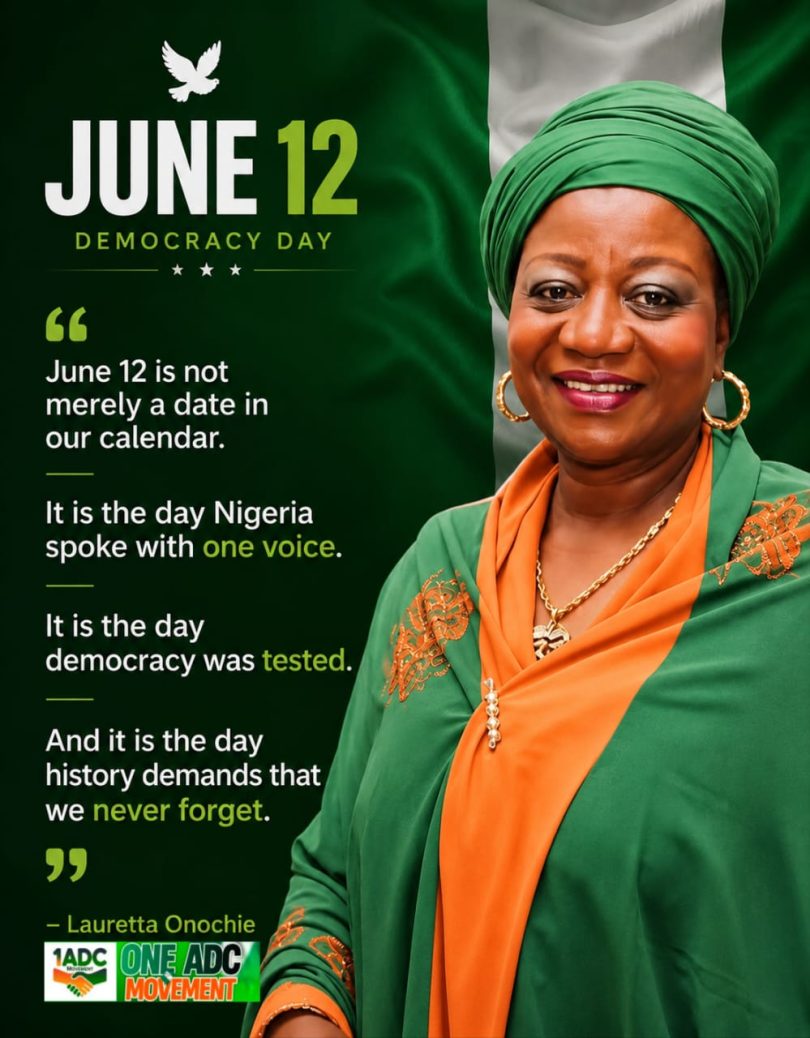
June 12 is not merely a date in our calendar.
It is the day Nigeria spoke with one voice as we will do in 2027.
It is the day democracy was tested.
And it is the day history demands that we never forget.
To all Nigerians: Happy democracy day.
God bless Nigeria.
Lauretta Onochie
@Laurestar