
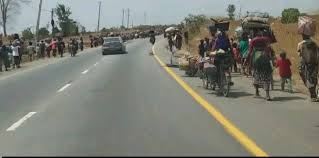
(Residents Shattered. Photo by X.com )
What started as a devastating terrorist assault on communities in Odeni Gida Ward, Nasarawa State, has taken a troubling new turn with those accused of carrying out the attacks now allegedly occupying the very villages they emptied of residents.
The coordinated violence, which claimed over 80 lives, left homes burned, farms abandoned, food stores looted, and property worth hundreds of millions destroyed.
But beyond the immediate destruction, survivors are grappling with a deeper concern: that the true nature of what happened is being deliberately obscured by framing it as a routine “communal clash.”
Residents and community advocates have consistently rejected that label, arguing that the attacks bore the hallmarks of a planned armed invasion, with heavily armed assailants hitting multiple settlements at the same time.
They contend that how the violence is classified has real consequences affecting prospects for justice, compensation, and ultimately, land ownership.
Adding to residents’ anguish, a visit by a presidential aide revealed that many communities remain deserted, with some of the alleged attackers now reportedly grazing cattle freely on the abandoned land. Many locals interpret this as confirmation that the assault was not a spontaneous clash but a calculated land grab.
Frustration has deepened over the lack of arrests, the perceived fading of public attention, and reports that relief materials were distributed in ways that appeared to treat victims and alleged perpetrators as equals.
Reconciliation meetings have been held, but residents say there is little evidence that any agreements reached were ever honoured, while isolated attacks on farmlands reportedly continue.
Community voices like Yahaya Kana Ismaila argue that the scale, coordination, and weaponry involved combined with the fact that the attackers share no ethnic or territorial connection with the Eloyi communities make it impossible to classify the violence as communal conflict.
He warned that the absence of accountability risks emboldening further attacks across the state.
With trust in local authorities eroding and humanitarian support falling short of earlier promises, many displaced residents are now appealing directly to the federal government for intervention, fearing that without urgent action, their communities may be permanently lost to occupation, fear, and silence.