
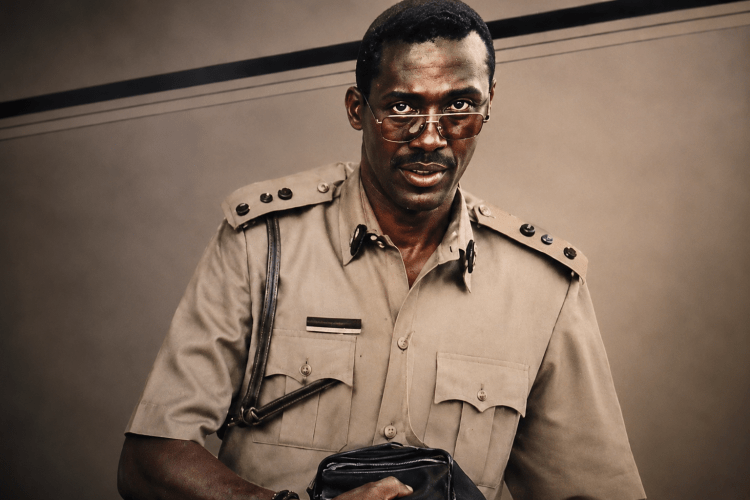
Speaking publicly for the first time in over 30 years, Omenka also claimed he was unaware of the Oputa Panel’s hearings until 12 years after they ended, despite the commission’s proceedings being televised and widely reported in Nigeria and abroad.
Omenka addressed the allegations during a three-hour virtual panel on June 25, organised by Experiential Leadership in Africa, TEL-Africa, in partnership with PREMIUM TIMES. The session was moderated by TEL-Africa’s Adeolu Adewumi and featured PREMIUM TIMES publisher Dapo Olorunyomi, TheNews Magazine executive editor Kunle Ajibade, and PREMIUM TIMES managing editor Idris Akinbajo.
For years, Omenka has been named by former detainees, journalists and activists in accounts of intimidation, torture and other abuses during military investigations in the 1990s. He denied all allegations, insisting he only performed his professional duties.
‘I Didn’t Know the Panel Was On’
When asked why he never appeared before the Human Rights Violations Investigation Commission, known as the Oputa Panel, Omenka said he had no knowledge of its sittings.
“I didn’t know the panel was even on,” he told the panel. “I switched off from Nigeria. It was painful.”
He said he lived in isolation abroad after leaving Nigeria and avoided contact with other Nigerians due to the abrupt end of his military career.
The Oputa Panel, set up in 1999 by former President Olusegun Obasanjo, investigated human rights abuses under past military regimes. Several senior officials of the Abacha government testified before it. Numerous former detainees, journalists, labour activists and military officers also appeared, with some specifically naming Omenka in accounts of detention and interrogation.
Omenka challenged journalists to confirm whether the panel ever summoned him. “You are journalists. Go and find out whether the panel sent a message to me and I refused to come,” he said. “I knew about the Oputa Panel about 12 years after it had ended.”
Denies Rape, Death of Teen Detainee
The discussion turned tense when moderator Adeolu Adewumi cited Oputa Panel records alleging that an 18-year-old detainee, Bunmi Samuel, was raped while in the custody of Omenka’s security group. Archived testimonies from 2000 claimed Omenka impregnated her and that she later died from abortion complications after her release.
Omenka denied the allegation. “I don’t know where the Security Group became a laboratory for making love to people,” he said.
He gave his own account: security operatives had searched a residence while pursuing adult suspects who escaped, leaving behind a young woman and a teenage boy. He said both were taken to a military facility “for their safety.” The boy was later released after his mother presented British High Commission documents confirming his identity.
He maintained that neither teenager was abused in custody. “People make up stories just to soil names because they had suffered pain,” he said.
‘I Did My Job Professionally’
Omenka also rejected longstanding claims that he tortured detainees during military investigations. While admitting he sometimes used “intimidating language” during interrogations, he said he never physically assaulted anyone.
“I did my job. I didn’t kill anybody. I didn’t touch anybody. I carried out my job professionally,” he said. “There is no room for apology because I have not committed any offence. My duty was to investigate.”
Former detainees who joined the panel disputed his version, arguing that his interrogation methods led to wrongful convictions, prolonged detention and suffering under the Abacha regime.