
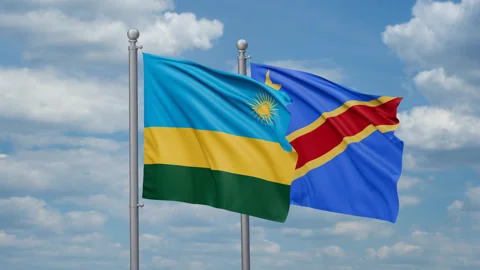
The Democratic Republic of the Congo (DRC) has instituted legal proceedings against Rwanda at the International Court of Justice (ICJ), accusing its neighbour of genocide and widespread human rights violations spanning nearly three decades….
The Democratic Republic of the Congo (DRC) has instituted legal proceedings against Rwanda at the International Court of Justice (ICJ), accusing its neighbour of genocide and widespread human rights violations spanning nearly three decades.
The ICJ disclosed in a statement shared on its official X handle on Friday that the application was filed on June 26 at its headquarters in The Hague, Netherlands.
According to the Court, the case concerns a dispute over “abuses attributable to Rwanda over a period extending from 1996 to the present day.”
READ ALSO: DR Congo Force Portugal To 1-1 Draw in W’Cup Opener
In its application, the DRC alleged that the abuses formed part of “a campaign of genocide and serious, widespread human rights violations waged by the Rwandan authorities in eastern Zaire, and subsequently in eastern Democratic Republic of the Congo.”
The Congolese government claimed the alleged violations primarily targeted Hutu populations who fled to what was then Zaire following the 1994 genocide against the Tutsi in Rwanda.
It further alleged that the campaign also affected several Congolese ethnic communities.
According to the filing, the abuses “have primarily targeted Hutus present on Zairian, and subsequently Congolese, territory following the genocide against the Tutsi in 1994. However, they have also been directed against other Congolese ethnic groups, in particular the Nyindu… as well as the Bembe, the Lega, the Nande, the Hunde and the Bashi.”
The ICJ said the DRC is asking the Court to assume jurisdiction under Article 36(1) of its Statute, as well as provisions of several international treaties, including the 1948 Convention on the Prevention and Punishment of the Crime of Genocide, the International Convention on the Elimination of All Forms of Racial Discrimination, the Convention on the Elimination of All Forms of Discrimination against Women, and the Convention against Torture.
The International Court of Justice, the principal judicial organ of the United Nations, settles legal disputes between states in accordance with international law and also issues advisory opinions on legal questions referred to it by authorised UN organs and specialised agencies.
The Court, which is composed of 15 judges elected by the United Nations General Assembly and Security Council, is headquartered at the Peace Palace in The Hague.