
The Nigerian political landscape was thrown into a state of shock on Monday, June 15, 2026, when the Federal High Court in Abuja ordered the Independent National Electoral Commission (INEC) to deregister the African Democratic Congress (ADC) along with four other political parties.
The judgement came hours after the Presidential candidate of the ADC, Alhaji Atiku Abubakar had just named former Rivers state Governor, Rotimi Amaechi, as his running mate in what was expected to be a keenly contested presidential election in 2027.
However, the court, presided over by Justice Peter Lifu, ‘killed’ the joy of ADC members’ when it handed down the verdict saying that the ADC, the Accord Party, Action Alliance (AA), Action Peoples Party (APP), and Zenith Labour Party (ZLP) did breach Section 225A of the Nigerian Constitution.
Not many Nigerians had paid much attention when the case was brought forward by the Incorporated Trustees of the National Forum of Former Legislators.
The group had asserted that the affected parties failed to secure the mandatory 25 per cent of votes in at least one state during the last general elections or win any elective seat across the local, state, or federal levels of electoral contests.
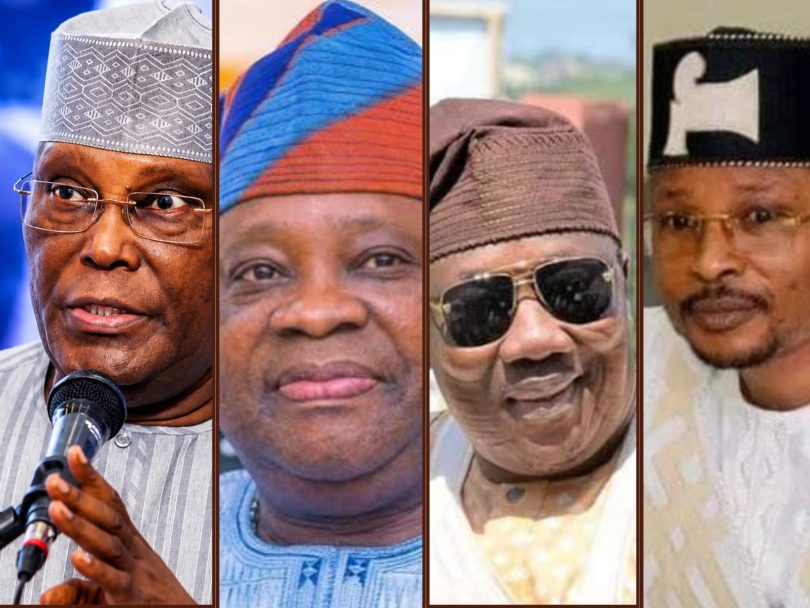
This verdict hits right at the heart of the opposition’s realignment plans for the 2027 general elections. Heavyweight political figures—including former Vice President Abubakar and the Osun State Governor Ademola Adeleke—had actively adopted or aligned with these structures to build a formidable mega-coalition.
Apart from Atiku whose sole platform to realise his ambition is the ADC, Governor Adeleke of Osun is mobilising support for his re-election come August this year on the platform of the Accord Party.
 Also affected are candidates of the ADC and others who are contesting in off-season elections ahead of the 2027 elections.
Najeem Salam, candidate of the ADC in Osun and his counterpart in Ekiti State, Dare Bejide, are in for a shock as their elections are less than three months in the face of this latest judgement.

 With their primary tactical vehicles now facing legal extinction, major questions emerge about what comes next for these political gladiators.
1. Aggressive Appeal to the Higher Courts
The first and most immediate line of defence for the affected parties and their political patrons is the appellate system.
Prior to this final judgment, Governor Adeleke and others had attempted to halt proceedings or join the suit, but their bids were dismissed by the high court to avoid delayed disruptions to the electoral calendar.
Political figures on the receiving end of this verdict will swiftly approach the Court of Appeal and, ultimately, the Supreme Court to secure an injunction to stay the execution of the judgment. If they can successfully argue that deregistering these platforms ahead of upcoming party primaries inflicts irreparable hardship on candidates, the higher courts may suspend INEC’s enforcement until a final determination is reached.
2. Returning to the Drawing Board: The PDP Option
For Atiku Abubakar and Governor Adeleke, both historically tethered to the Peoples Democratic Party (PDP), this judgment forces a hard look back at their original base. The move toward the ADC was largely born out of a desire to escape the endless internal crisis that had paralysed the party.
If the appellate courts uphold the deregistration, these leaders may be forced to abandon the mega-party coalition strategy and return to fight for the soul of the PDP. This would mean brokering truce deals with opposing internal factions to present a united front, rather than fracturing opposition votes across alternative platforms.
3. Seeking Shelter in Extant Alternative Parties
If the deregistration holds and the PDP remains too fractured to salvage, the opposition coalition will look to migrate to another legally compliant, registered political entity.
Dozens of smaller political parties remain recognized on INEC’s official portal. Rather than wasting time attempting to register a brand-new party -a process that INEC has historically slowed down—Atiku, Adeleke, and partners like former Kaduna Governor Nasir el-Rufai, former Interior Minister, Rauf Aregbesola, may simply execute a mass defection.
They could acquire or form an alliance with another surviving minority party to serve as their new operational platform for the 2027 race.
4. Intensified Push for the “Mega Coalition” Mergers
Ironically, this ruling could accelerate what the ruling All Progressives Congress (APC) had earlier dismissed as the noise of “political internally-displaced persons”.
By legally shrinking the political space and squeezing out five alternative options, the judiciary has effectively eliminated the luxury of fragmented minor campaigns.
The ruling could act as a catalyst, forcing the top leaders of the ADC, the Labour Party (LP), the New Nigeria Peoples Party (NNPP), and disgruntled factions of the mainstream parties to merge out of sheer survival. Instead of relying on loose alliances, they may be forced into an official, legally binding merger under a single banner, mirroring how the APC itself was formed in 2013.
All the above remain in the realm of conjectures depending on how the gladiators receive and interpret the latest judgement. The next few days will determine what happens to those whose political fates hangs in the balance.