
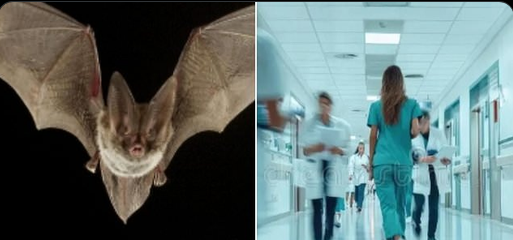
(Bat. Photo by Daily Mail)
An 11-year-old boy has died from rabies after a bat landed on his face while he slept, leaving no visible bite mark, prompting doctors to issue warnings about the dangers of the virus.
The fatal exposure occurred in Northern Ontario, where the boy had been staying during the summer of 2024.
He was asleep when he suddenly woke up to find a bat perched directly on his face, covering his nose and mouth. He swatted the animal away instinctively, and his father caught it before releasing it outside.
At the time, the family saw no sign of a bite, scratch or any other cause for concern, as the boy appeared completely normal with no blood, puncture marks or visible trauma, so urgent medical care was not sought. That decision would later prove fatal.
About 19 days later, the boy began feeling unwell, with vague discomfort quickly progressing into serious neurological illness, including tingling and numbness on one side of his face and persistent vomiting.
Because the family insisted there had been no bite, doctors initially investigated more common causes, but as his condition rapidly worsened, rabies was eventually diagnosed, by which point the disease had already taken hold of his nervous system.
He was admitted to hospital and placed in intensive care, but as with all symptomatic rabies cases, treatment could not stop the progression of the virus.
Despite more than two weeks of intensive supportive care, his condition continued to decline, and life support was eventually withdrawn. He died surrounded by his family, who chose to share his story publicly in the hope of preventing similar tragedies.
Specialists involved in the case say what makes such exposures especially dangerous is how easily they can go unnoticed, since bat bites are often microscopic and leave no visible trace.
A paediatric infectious disease expert involved in the case said the family wanted to use the experience to raise awareness about rabies risks, stressing that the absence of a wound does not rule out exposure and that any skin contact with a bat, especially on the face, should prompt immediate medical evaluation for post-exposure treatment.
The case, documented in the Canadian Medical Association’s Journal, represents Ontario’s first locally acquired human rabies case since 1967 and remains one of only a few recorded in Canada.
Still, bats remain a known carrier of the virus and are the leading cause of human rabies deaths in the United States, even though fewer than one percent of wild bats actually carry it, according to the Centers for Disease Control.
This is a distressing topic involving the death of a child; if you’re affected by anything similar, I can help point you toward appropriate support resources.