
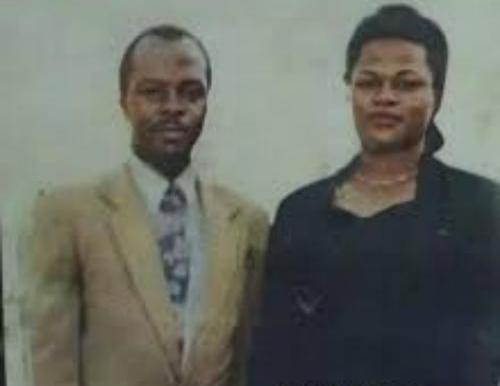
Almost 24 years after the brutal murder of a former chairman of the Nigerian Bar Association (NBA), Onitsha Branch, Barnabas Igwe, and his pregnant wife, Amaka, a report by the Anambra State Truth, Justice and Peace Commission (TJPC) has pointed accusatory finger at Prince Kenneth Okwuchukwu Emeakayi, Governor Chukwuma Soludo’s Special Adviser on Security.
Emeakayi, who served as Commissioner for Works under the administration of former Governor Chinwoke Mbadinuju, at the time of the killings currently serves as the Special Adviser on Community Security to Soludo and heads the controversial “Agunechemba” security outfit in Anambra State.
Governor Soludo set up the Truth Commission to look into historical grievances in the State.
The 14-man Commission which was chaired by human rights activist, Prof Chidi Odinkalu, former chairman of the National Human Rights Commission (NHRC), with Minister of Foreign Affairs, Ambassador Bianca Odumegwu-Ojukwu, as secretary, submitted its confidential report on March 6, 2024, clearly indicting Emeakayi.
Yet, despite the indictment, Soludo appointed Emeakayi a special adviser in October 2024, seven months after receiving the report of the Commission he set up with fanfare.
He was sworn in on October 29, 2024 at the Executive Chambers, Government House, Awka with core responsibilities including coordinating local security in communities across the state, overseeing intelligence gathering and championing community policing.
Not only that, more than two years after receiving the report, no effort has been made by the governor to act on the recommendations.
Speaking to TheNiche, someone who is privy to the report and who spoke on condition of anonymity because he is not authorized to speak to the press said: “This is why this is not only annoying but very difficult to defend Governor Chukwuma Soludo. How could he appoint the very man that was indicted as his security aide just two weeks after receiving the report? That was a slap on the 14 members of the Commission. It is a tragedy.”
Twenty-four years after the brutal murder of the couple, justice has remained elusive despite the fact that the report detailed the circumstances surrounding their murder and recommended remedial actions.
The confidential TJPC report, which Soludo has sat on for over two years, described the unresolved murder of the Igwes as “a continuing violation crying out for remedy” and documented allegations of state complicity, failed prosecution efforts and institutional interference that allegedly frustrated justice in one of Anambra State’s most controversial murder cases.
The report, prepared as part of the commission’s assignment to investigate historical violence, insecurity and unresolved grievances in Anambra and the South-east, traced the murder of the couple to September 1, 2002, when Barnabas and Amaka Igwe were attacked on Oraifite Street, Onitsha, shortly after returning from the NBA Annual General Conference in Ibadan, Oyo State.
According to the report obtained by TheNiche, the couple were allegedly blocked by armed men, dragged out of their vehicle, brutally assaulted with machetes and clubs, and run over with an automobile. Amaka reportedly died later that night, while Barnabas succumbed to injuries in the early hours of the following day after reportedly identifying some of his attackers.
According to the document, the attackers were allegedly members of the then state-backed Anambra Vigilante Service (AVS). At the same time, Mr. Ken Emeakayi, who served as Commissioner for Works under the administration of former Governor Chinwoke Mbadinuju, was named as the leader of the convoy linked to the attack. The report stated that witnesses and police investigators at the time identified Emeakayi and other suspects, leading to arrests and prosecution, efforts that later stalled.
However, no court conviction has been secured in connection with the case, and the allegations contained in the report remain claims documented by the commission.
The commission stated that the killings occurred amid growing tensions between the then Anambra State Government and the NBA, with Barnabas Igwe emerging as a vocal critic of the administration over unpaid salaries owed to teachers, judiciary workers and civil servants.
According to the report, Igwe had become one of the loudest critics of governance under the Mbadinuju administration at a time when workers, including teachers, judicial staff, and civil servants, were owed salaries and were on prolonged strike.
The report stated that as Chairman of the NBA’s largest branch in the old Eastern Region, Igwe regularly criticized what he described as poor governance and was outspoken against the operations of the Bakassi Boys, a vigilante group licensed by the then government and accused in the report of carrying out intimidation, unlawful detention and violent attacks.
According to the commission, tensions escalated in August 2002 after the NBA Onitsha branch, under Igwe, issued a 21-day ultimatum to the Anambra State Government, demanding payment of salary arrears owed to judiciary workers, teachers, civil servants, and legislative staff, or face consequences. The report stated that Igwe had also demanded the governor’s resignation if he was unwilling or unable to resolve the salary crisis.
The TJPC report further detailed an altercation between the NBA leadership and a political appointee in the Mbadinuju administration during a high-level meeting of senior lawyers convened to discuss possible action against the government. According to the report, the incident deepened tensions between the state government and the NBA leadership shortly before the killings.
The commission also noted that Barnabas and Amaka Igwe were not the only critics of the administration allegedly attacked during the period. It cited the case of the then Chairman of the Nigeria Labour Congress (NLC) in Anambra State, Charles Onyeagba, who was reportedly attacked and nearly killed around the same period after criticising the government over unpaid wages. At the same time, his office was allegedly burnt down.
According to the report, the couple had returned from Ibadan on August 31, 2002, and were attacked the following day while leaving work on Oraifite Street in Onitsha. The document alleged that a convoy led by Emeakayi blocked their vehicle and that Amaka, believing she recognised him as a client of the family’s law firm, reportedly ran toward him seeking safety as the assault began.
The report stated that armed men allegedly dragged the couple from their vehicle and attacked them with machetes and clubs before running over them with an automobile. It further alleged that neither Barnabas nor Amaka died from gunshot wounds but from the brutal physical assault that followed.
The commission said onlookers rushed the couple to several hospitals but that treatment was allegedly delayed because medical facilities reportedly insisted on a police report before admission. According to the report, the victims were eventually admitted after a police report was obtained, but the delay may have proved fatal.