
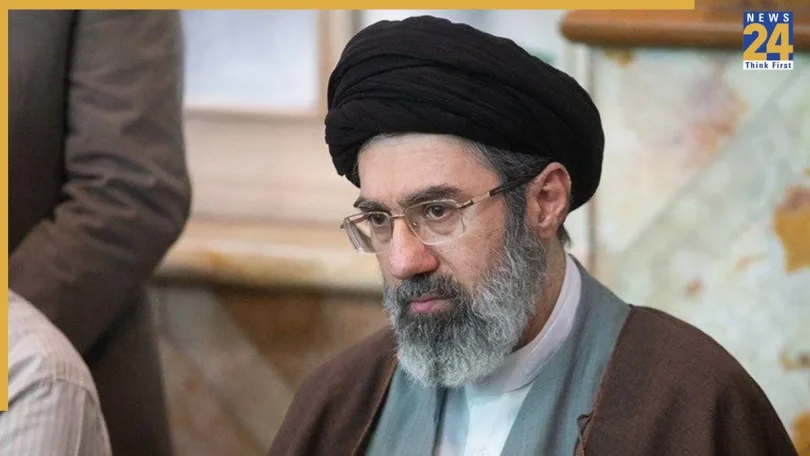
After the death of Iran’s Supreme Leader Ali Khamenei in an Israeli strike on February 28, Iran witnessed a major political shift. Soon after his assassination, his son Mojtaba Khamenei was named as the country’s new supreme leader. However, several reports suggest that the 56-year-old cleric does not hold the same authority and influence that his father had for nearly four decades.
According to a report by The New York Times, a small group of powerful Islamic Revolutionary Guard Corps (IRGC) commanders and hardline officials is now playing a major role in running the country. The report described them as a “band of brothers”, senior men with deep military, intelligence, and political influence who are helping shape Iran’s key decisions alongside Mojtaba Khamenei.
Most of these men fought in the Iran-Iraq war during the 1980s. Over the years, they rose through the ranks and gained control over Iran’s military, intelligence agencies, internal security system, and political institutions. Experts believe their close relationships and shared ideology have helped Iran continue functioning despite war, assassinations, and growing tensions in the Middle East.
How The IRGC Became So Powerful
The IRGC was formed in 1979 after the Islamic Revolution to protect Iran’s leadership and political system. Over time, it became much more than a military force. Today, the IRGC influences almost every part of Iran’s government, including politics, intelligence, security, and the economy.
Analysts say many of the officials now believed to be guiding Tehran worked closely with Mojtaba Khamenei for years while managing the office of his father, Ali Khamenei. Because of their long experience and control over security networks, they are considered among the most powerful figures in Iran today.
Read Also: Did Mojtaba Khamenei lose a leg? What really happened on February 28? Iran breaks silence on Supreme Leader’s condition
Key Men Said To Be Running Iran
Mohammad Bagher Ghalibaf
The 64-year-old speaker of Iran’s Parliament is one of the most influential leaders in the current system. He previously served as an IRGC air force commander, national police chief and mayor of Tehran.
Ghalibaf is believed to act as a link between Iran’s military and political leadership. Some experts think he could become even more powerful in the future.
Mohammad Bagher Zolghadr
Zolghadr, 72, is a former deputy commander of the IRGC and currently serves as secretary of Iran’s Supreme National Security Council.
He is responsible for coordinating Iran’s military, intelligence, judicial and political institutions during the ongoing crisis.
Ahmad Vahidi
A former intelligence officer and senior military commander, Ahmad Vahidi has held several important positions in Iran, including defence minister and interior minister.
The 67-year-old also led the IRGC’s Quds Force in its early years and played a major role in building Iran-backed proxy groups in the Middle East, including Hezbollah.
Mohammad Ali Jafari
Jafari, often called “Aziz,” served as commander of the IRGC from 2007 to 2019. Though he no longer holds an official post, he remains highly influential.
He is known for creating Iran’s “mosaic strategy,” a decentralised military system designed to continue functioning even if top commanders are killed during war.
Gholam-Hossein Mohseni-Ejei
Iran’s judiciary chief since 2021, Mohseni-Ejei is considered one of the country’s toughest hardliners.
Critics accuse him of using the judicial system to suppress dissent and crack down on anti-government protests. He has also been sanctioned by the United States and the European Union.
Hossein Taeb
Hossein Taeb is a former head of Iran’s Basij militia and IRGC intelligence organisation. He is known for overseeing internal security operations and monitoring political dissent.
Reports suggest Taeb shares close ties with Mojtaba Khamenei from their time together during the Iran-Iraq war, and he continues to hold influence behind the scenes.
While Iranian officials continue to say that Mojtaba Khamenei is fully in charge, analysts believe Iran’s leadership is now more collective than before. Many experts say real power in Tehran increasingly lies with senior IRGC commanders and hardline officials working together as a close-knit group.
Read Also: US President Trump threatens to seize Iran’s uranium stockpile as Mojtaba Khamenei issues fresh order over…, says ‘we’ll probably destroy…’
First published on: May 22, 2026 12:30 PM IST
Get Breaking News First and Latest Updates from India and around the world on News24. Follow News24 on Facebook, Twitter.
End of Article
About the Author
Navya Dubey
Navya Dubey is a Sub-Editor at News 24 with two years of experience in journalism. Passionate about storytelling and reporting, she covers a wide range of topics including politics, crime, general news, and breaking stories. She also takes a keen interest in trending and viral content, bringing readers engaging and thought-provoking stories that capture public interest.
Read More
Related Story


