
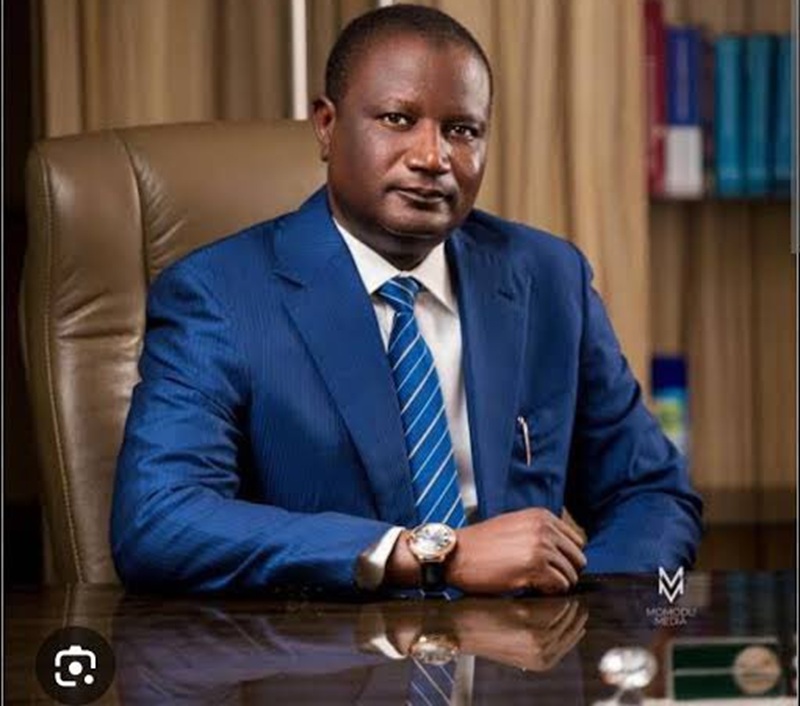
A court in the United Kingdom has taken sweeping action against a Nigerian oil trader, Mr Abdulrahman Musa Bashar, freezing his assets worldwide in a bid to secure repayment of a long-running debt dispute tied to failed fuel transactions.
The order, issued by the High Court in London, prevents Mr Bashar and his firm, Ultimate Oil and Gas FZCO, from selling, transferring, or otherwise dealing with assets across multiple jurisdictions, including Nigeria, the United Arab Emirates, the United Kingdom, and France. The restriction applies up to the value of the outstanding liability, with disclosed holdings estimated at nearly $170 million.
According to Business Day, the dispute traces back to oil trading agreements between 2022 and 2023, when Dubai-based Petrichor Energy supplied gasoil and Jet-A1 aviation fuel to Ultimate.
Court filings indicate that while deliveries were completed, payments were inconsistent and ultimately fell short, leaving the supplier to pursue legal and arbitration routes to recover its funds.
In an attempt to resolve the matter, Mr Bashar entered a personal repayment agreement in early 2024, backing the company’s obligations with his own guarantee.
He also issued a series of signed cheques as security. However, these measures failed to yield results, as the debt remained unsettled and the cheques were rejected upon presentation.
The court’s decision to impose a global freeze was influenced by what it described as troubling conduct during the dispute. Evidence suggested that assets were being sold without proceeds going toward the debt, alongside concerns that not all holdings had been fully disclosed.
The newspaper reported that testimony also pointed to an alleged warning from Mr Bashar that he might move assets out of reach if negotiations broke down, an assertion the court treated as a credible risk of asset dissipation.
The ruling adds to a growing list of legal challenges facing the businessman. He has previously been sanctioned by English courts for failing to comply with orders in a separate commercial dispute, and was also convicted in Dubai, the UAE, in a different cheque-related case.
With the freezing order now active, Petrichor has expanded its recovery efforts beyond the UK, initiating enforcement actions in both the UAE and Nigeria.
The move aims to block any pathways through which assets could be shielded, while also enabling seizure or control where legally permitted.
In a further escalation, the English court has directed two Nigerian-linked companies associated with Mr Bashar to grant access to a Delta State storage facility, allowing the creditor to recover fuel cargoes tied to the unpaid transactions. Failure to comply could trigger additional legal consequences, including contempt proceedings.
Despite ongoing attempts by Mr Bashar and his company to overturn the freezing order, the court has so far declined to lift the restrictions, leaving the enforcement process firmly in motion.