
For close to half a century, the popular Ramat Park stood out as one of the most difficult traffic points in Benin City. It is a junction many residents know too well and complained about. Whether heading towards Auchi, Asaba or linking other parts of the state, motorists often found themselves stuck in long queues that stretched far beyond the intersection. What should have been a short drive routinely turned into a slow and frustrating passage.
For the commercial drivers, it meant fewer trips in a day and higher fuel costs. For traders, it meant delayed movements to and from markets. For school children, office workers and business owners, it often meant leaving home earlier than necessary just to avoid the worst of the congestion. Over time, the situation became part of the city’s routine life.
All that has since changed because barely one week after assuming office in November 2024, Edo State Governor, Senator Monday Okpebholo moved to address the long-standing challenge with the flag-off of a flyover project at Ramat Park. It was a rarity, coming from a man who was just a week old in office. As a result, reactions were mixed. Some residents welcomed the announcement with cautious hope, while others had seen similar promises in the past and preferred to wait before drawing conclusions.
The doubts were not unusual. Infrastructure projects of this scale often begin with enthusiasm and fade into long delays. But this one took a different path.
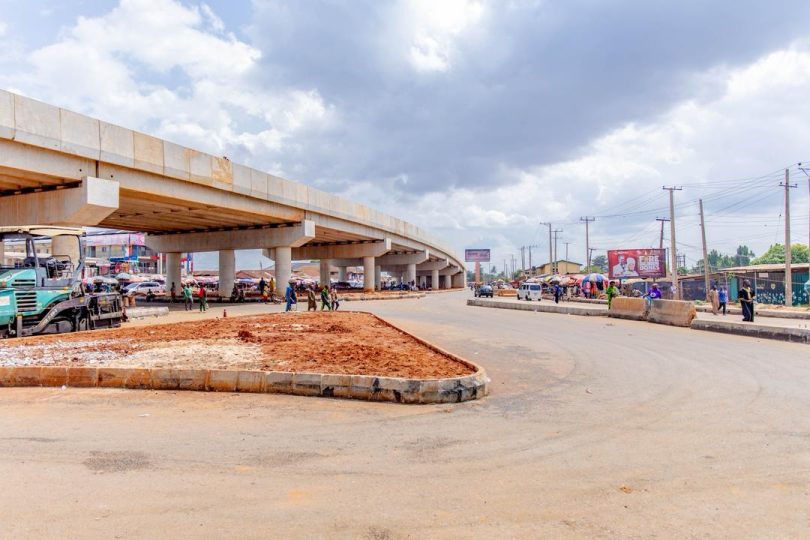
Eighteen months later, the structure has changed the outlook of the entire corridor. Tall concrete pillars now rise above the junction carrying the bridge is visible from a distance and altering the familiar landscape of Ikpoba Hill. What was once defined by gridlock and noise is gradually becoming a structured construction zone with a clear end in sight.
Interestingly the Ramat Park is not just a junction in Benin City. It sits at a strategic point that connects major highways leading to different parts of the country. Movement through the axis affects not only local commuters but also transporters and logistics operators who depend on the route for inter-state travel. When the junction is blocked, the effects are felt far beyond the immediate surroundings. This is part of what gave the project its urgency.
Ab initio, the bridge is designed to ease pressure on the ground-level traffic system and separate through-traffic from local movement. In practical terms, it means vehicles heading out of the city will no longer compete with local traffic at the same point, a problem that has defined the area for years.
Flooding has also been a recurring issue in the area, particularly during heavy rains. Sections of the corridor often become difficult to navigate due to poor drainage. As part of the ongoing work, new drainage channels are being integrated into the project to improve water flow and reduce the impact of flooding that has affected the junction for years.
As construction progressed, residents began to adjust to the changes around them. Diversions, temporary restrictions and noise from heavy machinery became part of daily life in the area. Yet, despite the inconvenience, there has been a growing sense of expectation among people who use the road regularly, many of whom have helped praises on Governor Okpebholo for his vision.
Many traders operating around Ramat Park have spoken about the balance between short-term disruption and long-term benefit. For them, the construction phase has affected customer movement, but there is also a clear understanding that the completed project will improve access and increase business activity.
Commercial drivers are perhaps the most direct observers of the change. They measure the project not in political terms, but in time saved on the road. A reduction in congestion at the junction will translate into more trips per day, less fuel wasted in traffic, and reduced wear on vehicles that currently spend long periods idling.
Over time, the project has also become a point of public curiosity. Residents often stop briefly at different times of the day to observe progress. Some come with children just to watch the scale of work being carried out. Others simply stand by the roadside, comparing what they see now with what the area used to look like before construction began.
The Governor’s inspections have become a regular feature of the project’s timeline. On such visits, engineers provide updates on progress while residents gather nearby to watch developments firsthand. These moments often reflect a mix of interest and expectation from the surrounding community.
As the project moved closer to completion, attention shifted from construction activity to its likely impact on movement within the city. The flyover is expected to ease congestion at one of the busiest intersections in Benin City and improve traffic flow along key transport corridors linking the state to other regions.
There is also a wider expectation that improved mobility will support economic activity. When goods and people move more efficiently, markets respond faster and businesses operate with fewer delays. In a city where transportation plays a central role in daily life, even small improvements in traffic flow can have noticeable effects.
Urban growth has made such interventions increasingly necessary. As Benin City continues to expand, pressure on existing road infrastructure has increased. Junctions like Ramat Park, which were once adequate for traffic levels of earlier years, now carry far more vehicles than they were originally designed to handle.
Today, the change at Ramat Park is visible to anyone passing through the area. What once stood as a symbol of delay is steadily becoming a structured transport corridor with a defined flow of movement. The transformation is not only physical but also functional.
When the flyover is finally opened to traffic, its success will be measured in ordinary ways. Shorter travel times. Less stress for drivers. Smoother movement across the city. Fewer hours lost in traffic that once defined the junction.
For a location that has shaped the daily experience of thousands of commuters for decades, that shift will be significant. It will not erase the past, but it will change what comes next.
________________________________
Patrick Akhere Ebojele, PhD, is the Chief Press Secretary to Governor Monday Okpebholo of Edo State