
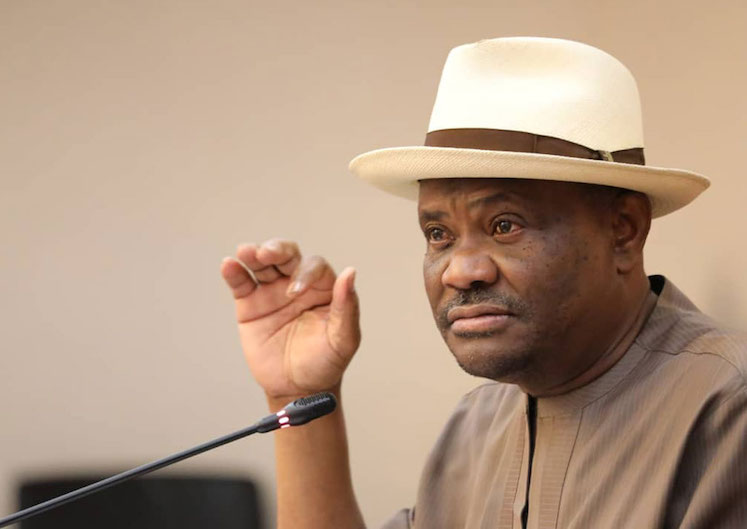
Nyesom Wike remains one of Nigeria’s most influential politicians because he has retained power after leaving office, shaped the crisis in Rivers State, and become a central figure in the debate over whether the Peoples Democratic Party can still function as a strong opposition party.
His influence is not based on quiet diplomacy. It is built on control, visibility, confrontation, alliances and results. As Minister of the Federal Capital Territory, Wike now sits over Abuja, Nigeria’s seat of power, where the Presidency, National Assembly, foreign missions, federal agencies and major business interests operate. The FCT Administration says the President delegates executive powers to the FCT Minister for the running of the territory, giving the office major administrative authority.
PrimeTimes estimates his weighted influence score at 88..3/100, positioning him among Nigeria’s top public figures whose soft power has helped shape the country’s culture, global image and creative economy.
This scorecard is an editorial estimate based on visible power, institutional reach, measurable impact, public relevance and political consequences in 2026.
Wike ranks as a top-tier political influencer because he does not merely speak about power; he exercises it. His strength lies in his ability to control political structures, command media attention, deliver visible projects and remain relevant across election cycles.
One of the clearest signs of his power is his unusual political position. He remains associated with the PDP, yet serves as a minister in President Bola Tinubu’s APC-led federal government. Channels Television reported that Wike has remained in the PDP while serving in the APC-led administration and backing Tinubu, making him one of the most controversial figures in Nigeria’s current political alignment.
That position has deepened questions about the PDP’s ability to operate as a viable opposition party. Wike’s critics argue that his role in the federal government weakens public trust in the PDP, divides party loyalists and makes it harder for the party to present a united front ahead of 2027. His supporters see him differently. To them, he is a practical politician who understands that power is about access, negotiation and results, not slogans.
Wike has rejected suggestions that opposition status can be claimed without electoral strength. In April 2026, he said no political group could call itself a credible opposition without winning elections, arguing that relevance must be earned at the ballot box. That statement captures his wider political view: parties do not become powerful because they complain; they become powerful because they organise, win and control structures.
His influence is also tied to the Rivers State crisis. Wike backed Siminalayi Fubara to succeed him as governor in 2023, but the relationship later collapsed over control of political structures in the state. The dispute split political actors, weakened governance and triggered a prolonged standoff involving the governor, lawmakers and rival factions.
In March 2025, President Tinubu declared a state of emergency in Rivers State, suspended Governor Fubara, his deputy and all state lawmakers, and appointed a retired vice admiral to run the state for six months. Reuters reported that Tinubu cited pipeline vandalism, political instability and the crisis involving PDP factions as reasons for the intervention.
It would be unfair to say Wike alone caused the emergency rule. But it would also be incomplete to discuss the crisis without him. The feud between Wike and Fubara was one of the central political battles that pushed Rivers State into national focus. Reuters later reported that Tinubu lifted the six-month emergency rule in September 2025, reinstating Fubara and other officials after saying the constitutional crisis had been resolved.
Fubara’s supporters have argued that the governor was trying to assert the independence of his office and free the state government from the influence of his predecessor. Wike’s camp, however, has framed the crisis as a matter of political loyalty, structure and order. That clash explains why Wike remains so powerful and so divisive: even outside the Government House in Port Harcourt, his hand is still felt in Rivers politics.
His record in the FCT strengthens the “results” side of his profile. As minister, Wike has focused on roads, transport terminals, land administration, enforcement and urban renewal. Abuja Digest reported that he inspected four major road projects in February 2026 and announced plans for a surveillance centre to protect public infrastructure from vandalism. The projects included the Wuse-Central Business District road, Mabushi Bus Terminal, Arterial N1 in Wuye and a 17-kilometre road linking Life Camp to Dei-Dei International Market.
His land reforms have also made headlines. Vanguard reported that Wike approved the cancellation of 485 FCT land title applications after they failed official integrity checks, as part of wider efforts to clean up land administration in the territory. He has also ordered enforcement action against developments said to violate the Abuja Master Plan, including an estate allegedly built on land originally meant for park and recreation in Guzape.
To his supporters, this is why Wike stands out. They see him as decisive, fearless and focused on delivery. They point to his record as Rivers governor and his current work in Abuja as proof that he turns office into visible projects.
To his critics, the same style is the problem. They see his politics as confrontational, dominant and too centred on personal control. They argue that his influence over Rivers State after leaving office weakened democratic independence and helped deepen a crisis that damaged governance.
Both views are important. Wike’s influence is not soft in the way a musician, cleric or business leader influences society. His soft power comes from command, loyalty, fear, visibility and the belief among supporters that he gets things done.
His generational influence is also different. Unlike cultural figures who shape youth identity, Wike shapes political operators, local power networks, younger politicians, party delegates and government loyalists. His influence is strongest inside the machinery of politics, not mass youth culture.
His national recognition is high because he has moved through several layers of power: local government chairman, minister, two-term Rivers governor and now FCT Minister. Internationally, his relevance comes from two political spaces that matter beyond Nigeria: Rivers State, an oil-producing hub, and Abuja, the country’s diplomatic and administrative capital.
Wike’s place in Nigerian politics is therefore uncomfortable but clear. He is useful to allies and difficult for opponents. He can strengthen a political camp, weaken a rival structure and force national attention onto issues he cares about.
His influence may divide opinion, but it cannot be dismissed. He has remained powerful because he understands the mechanics of Nigerian politics: loyalty, structure, timing, pressure and reward.
For some Nigerians, Nyesom Wike is a strong administrator who delivers. For others, he represents the hard edge of political control. Either way, his place among Nigeria’s most influential personalities is secure.
Wike does not merely survive political storms. He often stands at the centre of them.