
By Mercy Omoike
The Federal Government and key stakeholders have reaffirmed their support for the Food and Agriculture Organization of the United Nations (FAO)-led initiative to promote deforestation-free finance in Nigeria.
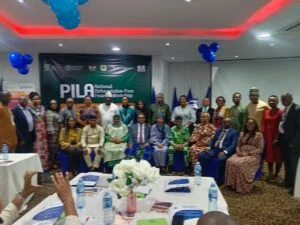
The commitment was made on Wednesday at a two-day workshop organised by FAO in Lagos with the theme: “Advancing Deforestation-Free Finance in Nigeria’s Banking Sector: From Roadmap to Implementation.”
The workshop was convened under the Global Environment Facility-7 Food Systems, Land Use and Restoration Impact Programme (FOLUR), funded by the Global Environment Facility and implemented by FAO in collaboration with national partners.
The programme seeks to promote integrated landscape management, sustainable food systems, biodiversity conservation and restoration of degraded ecosystems, particularly within cocoa and oil palm-producing landscapes in Nigeria.
Deforestation-free finance refers to investment, lending and capital allocation practices that ensure financial resources do not contribute to deforestation, forest degradation or ecosystem conversion.
In his opening remarks, the FAO Representative in Nigeria and to Economic Community of West African States, Dr Hussein Gadain, said the workshop was aimed at moving deforestation-free finance in Nigeria from dialogue to implementation.
“Deforestation-free finance is not only an environmental imperative, it is increasingly becoming an economic and market necessity.
“Global buyers, investors and consumers are demanding greater transparency and sustainability in commodity supply chains.
“Financial institutions that adapt proactively will be better positioned to manage risks, unlock investment opportunities and strengthen long-term competitiveness,” Gadain said.
He said Nigeria had the potential to become a regional leader in sustainable and deforestation-free agricultural finance, especially in the cocoa and oil palm sectors.
According to him, FAO, through the FOLUR programme and other interventions, will continue to support Nigeria in strengthening sustainable commodity value chains, integrated landscape management, biodiversity conservation, climate resilience and sustainable agricultural finance systems.
Also speaking, the Minister of Environment, Malam Balarabe Abbas, represented by Mrs Halima Bawa-Bwari, pledged the ministry’s continued support for efforts to achieve deforestation-free finance in Nigeria.
“For a long time, our forests have been viewed mainly as commodities to be exploited rather than vital lifelines to be conserved and invested in.
“The environmental and economic costs of this imbalance have been severe, threatening agricultural production, food security and regional stability.
“Achieving a deforestation-free economy is no longer just an environmental imperative; it is an economic necessity and an insurance policy for resilient supply chains and long-term prosperity,” he said.
The minister said sustainable finance should be directed towards community-led reforestation, climate-smart agriculture and the empowerment of smallholder farmers and forest-dependent communities.
He added that the ministry remained committed to partnerships that align environmental sustainability with fiscal responsibility and support the transition to a green economy.
Mrs Iyabo Mustapha-Lawal, representing the Federal Ministry of Agriculture and Food Security, said collaboration was essential to promote deforestation-free finance in the agricultural sector.
According to her, forests are now recognised as critical infrastructure for economic resilience, food system sustainability and climate mitigation.
“Protecting forests is not only an environmental obligation, it is also an economic imperative.
“Let us ensure that future generations inherit economies that are both prosperous and ecologically sustainable,” she said.
The Programme Manager on Agriculture at the European Union Delegation to Nigeria and ECOWAS, Mr Hugh Briggs, said the European Union would continue to support the push for deforestation-free finance in Nigeria.
He said the European Union Deforestation Regulation reflected the EU’s commitment to ensuring that products consumed in European markets do not contribute to global deforestation, forest degradation, biodiversity loss or climate change.
Briggs said sustainable finance was critical to supporting responsible production, traceability, transparency and inclusive economic growth.
He noted that the EU’s engagement was aimed at encouraging partnerships with governments, financial institutions, the private sector and civil society to achieve shared environmental and economic goals. (NAN)