
Health
WORLD Health Organisation, WHO says Democratic Republic of Congo (DRC) has reported nearly 1,000 suspected cases, including 220 suspected deaths, according to figures from health agencies and partners as at Wednesday, May 27, 2026.
In neighbouring Uganda, health authorities have reported seven confirmed cases linked to the outbreak, including two healthcare workers and one confirmed death.
WHO Director-General Tedros Ghebreyesus said on Wednesday that Ebola Bundibugyo virus outbreak in Ituri province was spreading in an environment where insecurity, attacks on health facilities and population movements were making it “nearly impossible” to trace contacts and isolate cases.
“We cannot build community trust or isolate the sick while bombs are falling,” he said.
The Bundibugyo strain of Ebola, first identified in Uganda in 2007, has no approved vaccine or treatment.
WHO, however, warned that the outbreak was continuing to spread geographically, with evidence of ongoing cross-border transmission.
The outbreak is centred in Ituri province but has now spread across 11 health zones, with cases also reported in North Kivu – including in Butembo and Goma – and in South Kivu, according to the UN Children’s Fund (UNICEF).
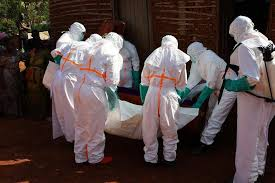
Health officials say the virus is spreading through family clusters and health facilities, with infections linked to caregiving, family gatherings and unsafe funeral practices.
Efforts to contain the outbreak are unfolding in one of the most volatile regions of eastern DRC, where humanitarian access has long been constrained by conflict involving multiple armed groups, including the Allied Democratic Forces (ADF), CODECO militias and the Rwanda-backed M23 armed group.
A December 2025 report by the UN peacekeeping mission MONUSCO documented persistent violence across Ituri and North Kivu, including attacks on villages, health facilities and displaced communities that killed hundreds of civilians and forced widespread displacement.
Active fighting and restrictions imposed by armed groups also hampered humanitarian operations, limited civilian movement and disrupted access to essential services.
The violence has compounded an already severe humanitarian crisis.
According to the latest analysis by IPC – the UN-backed global food security monitor – nearly 10 million people across Ituri, North Kivu, South Kivu and Tanganyika are facing acute hunger between January and June 2026.
At the national level, an estimated 26.5 million people in DRC are experiencing high levels of acute food insecurity.
“Hunger and disease are old companions,” Ghebreyesus said. “People weakened by hunger are far more vulnerable to infections.”
WHO said conflict, poor infrastructure and insecurity were limiting the movement of aid and access to health services.
“In many affected areas, health facilities are either non-functional or operating under severe constraints due to insecurity,” Ghebreyesus said.
“Poor road conditions further restrict the movement of goods and humanitarian assistance.”
WHO is at the centre of a UN systemwide response, deploying emergency personnel, medical supplies and funding to help contain the outbreak.
The agency is also working with community leaders in Bunia to build trust and counter misinformation.
It has developed public information messages and awareness materials adapted to local contexts and translated into local languages for wider reach.
“Community trust is the foundation of effective public health response,” Julienne Ngoundoung Anoko, a WHO Community Engagement Officer deployed in Bunia, said.
“Without community support, outbreak control measures cannot succeed.”
Ghebreyesus appealed for an immediate ceasefire to allow humanitarian and medical teams safe access to affected communities.
“Stopping this Ebola transmission depends entirely on humanitarian access,” he said. (NAN)
A.I
May 27, 2026
Tags: Tedros Ghebreyesus WHO World Health Organisation