
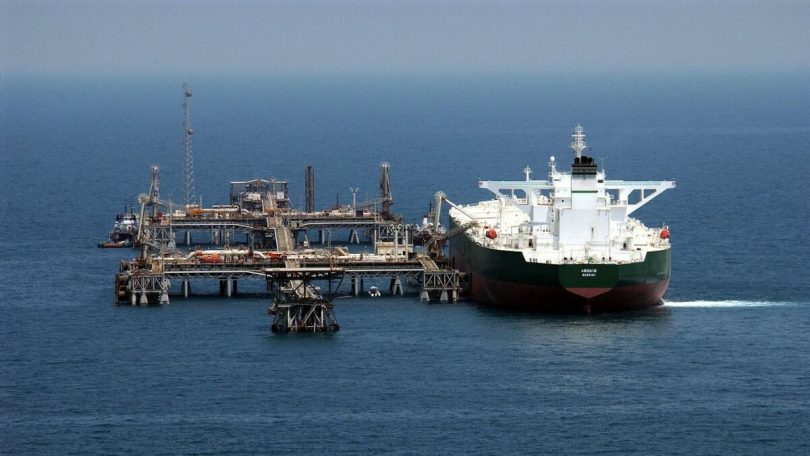
Crude oil fell below $115 after hitting a four-year high of more than $126 a barrel earlier on Thursday on concerns the US-Iran war could disrupt the wider global economy.
Data showed that Brent crude futures lost $4.02 or 3.41 per cent to trade at $114.01 per barrel, and the US West Texas Intermediate (WTI) crude futures gave up $1.81 or 1.69 per cent to trade at $105.07 per barrel.
According to market analysts, the drop in prices from intraday highs did not have an obvious catalyst and did not look related to a specific development, but reflected the heightened volatility in the market since the Iran war started.
Others noted the retreat in US Dollar strength on Thursday also put downward pressure on oil.
Japan’s Yen surged 3 per cent, the most in a day in over three years, on Thursday, following stark warnings from Japanese officials that intervention to prop up the currency, as well as action in other markets, including energy, could be imminent.
The jump in the Japanese currency puts the US currency down, on track for its biggest one-day drop against the Yen since last August.
US President Donald Trump is slated to receive a briefing on plans for a series of fresh military strikes on Iran to compel it to negotiate an end to the conflict.
Iran said it would respond with “long and painful strikes” on US positions if the US renewed attacks, and also reasserted its control over the Strait of Hormuz.
This complicates US plans for a coalition to reopen the waterway, which accounts for about 20 per cent of crude and Liquified Natural Gas (LNG) flows.
Since the US-Israeli attack on Iran began on February 28, the price of Brent and WTI has risen by around 90 per cent due to the effective closure of the strait.
The oil price gains risk a renewed spike in global inflation and higher pump prices across the world. Oil, gas, and their refined byproducts are critical for fuelling cars, trucks and planes, powering homes and industry and producing plastics and fertilisers.
President Trump called a ceasefire in the war earlier this month, but also imposed a US blockade on Iranian ports.
Talks to resolve the conflict, which has killed thousands and caused what the International Energy Agency (EIA) says is the world’s biggest oil disruption ever, have deadlocked.
Traders worry as the US insists on discussing Iran’s alleged nuclear weapons programme and Iran demands some control over the strait and reparations for damage from the war.
The United Arab Emirates (UAE) said on Tuesday it would exit the Organisation of Petroleum Exporting Countries (OPEC) after nearly 60 years as a member.