
Books
Reviewer: Victor Agusiobo
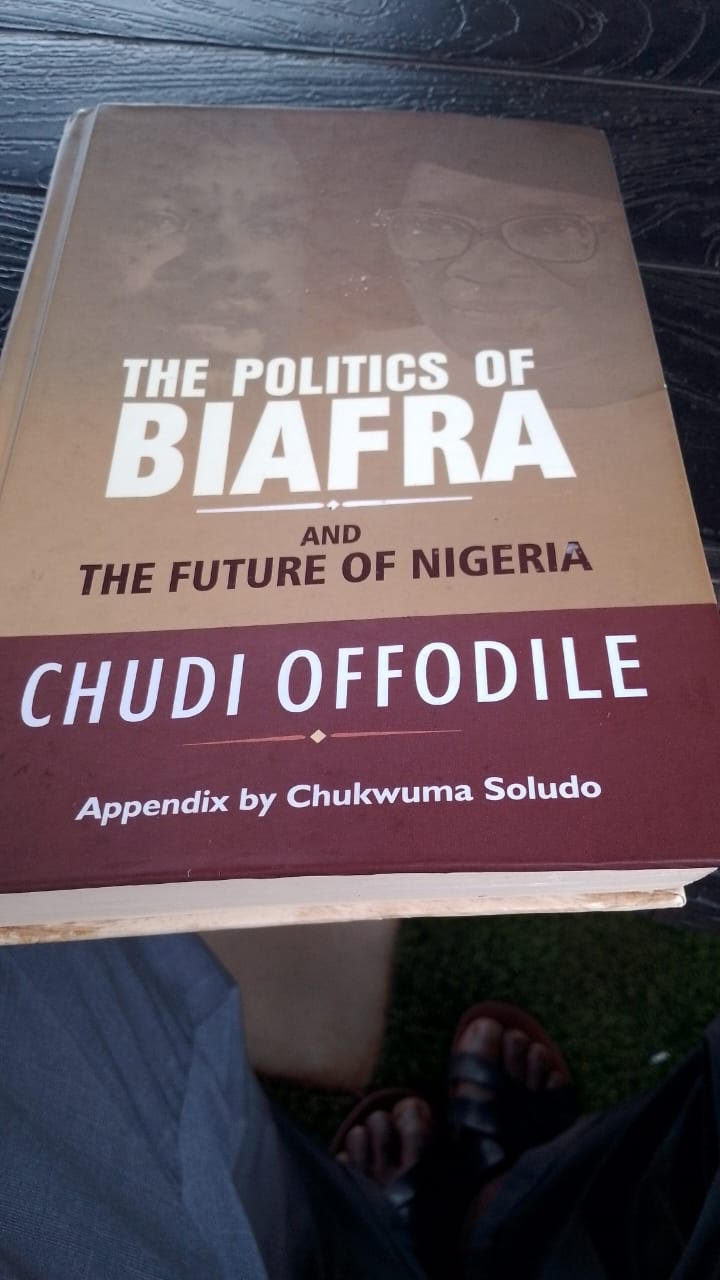
IT would be a disservice to literacy to overlook Chudi Offodile’s 279-page, 6-part book, The Politics of Biafra and the Future of Nigeria.
Though he was clearly very young during the Biafra/Nigeria war, Offodile manages to stitch together a varied account of the conflict and go beyond it to give it meaning, interpretation, and weight. He frames the lessons from that period as a compass for the development of Igboland and Nigeria.
As a lawyer, politician, and administrator, Offodile shows skill in navigating a sensitive, complex, and deeply emotional chapter of Igbo history—not just seeking answers, but pursuing the truth.
The book begins with two towering figures from different generations: Zik and Ojukwu. History placed on them the duty of leading the Igbo toward greatness, yet they diverged sharply due to their contrasting philosophies on how to achieve it.
Running through the work is the suggestion that reconciling those philosophies—federalism versus regionalism, insularity versus openness, diplomacy versus aggression—and knowing when each is appropriate, may ultimately hold the key to resolving the political challenges of the Igbo nation, and indeed Nigeria.
Offodile’s grasp of the shifting layers of the Aburi Accord—what it was meant to accomplish, why it failed, the role of a party pretending not to understand the deal, the deceit of civil servants who advised walking back the terms, and the personal ambitions of the key figures—is so instructive that the book concludes bluntly: “honour and integrity cannot be measured in percentages.”
The book also draws out the value in not treating opposing views as crimes. He examines the Asika era with the calm detachment of a seasoned scholar who values critical thought above all.
Offodile refuses to bend to folly just because it’s popular, or to propaganda just because it’s loud. His method of inquiry produces a narrative that flows freely and cuts deep, giving the reader an open field to draw their own conclusions.
He argues that the Igbo need more than a single perspective on the question of the Igbo nation. He questions whether it makes sense to meet today’s challenges with yesterday’s playbook.
By factually interrogating even figures like Chinua Achebe and Frederick Forsyth, Offodile marks himself out as an independent mind with the courage to follow the evidence where it leads.
Offodile’s account goes beyond a brutal and morally bankrupt war. It captures rare, frozen moments of empathy and conscience shown by non-Igbo sympathizers such as Wole Soyinka, Mayrock, Susan Garth, and others.
He follows the political path of the Igbo since the war ended, placing the blame for the region’s stalled development partly on marginalization and, more heavily, on a decline in leadership quality — a decline that now fuels a yearning for separation among the youth.
The book observes, with quiet fervor, that Biafra should not be framed merely as self-determination or separatism, but as an ideology of freedom and the emancipation of oppressed peoples everywhere.
Offodile’s work is rich with carefully considered prescriptions for Nigeria’s unity. He calls for a proper convergence of the worldviews of Nigeria’s ethnic groups as the basis for a clear national aspiration.

To drive the point home, his analogy likening Nigeria to Chinua Achebe’s Unoka is both striking in its imagery and timeless in its lesson.
It is no accident, then, that Offodile chose Prof Soludo’s incisive essay, _Restructuring Nigeria for Prosperity_, as a long and fitting epilogue to a book that itself explores the pragmatic and forward-looking possibilities of growth through competitive federalism for greater innovation and productivity.
All said, Offodile has produced an important book — one that deserves not just to be read, but studied with close attention.
A.I
May 20, 2026
Tags: Chudi Offodile Victor Agusiobo