
Africa
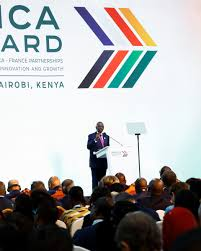
AS the Africa Forward Summit drew to a close in Nairobi, civil society leaders and climate advocates raised urgent concerns that the high-profile gathering risked reinforcing extractive dynamics rather than delivering a just and equitable energy transition for Africa.
The two-day summit, hosted by the French government and bringing together representatives from around 30 African countries, aimed to “reimagine partnerships for innovation and growth” between Africa and France. However, campaigners warned that the event’s business-heavy agenda and sponsorship by fossil fuel giant TotalEnergies undermined its credibility at a critical moment for climate action.
The summit followed closely on the heels of the Santa Marta conference in Colombia, where nearly 60 governments, including several African nations, had engaged in unprecedented discussions on transitioning away from fossil fuels.
Despite positioning itself as a platform for Africa’s future, the summit granted access to nearly 2,000 corporate executives and government representatives, while excluding the vast majority of civil society organisations from the main proceedings.
Rukiya Khamis, East Africa Programme Manager at 350.org, said:
“Inviting civil society to a pre-event while locking them out of the main summit was not participation, it was tokenism. Communities on the frontlines of the climate crisis could not be consulted as a formality and then excluded from decisions that shaped their future. We would not accept a Nairobi Declaration authored without us.”
Campaigners pointed to the contradiction between the summit’s stated ambition to reset clean energy partnerships and the involvement of companies driving fossil fuel expansion across the continent.
Savio Carvalho, Global Climate Campaign Lead at 350.org, said:
“You could not talk about a clean energy future while handing the microphone to companies like TotalEnergies, whose projects, including pipelines like EACOP, are linked to environmental destruction and human rights abuses. This wasn’t partnership, it was extractivism repackaged.”
New analysis from 350.org highlighted the real-world consequences of fossil fuel dependence. In just two months of the recent war in South West Asia, Kenyan households and businesses lost an estimated $143–150 million due to oil price spikes.
Advocates said this underscored the urgent need for African governments to commit to clear timelines for a fossil fuel phase-out and accelerate investment in renewable energy. Civil society leaders urged France to move beyond rhetoric and take concrete action, including holding fossil fuel companies accountable and delivering meaningful financial support for a just transition.
Fanny Petitbon, France Country Manager at 350.org, said: “Fossil fuel majors investing in renewables is the same as a tobacco company funding wellness research, enough to stay credible, not enough to change anything. France can not claim to reset its relationship with Africa while backing corporations that profit from the energy crisis and pollution. A genuine partnership would mean accountability, taxing excess fossil fuel profits, and delivering climate finance as grants, not loans that deepened debt.”
Campaigners emphasised that Africa faced a defining choice: lead the global renewable energy transition or remain locked into unequal relationships shaped by extraction and dependency.
Rukiya Khamis added: “Africa did not need charity. It needed reparative finance, political courage, and a seat at the table where decisions were made. Nothing for us should be decided without us.”
A.I
May 13, 2026
Tags: Africa Forward Summit Rukiya Khamis