
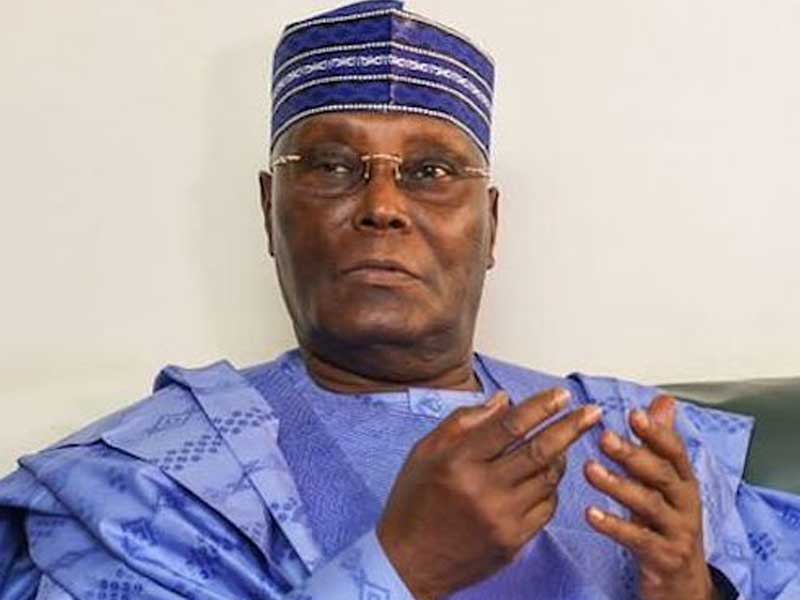
Former media aide to the late former President Muhammadu Buhari, Lauretta Onochie, has commended former Vice President Atiku Abubakar following his presidential screening by the African Democratic Congress (ADC) screening committee.
Onochie, in a statement she signed titled “Atiku Abubakar Done and Dusted,” described the former Vice President as an approachable leader capable of ruling over a diverse nation like Nigeria.
According to Onochie: “Today, H.E. @atiku Abubakar was screened as he prepares for the contest for the presidential ticket of the African Democratic Congress (ADC).
“Atiku Abubakar’s political story is deeply woven into the Nigerian experience, a bridge across regions, cultures, faiths, and aspirations. Over the years, Atiku Abubakar has built relationships across Nigeria’s ethnic nationalities.
“Atiku served as Nigeria’s Vice President (1999–2007) under Olusegun Obasanjo, building one of the country’s most nationally representative political partnerships, with the North and South working together in democratic transition.”
She noted that before politics, Atiku rose through the Nigeria Customs Service, where he worked alongside Nigerians from different ethnic backgrounds, shaping his reputation as a consensus-builder with broad national exposure.
Onochie said the former Vice President founded the American University of Nigeria in Yola, attracting students and faculty from every region of Nigeria and several African countries, reflecting his belief in education as a unifying force.
She said: “Atiku is widely associated with market-driven economic reforms, but he also consistently frames economic growth as something that must benefit farmers in the North, traders in the East, entrepreneurs in the West, and oil-producing communities in the South-South alike.
“Though from Adamawa State, Atiku has long projected a pan-Nigerian identity, speaking multiple northern languages and maintaining political, business, and social relationships across Yoruba, Igbo, Hausa, Itsekiri, Ijaw, Tiv, Nupe, Anioma, Kanuri, Urhobo, and many other communities.
“His repeated presidential contests over the years have made resilience part of his political identity, a persistence many supporters across ethnic and religious lines interpret as commitment to democratic participation rather than entitlement.
“His business interests in logistics, agriculture, and energy have connected him with producers, transporters, industrialists, and workers from across Nigeria’s diverse economic corridors.
“Atiku often argues that government should empower enterprise rather than dominate it, a philosophy that resonates with the trading culture of the South-East, the commercial drive of the South-West, and the agricultural backbone of the North.
“Supporters frequently point to his investment in education and youth development as proof that he sees Nigeria’s greatest resource not in oil or politics, but in human capital across all ethnic groups and regions.
“Both critics and admirers acknowledge Atiku’s vast national network in politics and business. To supporters, this reflects experience and bridge-building.
“Atiku has consistently advocated national unity through inclusion, often emphasizing that Nigeria works best when no ethnic group, religion, or region feels excluded from power or opportunity.
“His political alliances over the years with leaders from the South-West, South-East, Niger Delta, Middle Belt, and Northern Nigeria have reinforced his image as a politician who thrives on coalition-building in a highly diverse country.
“Many who know him, and I can now attest to it, agree that his communication skills, humility, and selflessness stand him out as an approachable leader, qualities needed to preside over a diverse nation such as ours.
“Your Excellency, I wish you all the best in the coming days. Arise and shine, Nigeria.”