
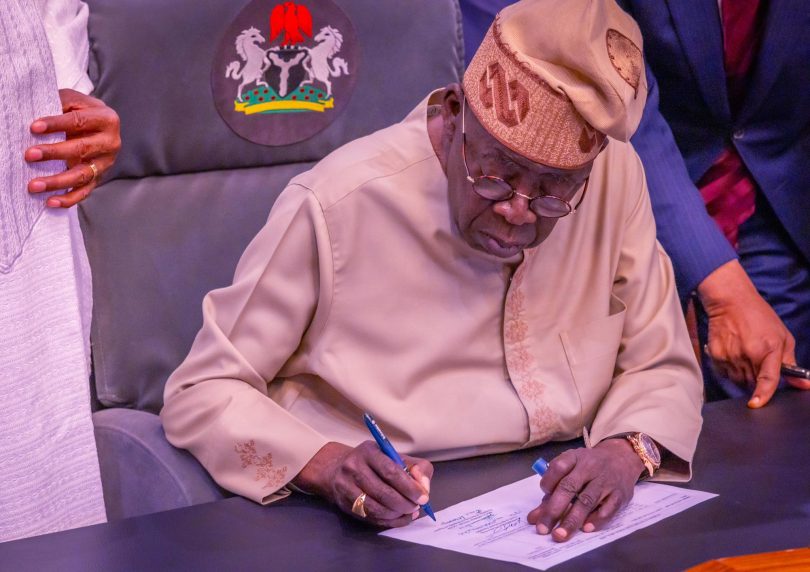
President Bola Tinubu has approved a 30 per cent relief on debts owed by local airlines to aviation agencies and ordered talks involving fuel marketers, airlines, and regulators to reach a fair jet fuel price.
He had earlier agreed in principle to write off part of domestic airlines’ debts to aviation agencies following successful talks with the Airline Operators of Nigeria (AON).
The group demanded a total waiver of debts owed to aviation agencies to cushion the effect of a 300 per cent increase in aviation fuel prices during a crucial high-level meeting with the Minister of Aviation and Aerospace Development, Mr Festus Keyamo and other critical stakeholders in Abuja.
Recall that the airlines had called off their impending strike due to commence on Monday over the rising cost of operations, particularly for fuel, triggered by the current Middle East crisis.
In an update on Thursday, Mr Keyamo said President Tinubu had approved the 30 per cent write‑off and tasked stakeholders, including fuel marketers, government representatives, airlines, and regulators, to reach a fair jet fuel price by Sunday.
Also, the federal government agreed to set up a committee to review taxes, levies and fees charged on domestic air tickets, to recommend cuts to ease pressure on airlines and passengers.
Engagements among representatives from government, airlines, fuel marketers, and regulators will continue to agree on what the minister described as “fair and reasonable” pricing for jet fuel, with any outcome to be made public.
The cost of fuel has generally risen in the last two months due to the escalating war with Iran by the US and Israel, which has triggered one of the most severe energy shocks in decades. Oil prices are currently above $100 per barrel as markets react to escalating tensions and the risk of prolonged disruption.
At the centre of the crisis is the Strait of Hormuz, a chokepoint through which roughly one-fifth of global oil supply flows. With shipping constrained, the effects are cascading across the global economy, raising fuel costs, fueling inflation, and increasing the risk of economic slowdown across many economies. This is forcing airlines to raise fares, curb growth plans and rethink forecasts.