
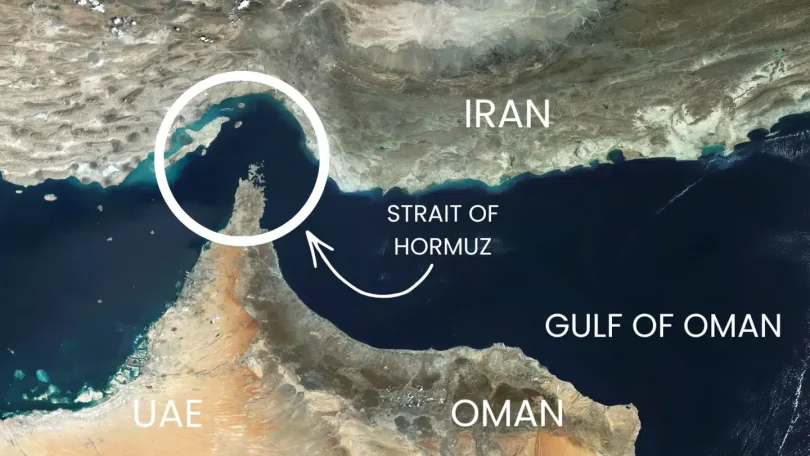
The Strait of Hormuz remained closed on Sunday as tensions between Iran and the United States persisted, with Tehran insisting that a final peace agreement was still distant despite ongoing negotiations.
Iran maintained that the vital maritime route would not be reopened until Washington lifts its blockade on Iranian ports, deepening concerns over global energy supplies.
Speaker of the Iranian Parliament, Mohammad Bagher Ghalibaf, said there had been some progress in talks with the United States but warned that significant differences remained.
“We are still far from the final discussion,” Ghalibaf said in a televised address on Saturday night.
He noted that while negotiations had recorded “progress,” “many gaps and some fundamental points remain.”
Ghalibaf, a key figure in Tehran’s negotiating team, is involved in efforts to end the ongoing conflict involving Iran, the United States, and Israel.
Iran had briefly reopened the Strait of Hormuz on Friday following a temporary ceasefire linked to Israel’s conflict with Hezbollah in Lebanon.
However, the move was reversed after US President Donald Trump insisted that the blockade of Iranian ports would remain until a comprehensive deal is reached.
“If America does not lift the blockade, traffic in the Strait of Hormuz will definitely be limited,” Ghalibaf stated.
The strait, a critical global shipping lane, handles about a fifth of the world’s oil and liquefied natural gas, making its closure a major concern for international markets.
President Trump acknowledged ongoing diplomatic engagement but cautioned Iran against what he described as tactical manoeuvres.
“We have very good conversations going on,” Trump told reporters at the White House, adding that the United States was “taking a tough stand.”
He also accused Tehran of trying to “blackmail” Washington, warning against inconsistent actions regarding the strategic waterway.
Iran’s Revolutionary Guards issued a stern warning, stating that any unauthorised attempt to pass through the strait would be treated as hostile.
Any vessel attempting passage without approval, the force said, “will be considered cooperation with the enemy, and the offending vessel will be targeted.”
Shipping activity in the area reflected the heightened tensions, with only a few oil and gas tankers passing through during the brief reopening on Saturday before most vessels withdrew.
According to AFP, by Sunday morning, tracking data indicated that the strait was largely empty, signalling a near-total halt in maritime traffic.
Rising Security Incidents
The risks of navigating the strait were underscored by a series of incidents reported on Saturday.
A United Kingdom maritime security agency said Iranian forces fired at a tanker, while security firm Vanguard Tech reported threats to destroy a cruise ship attempting to flee the Gulf.
In another case, a vessel was reportedly struck by an unknown projectile, causing damage to shipping containers.
India also lodged a formal protest after a “shooting incident” involving two Indian-flagged ships in the strait, summoning the Iranian ambassador over the matter.
Despite the tensions, diplomatic efforts are ongoing, with Egypt and Pakistan playing key mediation roles.
Egypt’s Foreign Minister, Badr Abdelatty, expressed optimism that a final agreement could be reached “in the coming days.”
However, major sticking points remain, particularly Iran’s stockpile of near-weapons-grade enriched uranium.
While Trump claimed that Iran had agreed to hand over its stockpile of enriched uranium, Tehran firmly rejected the assertion.
Iran’s foreign ministry said the materials would not be transferred, describing such a move as never having been part of negotiations.
On Sunday, President Masoud Pezeshkian defended Iran’s position, questioning US demands.
“How come the US president declares that Iran should not use its nuclear rights but does not say why?” he asked.
“How in the world is he trying to deprive a nation of its legal rights?”
A two-week ceasefire currently in place is expected to expire on Wednesday, raising fears of renewed hostilities if no agreement is reached.
PrimeTimes Nigeria reports that the broader Middle East conflict, which began on February 28 following coordinated US-Israeli strikes on Iran, has since spread across the region, drawing in multiple actors and escalating geopolitical tensions.